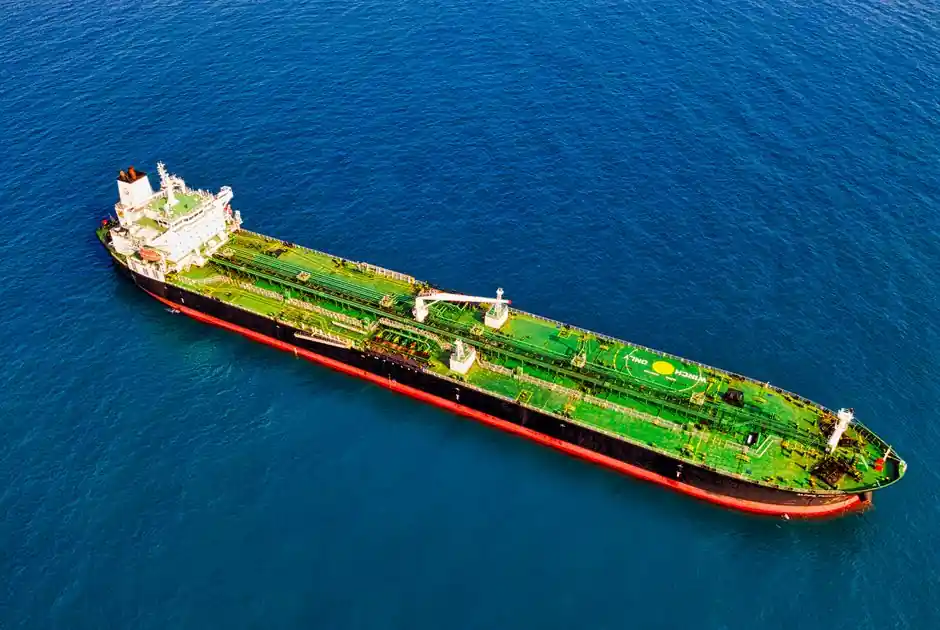
A marine timing-belt drive should be specified by starting with profile and pitch (HTD 5M/8M or GT2 are the common choices for engine-room auxiliaries), then enforcing a 90° minimum wrap on every pulley and a service factor that compensates for salt-air corrosion and shock loading on deck machinery [S1][S2][S3].
Engineers specifying drives for bilge pumps, winches, HVAC fans, timing pulley assemblies on bow thrusters, and generator couplings are increasingly asked to balance a 15,000–30,000 hour design life [S4] against the wet, salty, and often temperature-cycled environment below deck.
Profile and pitch: the decision that locks the rest of the BOM
Tooth profile is the most fundamental selection decision because it determines which pulleys the belt will mesh with and sets the baseline for load capacity, accuracy, and noise; once the profile is set, the pulleys cannot be reused with a different family [S3]. Trapezoidal profiles (MXL, XL, L, H; metric T2.5/T5/T10/AT5/AT10) fit light to medium duty general conveyance, while curvilinear HTD 3M/5M/8M/14M and GT/GT2/GT3 profiles carry higher torque at lower noise and are recommended for most industrial and marine applications [S3].
Pitch then sets load capacity per tooth: a 3M or GT2 2mm pitch suits miniature drives, 5M (or XL at 5.08 mm) handles light to medium service, 8M (or L at 9.525 mm) is the marine workhorse for medium-duty engine-room auxiliaries, and 14M (or H at 12.7 mm) covers very heavy, high-torque loads [S3]. The smallest recommended pulley for an MXL pitch belt is 10 teeth, and MXL pitch belts are typically rated at only 1/15th of their ultimate strength to give a working safety margin [S1].
Belt length, center distance, and the 90° wrap rule
For any synchronous drive, belt should have at least 90° of contact with each pulley it engages, and best practice is 180° or more, because with proper tensioning the belt is then very unlikely to jump or skip [S2]. Undertensioning causes the belt to fall off or skip teeth, while overtensioning burns out the driving motor and robs efficiency; the field check is a gentle finger push that moves the belt span slightly without significant resistance [S2].
Length selection is driven by the pitch and the available center distance (C2C) between driver and driven shafts, and the calculation is detailed enough that a CAD pass plus a calculator is the practical path: a closed-loop belt of fixed length leaves no on-the-fly adjustment, so the geometry must be locked before procurement [S2]. A 2MR (2 mm) or 3MR (3 mm) Gates high-torque belt is a typical fine-pitch option for compact marine auxiliaries, with 5MM (5 mm) covering the next step up [S7]. Because timing belt length is fixed at manufacture, a slight over- or under-spec on center distance cannot be rescued at install time without a tensioner.
Width, material, and the marine environment

Belt width scales torque capacity linearly once pitch is fixed, and material choice is where most marine failures are won or lost. Polyurethane (PU) and chloroprene/neoprene rubber are the two main constructions: PU resists abrasion, oil, and many chemicals and is favoured in clean or washdown spaces, while neoprene rubber tolerates broader temperature swings and shock loads typical of deck machinery [S3][S4]. A double-sided timing belt is the right answer when the drive must transmit power from both faces of the loop, and an STS (Super Torque) profile targets high-precision motion stages where backlash matters [S4].
Cover materials and additives (chloroprene, fabric-faced nylon, PU top coats) are specified against three marine stressors: salt-spray corrosion of the steel or aluminium pulley, oil and fuel exposure in the engine room, and ambient temperature swing. A properly selected and tensioned timing belt in a benign industrial setting runs 15,000 to 30,000 hours before replacement, and a marine installation is generally planned against the lower end of that window when salt-air exposure is continuous [S4]. For installations that mirror land-based material handling, the engineering workflow overlaps heavily with the pitch/profile/material logic in Timing belt selection for material handling.
Comparison: profile families against four marine-relevant criteria
On the four criteria that drive most marine BOM decisions (load capacity per tooth, noise, compatibility with stock marine pulleys, and cost), the three families line up as follows. Trapezoidal MXL/XL/L/H are the cheapest and are widely stocked as imperial timing pulleys, but they carry less load per tooth and run louder than HTD at the same pitch. HTD 5M and 8M are the practical default for engine-room auxiliaries: higher torque capacity, lower noise, and broad marine distributor stocking. GT2/GT3 are the precision option, best when the drive feeds a servo-driven positioning axis such as a bow-thruster vane actuator or a CNC tool changer on a workboat. For a comparison of belt tensioner hardware that keeps any of these families in spec under hull-flex and engine vibration, the selection logic is the same as for any industrial drive. [S4]
Cross-checking the part number is the fastest path to a replacement: vendors cross-reference Gates, Continental, Bando, Megadyne, and OEM codes, so an existing marine belt with a readable marking can be matched without re-measuring [S3]. If the marking is gone, the belt has to be identified by physical measurement of pitch, width, and tooth count before a substitute is approved.
When a timing belt is the wrong choice for a marine drive
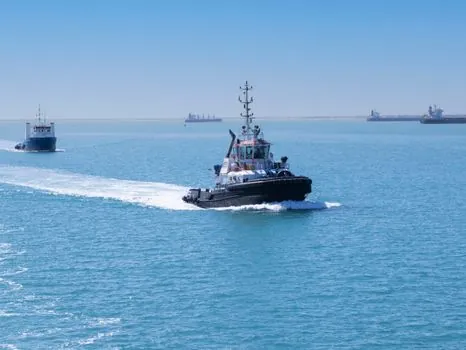
Timing belts are not the right answer when the drive must survive sustained salt-water immersion, when the load profile includes heavy shock that a toothed belt cannot absorb (e.g. anchor winch under peak snatch load), or when the service factor after derating for a 1/15 ultimate-strength working load is below the driven machine's torque demand [S1]. A roller chain drive is the usual substitute: noisier, lubrication-dependent, but tolerant of abuse and outdoor washdown that would shorten a rubber or PU belt's life, and it is the standard selection for many deck cranes and chain-lock drives [S5].
Friction (flat and V) belts are typically ruled out for new marine timing applications because they slip under high load, generate heat, and need higher tension that overhung-loads the shaft bearings; the same argument that disqualifies them on land applies with extra force in a hot engine room [S5]. When the surrounding system already runs a belt conveyor or a marine HVAC fan stack, the timing-belt selection rules are identical to those used in those adjacent subsystems, which is why a spec-first approach to the auxiliaries pays back in lower spares inventory.
Sourcing and standards: what to write on the spec sheet
On the data sheet, lock down five values: tooth profile (HTD 5M, HTD 8M, GT2 8M, or equivalent), pitch in mm, belt width in mm, belt length in mm, and cover/compound (chloroprene rubber with fabric facing, or PU with steel cord tension member). Then state the pulley tooth count on the driver and driven sides, the required center distance, and the service factor applied to the motor torque (a marine installation typically derates by an additional 1.2 to 1.5 over the land baseline to cover shock and corrosion) [S1][S3].
For procurement, cross-reference at least two vendor part numbers (Gates, Continental, Bando, Megadyne) against the chosen profile and pitch, and verify that the marine valve and HVAC auxiliaries that share the same engine room are on a similar replacement interval so the spares cycle can be unified. Trackable signals over the next procurement cycle: distributor stocking of HTD 8M and GT2 8M widths above 20 mm, and confirmation that PU-compound marine-rated belts are offered with documented salt-spray test results rather than generic industrial ratings.