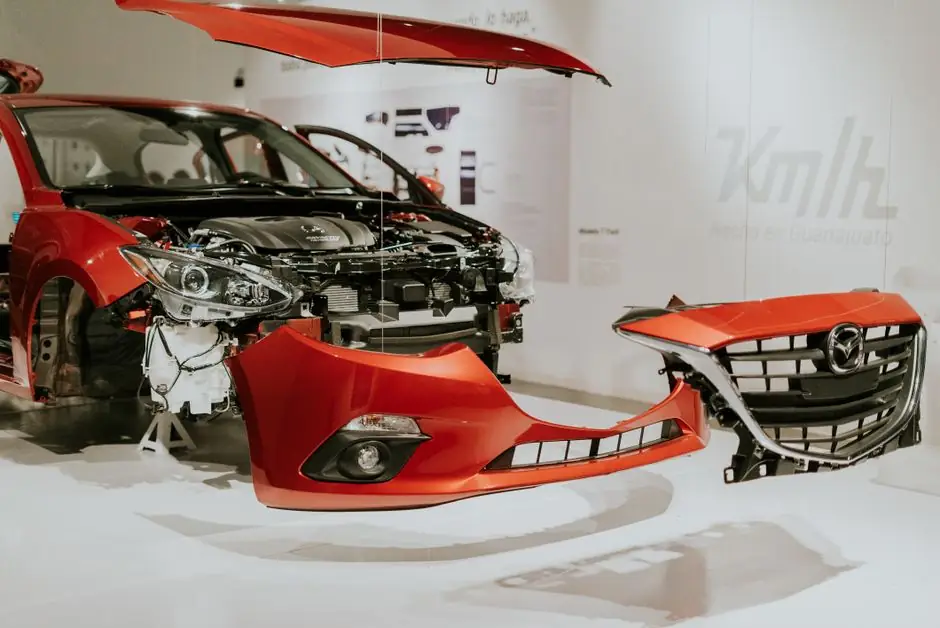
Ti6Al4V (Grade 5) remains the dominant titanium specification for automotive weight-saving components such as connecting rods, intake/exhaust valves, and suspension springs, with mass-produced titanium auto parts traced back to the early 2000s in OEM technical literature [S1].
Selection pivots on three variables: required tensile/yield class, weldability versus additive-manufacturing compatibility, and the cost delta over aluminum alloy or alloy steel substitutes, since titanium density (~4.5 g/cm³) is roughly 60% higher than aluminum yet 40% lower than steel at comparable strength [S1][S4].
Grade Selection: Alpha, Alpha-Beta, and Commercially Pure
Commercially pure (CP) titanium Grades 1-4 offer the lowest cost and best cold formability, making them a candidate for non-structural body panels and trim brackets where strength targets sit near 240-550 MPa tensile range [S1].
The alpha+beta workhorse Ti6Al4V (Grade 5) delivers tensile strength above 895 MPa in annealed condition and is the alloy most frequently cited in laser-welding studies of automotive and aerospace subassemblies [S1][S2]. Alpha alloys such as TA15 are specified where weld toughness at elevated temperature is needed, with reported fracture-toughness data on 1.5-2 mm TA15 sheet for laser-TIG hybrid joints [S1].
Beta-rich alloys (e.g. TC16) are used for cold-headed fasteners; visco-plastic damage modeling of TC16 upset forging published in 2023 shows the triaxiality-Lode coupled approach used to predict cracking in cold-formed titanium alloy fasteners [S8].
Joining: Laser Beam Welding versus Resistance and Hybrid
Laser beam welding of titanium relies on a narrow melt pool with low heat input to limit grain coarsening, with pulsed Nd:YAG and fiber-laser studies on Ti6Al4V plate demonstrating joint tensile strength approaching base-metal levels in the 0.8-2.0 mm gauge range [S1].
Compared to gas tungsten arc welding (GTAW/TIG), electron beam welding (EBW), and laser, the published fatigue-crack-growth ranking for Ti6Al4V joints places EBW and laser below GTAW at high ΔK, while laser wins on distortion control for thin-gauge automotive sheet [S1].
Residual-stress measurements on laser and TIG weldments of titanium show lower tensile residual stress in the longitudinal direction for the laser process, a key driver when welding formed sheet assemblies where post-weld straightness is difficult to recover [S1].
Additive Manufacturing: EBM versus SLM for Ti6Al4V
Electron beam melting (EBM) and selective laser melting (SLM) both deliver Ti6Al4V parts meeting ASTM-grade mechanical requirements, with corrected β-phase fractions of 0.12 (EBM) and 0.10 (SLM) reported in a comparative powder-bed study of Ti6Al4V [S2].
EBM-built Ti6Al4V shows slightly higher tensile/yield strength than SLM in the cited evaluation, attributed to the higher thermal energy and slower cooling that shifts the α:β ratio; both routes pass in-vitro biocompatibility screening where this is required for motorsport medical-adjacent applications [S2].
Laser powder deposition (LPD) using Nd:YAG has been used to bond titanium-tantalum interface layers onto Ti6Al4V substrates, exploiting the narrow gap between tantalum melting (3017°C) and titanium boiling (3287°C) to produce porous coatings in the 350-500 µm range [S3]. Design-of-alloys work via AM is treated as an independent alloy-development vector in a 2021 critical review, not only a shaping route [S7].
Machining and Cutting Considerations
Titanium's low thermal conductivity (~7 W/m·K for Ti6Al4V versus ~50 for plain carbon steel) drives concentrated tool-tip heat, and a 2023 review of machine-learning monitoring of titanium cutting highlights the move from operator-dependent tool-wear observation to sensor-driven CNC feedback [S9].
Tool-life extensions in titanium machining come from sharp carbide grades, high-pressure coolant, and reduced cutting speeds; intermediate annealing is required between roughing and finishing passes on lean-alloy titanium parts to relieve residual stress from prior passes [S4][S9].
For automotive fasteners and small turned parts, the same cooling constraint applies: TC16 cold upsetting simulations point to triaxiality-aware FE modeling as a way to predict surface cracks before tool tryout [S8].
Comparison: Ti CP, Ti6Al4V, TA15, TC16, Ti-Ta
Across five criteria: cost (low to high: CP Grade 1 < TC16 < Ti6Al4V < TA15 < Ti-Ta coating); tensile strength class (~240-550 MPa CP, ~895 MPa Ti6Al4V, ~930-1000 MPa TA15, ~1000-1100 MPa TC16 beta); weldability (CP good, Ti6Al4V very good via laser/EBW, TA15 good for hybrid laser-TIG, TC16 limited to mechanical fastening, Ti-Ta deposited not fusion-welded); AM compatibility (CP limited, Ti6Al4V excellent in EBM and SLM, TA15 demonstrated via LPD, TC16 forging-dominated, Ti-Ta LPD onto Ti6Al4V); and automotive fit (CP for trim, Ti6Al4V for valves/rods/springs, TA15 for elevated-temperature brackets, TC16 for fasteners, Ti-Ta for additive manufacturing material interface layers rather than primary structure) [S1][S2][S3][S7][S8].
Selection Criteria and Sourcing Standards
Decision thresholds: specify Ti CP Grade 1-2 when a 30-40% weight saving over steel is enough and the part is non-safety; specify Ti6Al4V when fatigue endurance, high cycle count, and a strength-to-weight target above 250 kN·m/kg drive the build; specify TA15 or another alpha alloy when service temperature exceeds 300°C; specify beta alloys such as TC16 for cold-headed fasteners where through-thickness ductility is critical [S1][S7][S8].
Sourcing should reference ASTM B265 (mill product), ASTM F136 (Ti6Al4V ELI for medical), and ASTM B348 (bar/billet) for chemistry and mechanical-property traceability; welding procedure qualification is normally referenced to AWS D17.1 for aerospace fusion welding, with ISO 15614-1 used in European automotive programs, though the cited literature does not confirm either standard's exact revision text for these alloys [S1].
Chinese mill-product and OEM/ODM blade-and-bushing suppliers now offer small-batch titanium alloy semi-finished parts to global buyers, with production in Henan and adjacent provinces covering rods, blades, and bimetal bushings suitable for prototype automotive programs [S5].
Limits, Failure Modes, and What to Verify Before Specifying
Galvanic corrosion is the dominant in-service failure mode when titanium is coupled to aluminum in a salt environment; isolating washers or dielectric coatings are mandatory at dissimilar-metal joints, and the cited laser-welding literature does not provide a generic clip-rule for all automotive cases [S1].
Tooling cost, slow machining cycle times, and high-energy AM build rates keep titanium outside mainstream high-volume body-in-white programs; selection is justified only on components where the 40-50% mass saving over steel or the 60% strength-to-weight advantage over aluminum pays back within program life [S1][S9].
For procurement teams, the trackable next nodes are: (a) confirmation that mill certificates cite ASTM B265/B348 with actual chemistry, (b) verification of laser-weld or EBW procedure qualification records to AWS D17.1 or ISO 15614-1, and (c) on AM-supplied Ti6Al4V, the as-built α:β ratio and tensile data against the 895 MPa annealed baseline [S1][S2][S7].
See also our earlier report, Pneumatic Nail Gun Selection for HVAC Installation.