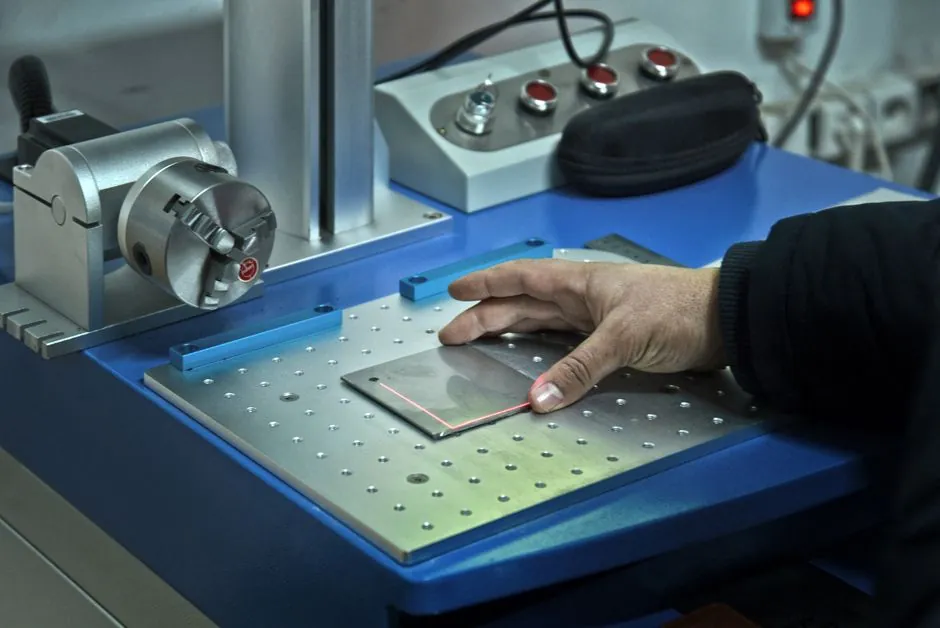
Titanium tooling sits in a narrow band of the mold-and-die market: applications where the workpiece is itself a titanium or nickel superalloy part, where the tool must survive a corrosive polymer or aluminum melt, or where thermal expansion mismatch with steel would otherwise scrap the cavity. Commercial Chinese mills now stock Ti-6Al-4V bar, Ti-6Al-4V ELI, and beta-rich grades explicitly for die inserts and EDM electrodes, with rod diameters in the 10-200 mm range as standard catalog items [S1].
The selection question is not whether titanium beats P20 or H13 on cost; it does not. The question is which titanium class (alpha, alpha+beta, near-beta, or the new metastable beta grades like TTFNZ) delivers the right combination of hardness, thermal conductivity, and EDM machinability for the specific mold or die duty. EDM literature treats titanium as a "difficult-to-machine" category, with die-sinking mixed-gas atomization discharge ablation (DMA-DAP) now reported to give materially higher material removal rate than conventional EDM on Ti-6Al-4V [S3].
Alloy Classes and Hardness Bands Relevant to Tooling
Tooling-relevant titanium divides into four microstructural classes. Alpha alloys (commercially pure grades, Ti-3Al-2.5V) offer the best corrosion resistance but cannot be heat-treated above roughly 350 HV, so they are restricted to corrosion-resistant plastic-injection mold inserts where galling against glass-filled resin is the failure mode. Alpha+beta, led by Ti-6Al-4V (solution-treated at 955-970 C, aged at 480-595 C), reaches 320-380 HV and is the workhorse for die-casting shot sleeves, plastic mold cores, and EDM electrodes [S1][S3].
Near-beta and metastable beta alloys sit at the top of the hardness range relevant to tooling. The novel TTFNZ composition (Ti-4.5Ta-4Fe-7.5Nb-6Zr) was published in 2022 as an additive-manufacturable metastable beta grade targeting high-strength engineering components, with Ta and Nb added for biocompatibility-strict alloying rather than tooling, but the composition and AM processing window transfer directly to die-insert production where complex conformal cooling channels would be impractical to EDM [S2]. Beta grades can exceed 400 HV after aging, but at the cost of higher density (4.8-5.0 g/cc) and a narrow forging window that pushes most tooling buyers toward wrought Ti-6Al-4V bar stock [S1].
EDM, DMA-DAP, and Near-Dry Machining Routes for Titanium Die Cavities
Titanium is classed as a difficult-to-machine material because of low thermal conductivity (around 7 W/m.K for Ti-6Al-4V vs 25 W/m.K for H13) and a strong work-hardening response, which together push conventional EDM into low material removal rate and high electrode wear. Die-sinking mixed-gas atomization discharge ablation (DMA-DAP) was reported in 2022 as a variant EDM that uses an atomized gas-liquid medium rather than a dielectric bath, with measured gains in material removal rate on titanium compared with conventional EDM under matched pulse conditions [S3].
For deep, narrow, and complex special-shaped cavities in titanium and superalloy integral components, the published evidence ranks process options as: near-dry EDM (water mist with air) for environmental compliance and reduced fire risk, DMA-DAP for higher MRR on titanium specifically, and additive manufacturing of a beta-titanium near-net shape followed by finish EDM where the cavity geometry is too complex for any subtractive electrode. AM of TTFNZ via laser powder-bed fusion has been demonstrated, with the as-built microstructure being amenable to subsequent heat treatment to a hardness suitable for die service [S2][S3].
Decision Matrix: When Titanium Beats Tool Steel in a Mold or Die

Use titanium tooling when at least one of the following is binding, and use H13, P20, or S7 when none of them is. The four decision criteria, drawn from EDM research and commercial catalog data, are: (1) corrosion or galling against the workpiece, (2) thermal expansion match to a titanium or Inconel workpiece, (3) weight reduction for a moving die half, and (4) ability to manufacture internal conformal cooling channels [S1][S2][S3].
Where the matrix points to titanium: die-casting shot sleeves and plunger rods for aluminum and magnesium melts (anti-soldering, no Fe pickup into the casting), plastic-injection mold cores running glass-filled PA66 or PPS (anti-galling, no rust in coolant channels), die inserts for titanium aerospace part forging (thermal expansion match to the workpiece), and conformal-cooled inserts built by AM of a beta-titanium powder bed [S1][S2][S3].
Failure Modes and Limits Buyers Get Wrong
Three failure modes dominate titanium mold-and-die service, and each one breaks a different selection rule. First, galling and micro-welding of the titanium tool against a soft aluminum or magnesium workpiece, which is paradoxically solved by using titanium (CP-Ti) as the tool rather than steel, because titanium forms a stable oxide that prevents metal-to-metal adhesion. Second, surface cracking under cyclic thermal shock: titanium's low thermal conductivity creates steep thermal gradients in a die cavity, and the alpha+beta Ti-6Al-4V heat treatment window is narrow enough that overheating above the beta transus (~995 C) coarsens the grain and drops fatigue life sharply [S3].
Third, EDM-induced surface damage. Conventional EDM leaves a recast layer and tensile residual stress on titanium that can crack under cyclic loading; DMA-DAP and near-dry EDM were developed specifically to cut the recast thickness and reduce hydrogen pickup from water-based dielectrics. The 2022 DMA-DAP study on Ti-6Al-4V explicitly cites fire-prevention and operator-safety issues with traditional EDM fluid on titanium chips, which is why mixed-gas atomization is now being specified for enclosed die-sink cells [S3]. For buyers, the practical rule is to require the EDM process spec in writing when a titanium die is quoted, and to reject any quote that does not state the dielectric medium, pulse on-time, and recast-layer target.
Standards, Sourcing, and What to Ask the Mill
Titanium bar for tooling is sold against ASTM B265 (strip, sheet, plate), ASTM B348 (bar and billet), and ASTM F136 (ELI grade for medical, often reused for high-purity die inserts) in the Chinese supply chain, with Ti-6Al-4V Grade 5 as the default catalog item and Grade 23 (ELI) for tighter interstitial limits [S1]. Chinese mills like the Henan-based OEM/ODM factory catalog Ti-6Al-4V rod in the 10-200 mm diameter range, with custom cuts to drawing for EDM electrode blanks and die inserts; this is the practical sourcing band for prototype and short-run tooling [S1].
For research and process design, the open Scientific.Net "Titanium Alloy" reference work (edited volume, online since April 2026) explicitly frames titanium selection around friction, lubrication, and wear in metal forming, which is the right framing for any buyer who treats a die as a tribology problem rather than a steel-substitution problem [S4]. Buyers should request a mill cert with the actual heat lot chemistry (Al, V, Fe, O, N, H, C), the alpha+beta solution-and-aging heat-treatment cycle used, and the beta-transus verification temperature; without these, hardness claims on the certificate do not transfer to die-cavity performance. For deeper material context across industries, the construction-grade selection map and the automotive selection rules cover overlapping alloy families from different duty-cycle angles, and the underlying titanium-alloy properties reference is the right entry point for cross-referencing thermal and physical constants against H13.
Mold- and Die-Specific Selection Rules
Five rules follow from the evidence and the catalog data, and they apply whether the die is for plastic injection, die casting, or hot forging of titanium aerospace parts. Rule 1: specify Ti-6Al-4V Grade 5 (or Grade 23 ELI for medical-adjacent tooling) as the default alpha+beta, and deviate only with a written reason. Rule 2: confirm EDM process spec (dielectric, pulse on-time, recast target) before accepting a tool quote, because conventional EDM on titanium will under-deliver on surface integrity [S3]. Rule 3: use metastable beta or AM-processed TTFNZ only when the cavity geometry demands internal conformal cooling that cannot be reached by a ram EDM electrode, and budget 15-30x the H13 cost for that geometry [S2].
Rule 4: for die-casting aluminum or magnesium, specify a titanium shot sleeve, plunger tip, and gooseneck liner rather than a full titanium die, because the wear surfaces see the melt and the rest of the die does not benefit. Rule 5: keep the heat-treatment cycle inside the alpha+beta window, and never run the solution step above 995 C for Ti-6Al-4V, or the prior beta grain will collapse fatigue life. For broader die-system context, the die-casting process reference and the die-casting die design notes frame the wear and thermal loads a titanium insert must survive, and the casting-mold selection baseline is the right starting point when the part being made is itself a casting.
The next trackable signal is the 2026 follow-up literature on AM-processed beta-titanium die inserts in production service, and whether published case studies confirm that the TTFNZ-class compositions hold dimensional tolerance after 10,000+ shot cycles in aluminum die casting. A second signal is the adoption rate of mixed-gas atomization EDM cells in tier-1 Chinese mold shops, which would indicate whether DMA-DAP has moved out of the lab and into commercial die-quote lead times [S3].