
China's titanium sponge exports under HS code 81082021 reached their highest April 2026 volumes on record, with CBCIE trade data tracking month-on-month shipment increases to aerospace-grade and industrial-grade buyers [S5]. The country retains over 50% of global titanium sponge capacity, anchored by state-run integrated producers that control the full chlorination-to-ingot chain [S6].
Outside China, the producer map narrows to four serious players: Japan's Toho Titanium and OSAKA Titanium Technologies, Russia's VSMPO-AVISMA, and Kazakhstan's Ust-Kamenogorsk Titanium-Magnesium Plant (UKTMP). Each operates a Kroll-process sponge line feeding vertically integrated ingot, billet, and mill-product operations [S6]. For procurement teams specifying titanium alloy feedstock, the choice is less about quality grade and more about geopolitical exposure, lead time, and dual-sourcing viability.
Titanium Sponge Grades and the Kroll Process Baseline
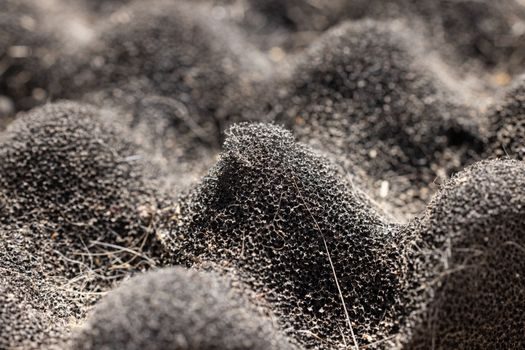
Titanium sponge is the porous, sponge-shaped metallic titanium produced by the Kroll process, where titanium tetrachloride (TiCl4) is reduced by molten magnesium under inert atmosphere. It is the primary raw material for titanium ingot, titanium powder, and downstream mill products such as plate, tube, and billet [S6]. Commercial grades are sorted by Brinell hardness, with the industry reference split between soft-grade sponge (≤90 HB, used for rotating-grade aerospace forgings) and hard-grade sponge (≥100 HB, used for static industrial and chemical-process components) [S6].
China's national standard GB/T 2524 grades domestic sponge into levels 0A through 4 based on combined Fe, Si, Cl, O, N, C, and HB limits, with 0A and 0 grades mapped roughly to ASTM B299 soft-grade equivalents for aerospace rotating parts [S6]. Buyers specifying ASTM B299 Grade A or higher for pressure vessel and heat-exchanger tube feedstock should verify the producer's chloride residual capability, since chloride above 0.10 wt% is the most common disqualifier at mill acceptance.
Tier-1 Chinese Producers and Capacity Distribution
The Chinese sponge sector consolidated between 2018 and 2024 into roughly six major producers, with the rest operating intermittently. Pangang Group Vanadium Titanium & Resources (Panzhihua, Sichuan) and Baoti Group (Baoji, Shaanxi) are the two state-owned anchors, each with nominal sponge capacity above 30,000 t/yr when their reduction lines are fully ramped [S6]. Zunyi Titanium (Guizhou) and Yunnan Metallurgical New Materials (Yunnan) operate at the 20,000–25,000 t/yr scale, while smaller but technically capable lines at Chaoyang Baisheng and Fushun Titanium run in the 5,000–10,000 t/yr range [S6].
The April 2026 export surge documented by CBCIE under HS 81082021 indicates that Chinese sponge is being shipped at competitive price points into South Korea, Japan, Russia, and several EU member states for downstream melting [S5]. Procurement planners should note that domestic Chinese consumption for TiO2 pigment via the sulfate-chloride route still absorbs a large share of chlorinator output, meaning export availability is the residual after that internal draw, and price signals lag CBCIE volume prints by roughly 30–45 days [S5].
Japanese Producers: Toho Titanium and OSAKA Titanium
Japan's two producers together account for under 15% of global titanium sponge output but command premium pricing on aerospace and medical-grade product. Toho Titanium (Chigasaki, Kanagawa) operates a 25,200 t/yr sponge line and is the dominant supplier to Boeing's Tier-1 forging chain for rotating-grade titanium alloy billet [S6]. OSAKA Titanium Technologies (Amagasaki, Hyogo) runs roughly 16,000 t/yr, with a higher mix of high-purity sponge for semiconductor and medical-implant applications [S6].
Both Japanese producers publish mill certificates aligned to JIS H 2151 and ASTM B299, with chloride residual typically below 0.06 wt% on aerospace lots. For buyers requiring AS9100D-traceable feedstock for civil aerospace or Ti-6Al-4V ELI medical bar stock, Japanese sponge remains the benchmark — but order books for 2026 delivery are reportedly filled through Q3 at most major distributors, and spot tonnage is scarce [S6].
VSMPO-AVISMA and the Russia-Kazakhstan Axis
VSMPO-AVISMA (Verkhnaya Salda, Sverdlovsk Oblast) is the world's largest single-site titanium producer, with integrated sponge-to-mill product capacity that includes forging, extrusion, and plate-rolling. Sponge capacity sits in the 35,000–40,000 t/yr range, with the majority absorbed internally by AVISMA's own ingot and billet lines feeding Boeing and Airbus forging contracts [S6]. Ust-Kamenogorsk Titanium-Magnesium Plant (UKTMP) in Kazakhstan adds another ~12,000 t/yr and serves as the CIS region's principal sponge exporter outside Russian borders [S6].
For procurement teams subject to ITAR, EAR, or EU dual-use export controls, the Russian and Kazakh supply is now functionally segmented from most Western aerospace primes; however, industrial, chemical-process, and industrial valve trim buyers often still source VSMPO sponge indirectly through Chinese re-melt channels [S5]. The CBCIE export data for April 2026 includes a measurable tonnage landing at Chinese ports and being re-melted for industrial-grade ingot, illustrating that the geopolitical map does not fully match the actual material flow [S5].
Selection Criteria: Matching Sponge Grade to End Use

The first decision gate is the end-product specification. Aerospace rotating components (discs, blades, landing-gear forgings) require soft-grade sponge (≤90 HB) with low Fe, O, and chloride residuals, and the practical supplier list narrows to Toho Titanium, OSAKA Titanium, and the premium lots from Baoti Group's Mianyang line [S6]. Static industrial applications — heat-exchanger tubes, pressure vessel shells, chloride-service chemical reactors, and valve bodies — accept hard-grade sponge (≥100 HB) and can be sourced competitively from Pangang, Zunyi, Yunnan Metallurgical, VSMPO, or UKTMP [S6].
Second gate is dual-sourcing viability. The safer industrial pattern, reflected in the 2026 export-flow data, is a primary Chinese qualified source backed by either UKTMP or one of the Japanese producers for spot fill [S5]. Third gate is documentation depth: producers serving aerospace release full heat-traceable mill certs with lot-level impurity data, while commodity-grade Chinese producers often provide only heat-average analysis, which downstream flow meter and chemical-plant fabricators may find acceptable but aerospace primes will not.
Price Signals and Lead-Time Reality for 2026
CBCIE's April 2026 export series under HS 81082021 shows unit values that have firmed versus the 2023–2024 trough, with year-on-year value growth outpacing volume growth — a classic tight-supply signature [S5]. Lead times for new mill-product orders in 2026 sit at 6–10 months for Chinese producers on plate and tube, and 10–14 months for Japanese producers on aerospace-grade billet [S6]. Sponge itself, as the upstream of ingot, is typically contracted 3–6 months ahead of the ingot melt, so the booking decision in mid-2026 locks in delivery for late 2026 or early 2027 [S5].
One verifiable signal to watch is the monthly CBCIE volume print under HS 81082021: a sustained drop below the 2024 baseline would suggest Chinese internal demand (TiO2 pigment plus industrial mill product) is tightening against export, and would normally pull export offers upward within 30–60 days [S5]. A second trackable signal is the JIS H 2151 sponge inventory disclosure from Toho Titanium in its quarterly results; historically, a sub-1-month cover reading precedes price step-ups in the Japanese aerospace-grade segment [S6].
For related reading on the upstream supply picture, see the titanium sponge capacity, exports, and price signals to July 2026 data brief, and for the downstream valve and piping implications, the butterfly valve suppliers 2026 spec map covers how sponge-grade decisions flow into final industrial valve trim specifications.