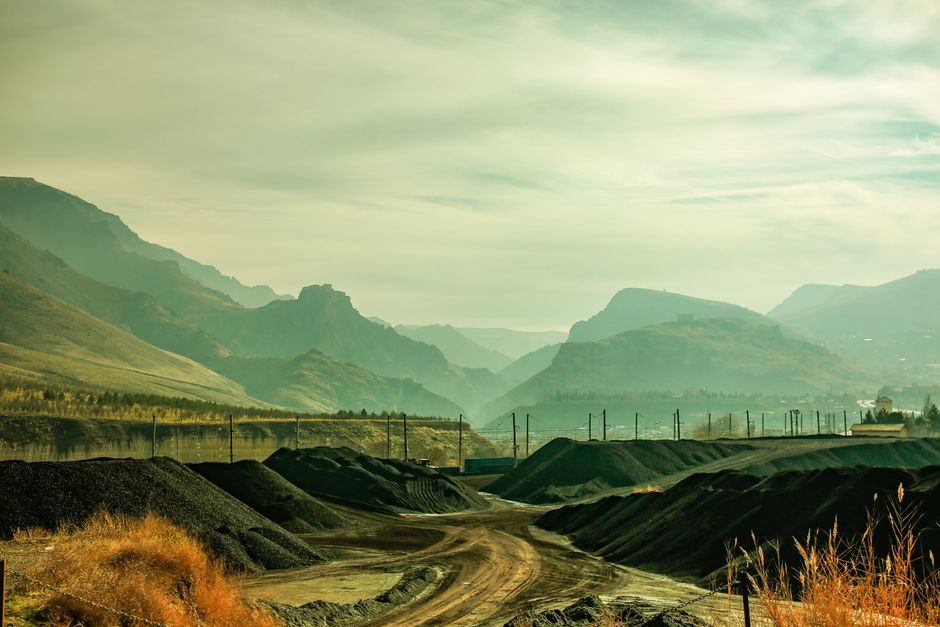
South Africa, Gabon, and Australia remain the three largest manganese ore producing countries, and the company-level supplier base in 2026 splits into a small number of integrated miners (South32, Eramet, Anglo American/Anglo American Marketing, OM Holdings, Jupiter Mines, Vale) and a much larger pool of mid-tier traders and Chinese processors handling Gabonese, South African, and Brazilian lump and fines [S4][S6].
On the open-market side, Brazilian supplier Svb Construtora E Inc. Eireli lists Mn ore at USD 180/t, FOB/CIF, 5,000 t MOQ, 150,000 t/yr capacity, Mn 42–52%, granulometry 10–100 mm, Fe ≤ 8%, SiO2 ≤ 10%, Al2O3 ≤ 8%, load port Barcarena, Pará [S3]. A 26 January 2026 spot reference for South African lumpy 28–30% Mn in China illustrates the lower-grade end of the market that feeds Chinese ferro-alloy and battery-manganese processors [S5].
Who Actually Sits at the Top of the 2026 Producer Stack
South Africa holds the largest share of global manganese ore reserves and hosts the bulk of the Kalahari Basin output; Gabon ranks second by mine production, with the Moanda district operated by Eramet through Comilog supplying roughly a quarter of seaborne high-grade ore [S4][S6]. ScienceDirect's 2025 metallurgical reference confirms manganese ore is "required in iron making to control the manganese content of the hot metal," which is the baseline demand that anchors every producing country's business case [S4].
Among publicly listed names, the 2026 ranking is led by South32 (Australia, GEMCO and Mamatwan/Wessels), Eramet/Comilog (Gabon, France-listed), Anglo American (Manganese via Hotazel Manganese Mines in South Africa, partly under divestment), OM Holdings (Bootu Creek, Australia and Malaysian ferro-alloy conversion), Jupiter Mines (Tshipi Borwa, South Africa, ~33% stake), and Vale (Brazil, Urucum/Mato Grosso do Sul) [S4][S6]. Buyers evaluating a single supplier against this list should compare grade, Fe: Mn ratio, and SiO2 + Al2O3 penalty elements — not just the brand name.
Grade Bands and Product Forms That Drive Pricing
Seaborne metallurgical-grade ore is typically sold in three bands: high-grade lumpy (Mn ≥ 44%, low Fe, low P), medium-grade (Mn 35–43%), and low-grade fines (Mn 28–35%) used mainly in silicomanganese and ferro-manganese smelting [S4][S5]. The 26 January 2026 China spot reference for South African lumpy 28–30% Mn [S5] sits firmly in the low-grade band, which trades at a structural discount to high-grade lumpy from Gabon (typically Mn 44–48%).
For comparison, the Brazilian offer Svb Construtora lists on go4worldbusiness — Mn 42–52%, Fe ≤ 8%, SiO2 ≤ 10%, Al2O3 ≤ 8%, K2O ≤ 4%, CaO ≤ 0.20%, MgO ≤ 0.15%, granulometry min 10 mm with 10% below 100 mm and 90% in-range, moisture 2–12% [S3] — sits in the high-to-premium band. Moisture spread (2% summer vs 12% winter) is a real freight and penalty risk, not a marketing line, and a 1% moisture delta moves roughly 1.4 t of dead weight per 100 t shipped.
Port Inventory and Trade Flow on the China Side
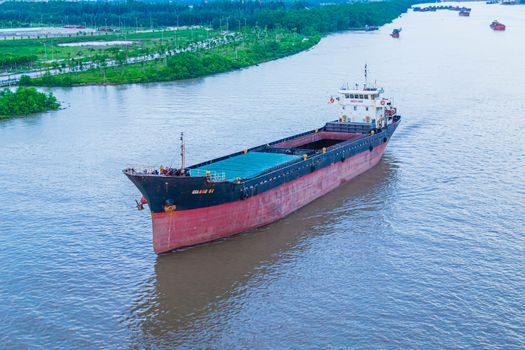
China remains the largest single importer of seaborne manganese ore, and CBCIE Metal's daily "Inventory of Manganese Ore by Port" page — refreshed 19 June 2026 with mainland port-level stock figures — is the de facto pricing reference for spot tonnes flowing into Tianjin, Caofeidian, Lianyungang, and Fangchenggang [S2]. Port inventory level is the single most actionable signal for spot buyers: rising inventory weakens CIF bids, falling inventory tightens them within days.
On the customs side, the HS-code page for "manganese-ore" on e-to-china tracks China's MFN tariffs, FTA concessions, and any active anti-dumping or anti-subsidy cases per HS subheading, with the page 7 reference dated 22 June 2026 [S8]. A specifier buying through a Chinese import agent should always re-pull the HS subheading (typically 2602) and the anti-dumping schedule before locking a vessel; the 2026 schedule can differ from a 2024 quote on the same cargo. Wholesale supplier directories — for example Made-in-China's "Wholesale Manganese ore 2026" list updated 13 July 2026, which includes CE-certified Chinese exporters such as Henan Wanbo Machinery Manufacturing [S1] — are useful for identifying mid-tier Chinese processors handling Gabonese, South African, and Australian material, but they are not the right place to validate reserve size or mine output.
Side-by-Side Comparison: How the Main Producer Countries Stack Up
Across the three top producing countries, the decision matrix a procurement engineer should run is grade, port logistics, and downstream integration, not country prestige [S4][S6].
South Africa: dominated by the Kalahari Basin (Hotazel), high-volume medium-to-high grade, deep-water ports (Port Elizabeth, Durban), highly integrated with local ferro-manganese smelters (Transalloys, Metalloys, Mogale). Gabon (Comilog/Eramet): consistently the highest-grade seaborne lumpy (Mn 44–48% typical), single-port dependency on Owendo, single-operator risk, premium pricing. Australia (GEMCO/South32, Bootu Creek/OMH): high-grade, low-Fe, lower-tonnage than South Africa, shipped from Townsville/Esperance, popular with Chinese buyers seeking low-impurity feed. Brazil (Vale, smaller players including Svb Construtora): mid-to-high grade, Fe 6–8% baseline, ports Barcarena and Ponta da Madeira, smaller merchant market share but a regular spot supplier [S3][S4][S6].
For battery-grade manganese (high-purity MnSO4 for cathode precursor), a different supply chain applies — see the nickel-sulfate reference for the cost-band logic, since nickel and manganese sulfate markets move on overlapping precursors and Chinese conversion capacity. Procurement engineers handling both steel and battery-end customers often consolidate sourcing through one trading desk to share vessel economics.
Spec and Contract Gates for a 2026 Sourcing Decision

A tight spec sheet on a manganese ore RFQ should fix: Mn content (with rejection below a floor, e.g. 44% for high-grade lumpy), Fe ceiling (≤ 8% in most battery-feed contracts), SiO2 + Al2O2 penalty elements (typical cumulative ceiling 18%), moisture band (2–12% in the Brazilian offer, tighter on most lumpy contracts), granulometry (10–100 mm with a defined oversize/undersize ratio), phosphorus (not always disclosed, but ≤ 0.1% is the common ceiling for steelmaking-grade fines), and load/discharge port (Barcarena for the Brazilian Svb offer [S3], Owendo for Gabon, Port Elizabeth/Durban for South Africa, Townsville/Esperance for Australia).
Contract mechanics that matter in 2026: FOB vs CIF pricing, provisional vs final assays, payment method (LC at sight is standard, but USD 180/t × 5,000 t MOQ on the Brazilian offer [S3] means a USD 900,000 single-ticket exposure, so banking line confirmation is the real risk gate), and a clear MFN/FTA tariff assumption for China-bound cargoes [S8].
Who This Market Is For, and Who It Is Not For
Manganese ore is for: integrated steel mills running BF/BOF routes (Mn as a de-sulphuriser and alloying agent), ferro-alloy producers (silicomanganese, high-carbon ferro-manganese, refined FeMn), and battery-cathode precursor plants needing high-purity MnSO4 or electrolytic manganese metal [S4]. It is not for: small foundries needing pure metal, traders without vessel or LC infrastructure, and end users who cannot lock grade testing at discharge — Mn lot-to-lot variance from the same mine can be 2–4 percentage points, and a 1-point Mn shortfall at 44% baseline is roughly a 2.3% loss in contained metal value, which compounds quickly at USD 5–7/dmtu spot.
For buyers who need the physical product downstream in a finished part — crusher liners, wear plates, lifting components — the right move is to spec the alloyed form, not the ore. Foundries selecting wear-resistant castings should consult a casting-side spec map such as the riser-cutting reference to understand the downstream production steps that consume the ferro-manganese their procurement team is sourcing today.
Two trackable signals to watch into Q4 2026: the weekly CBCIE port-inventory print for Chinese ports [S2] as the proxy for global seaborne balance, and any update to the HS 2602 anti-dumping schedule [S8] that would re-price China-bound Gabonese and South African parcels.
Spec-level background on the components involved: pressure transmitter, flow meter, and industrial valve.