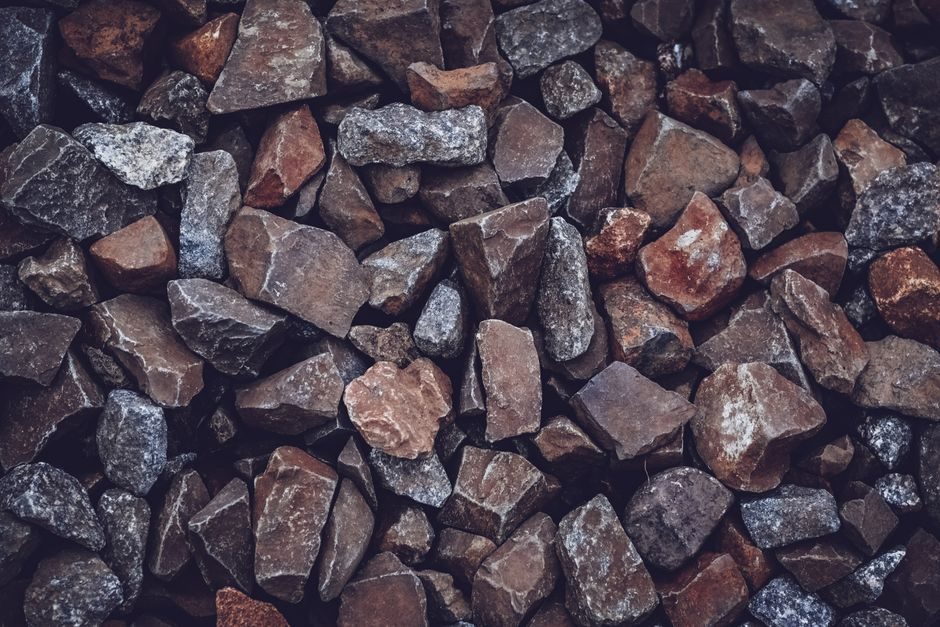
South African manganese ore lumpy 28-30% Mn held a stable band across the four trading sessions ending 2026-07-24 on the Ferro-Alloys.com domestic China price board, with parallel prints for Australian lumpy 46%, Gabonese 45%, Australian ore 45%, Australian sands 48%, and South African 38% [S1].
Downstream, made-in-China spot listings on 2026-07-12 put bulk electrolytic manganese flake at US$ 2200-2500/t (Henan Guohan Steel, 20 t MOQ, 1000 kg bag, Tianjin) and 99.7% Djmn grade at US$ 1500-1800/t, while a 99.7% Mn / 0.04% C / 0.05% S grade with 10-50 mm sizing clears at US$ 1350-1750/t [S2].
Grade Spread: From 28% Lumpy to 48% Sands
The spot board on 2026-07-24 simultaneously printed six distinct grade/origin pairs, a useful one-page reference for procurement desks cross-checking CIF offers [S1]. Australian manganese sands 48% is the highest-grade Mn reference on the list, with Australian lumpy 46% and Australian ore 45% close behind, while Gabonese 45% and South African 38% bracket the lower-grade, high-volume bookends of seaborne trade [S1]. South African lumpy 28-30% sits at the bottom of the grade stack and is typically used as a low-cost acid-leach or blend feed rather than a direct silico-manganese charge [S1].
Australian-origin material is double-listed: a lumpy 46% line and a separate 48% sands line that frequently diverges by US$ 0.3-0.7/dmtu Mn FOB depending on Fe:Mn ratio and alumina penalty, with [S3] confirming forward Australian lumpy and sand offers are still negotiable through the Mn Australia desk for shipment to Chinese ports.
Electrolytic Manganese Flake: 99.7% Mn, Low-Carbon, 10-50 mm
Electrolytic manganese metal flake (EMM) is the highest-purity bulk Mn product on the Chinese merchant market, with [S2] showing a tight cluster of offers on 2026-07-12: 99.7% Mn at US$ 1500-1800/t (Inner Mongolia Pusheng, 20 t MOQ, lump form), 99.7% Djmn with C ≤ 0.04% and S ≤ 0.05% at US$ 1350-1750/t (Hainan Yaojiuzhou, 20 t MOQ, 10-50 mm plate), and bulk steelmaking-grade flake at US$ 2200-2500/t (Henan Guohan, 20 t MOQ, 3000 t/month capacity, Tianjin port) [S2].
The price gap between the low-carbon Djmn99.7 plate and the bulk steelmaking flake runs US$ 450-1150/t in favour of the steelmaking grade, reflecting the aluminium- and silicon-deoxidation market for EMM in stainless and specialty steel rather than battery cathode synthesis [S2]. Typical EMM chemistry: Mn 99.7% min, C 0.04% max, S 0.05% max, sizing 10-50 mm flakes, packed 1000 kg/bag, with monthly line capacity cited at 3000 t [S2].
Battery-Grade EMD MnO2: A US$ 2000-3000/t Premium Over Flake
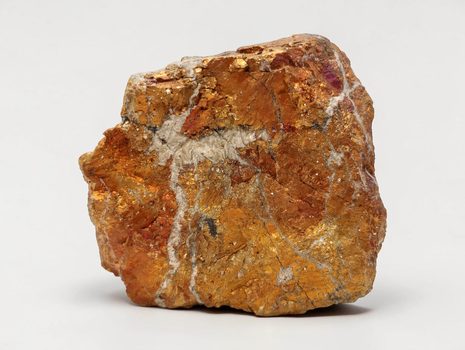
Electrolytic manganese dioxide (EMD, CAS 1313-13-9, formula MnO2, EINECS 215-205-6, industrial-grade classification) is the relevant input for alkaline and lithium-manganese cathode chemistries, and [S2] records a 2026-07-12 quote of US$ 3500-4500/t from Anhui Fitech for battery-grade MnO2, 20 t MOQ.
That places EMD roughly US$ 1300-3000/t above bulk EMM flake and US$ 2000-3000/t above 99.7% Djmn plate on a same-day merchant basis, reflecting the additional purification, surface area, and discharge-capacity control required for cathode active material [S2]. For procurement planning, treat EMD as a separate spec line with its own supplier roster, not as a substitute for EMM flake in steelmaking recipes.
Origin Map: Australia, Gabon, South Africa, and India
The seaborne manganese ore flow into China is dominated by three origins on the spot print: Australia (lumpy 46%, ore 45%, sands 48%), Gabon (ore 45%), and South Africa (38% lumpy ore, 28-30% lumpy) [S1]. [S3] confirms Australian lumpy and sand remain actively offered into Chinese ports via the Mn Australia trading desk (WhastApp +86 18339988147, [email protected]), with negotiable forward cargoes rather than fixed posted prices.
Outside the three dominant origins, [S4] shows Indian-origin manganese ore remains a secondary supply channel, with Anvi Mines & Minerals (Hyderabad) listed on ExportersIndia as a manufacturer/exporter/retailer offering chemical-industry-grade Mn ore for global buyers, typically a 30-35% Mn low-volume niche used in dry-cell, pigment, and water-treatment applications. For context on how this 30-35% niche slot sits next to the 45-48% metallurgical bookends, see the related Manganese Ore 2026: Grade Spread, Steel Anchor, and Battery-Grade Premium tracking file.
Port Inventory: CBCIE Weekly Reading
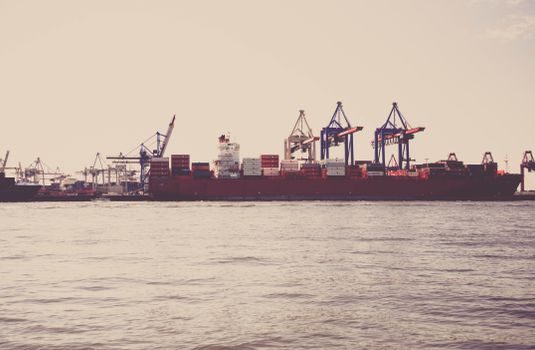
CBCIE Metal's Weekly Manganese Ore Market Review, published 2026-05-15, characterises the domestic Chinese manganese ore spot market as largely stable that week, with port-side inventory tracked weekly at [email protected] / WhatsApp +86 18634332159 [S5]. Inventory tone is the swing factor for CIF bid-ask spread, since Chinese mills typically draw down 1.4-1.8 Mt of seaborne Mn ore per month and port stocks of 3-4 Mt cover roughly two months of mill demand, softening the spot board.
Stable inventory combined with stable [S1] spot prints through 2026-07-23/24 suggests mid-2026 is sitting in a sideways range rather than a directional squeeze. The Shanghai Metals Market (SMM) data desk at metal.com/manganese continues to publish daily Mn metal, ore, and silico-manganese reference prices, providing a second cross-check for any buyer reconciling Ferro-Alloys.com prints against a different methodology [S6].
Who This Market Is For — and Who It Is Not
This spot ecosystem is built for integrated stainless mills, silico-manganese smelters, EMM/EMD processors, alkaline-battery cathode plants, and trading desks that can absorb 5-20 t minimum order quantities in standard 1000 kg bags [S2]. It is poorly suited to buyers needing < 1 t research samples, to specifiers of ultra-high-purity Mn for semiconductor targets (≥ 99.99%), or to procurement teams that require multi-year fixed-price contracts without an indexed formula.
Within that range, the decision matrix is roughly: choose 28-30% South African lumpy for cost-driven blend feeds; choose 45-48% Australian or Gabonese lumpy/sands for direct silico-manganese smelting charge; choose 99.7% EMM Djmn plate (C ≤ 0.04%, S ≤ 0.05%) for stainless deoxidation and aluminium alloy additions; and choose battery-grade EMD MnO2 (CAS 1313-13-9) only when cathode discharge capacity is the binding spec, not Mn purity alone [S1][S2].
Decision Criteria Comparison: Ore Grades vs Flake vs EMD

A side-by-side read of the four dominant Mn product lines on 2026-07-24/12 spot data [S1][S2]: (1) South African lumpy 28-30% Mn — lowest unit Mn cost, suitable for blending and acid leaching, seaborne origin South Africa, no battery relevance. (2) Australian/Gabonese 45-48% lumpy or sands — direct silico-manganese charge, premium per dmtu Mn but lower freight penalty per unit metal, seaborne origin Australia/Gabon. (3) EMM flake 99.7% Mn Djmn plate — Mn 99.7% / C ≤ 0.04% / S ≤ 0.05% / 10-50 mm, US$ 1350-1750/t, used for stainless deoxidation, made in China, Tianjin port. (4) Battery-grade EMD MnO2 — CAS 1313-13-9, EINECS 215-205-6, US$ 3500-4500/t, the cathode active material input for alkaline and Li-MnO2 cells, not interchangeable with EMM flake.
The two trackable signals a buyer should monitor from here: (a) the Ferro-Alloys.com 7/24 vs 7/23 deltas on the six spot lines [S1], since a multi-day widening of the 48% sands vs 28-30% lumpy spread typically flags either a steel-mill restock or a port-side destock; and (b) the CBCIE weekly port-inventory tone [S5] cross-checked against SMM daily Mn prints at metal.com/manganese [S6], which together catch a demand shift roughly two to three weeks before the Ferro-Alloys.com board reflects it.
Spec-level background on the components involved: pressure transmitter, flow meter, and industrial valve.