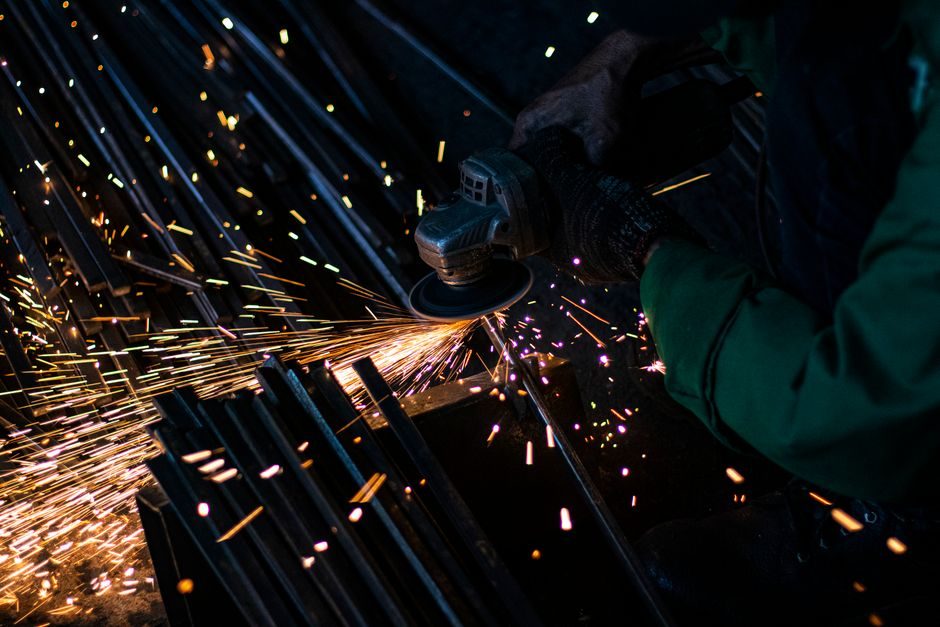
Automotive stamping, forging, and die casting programs in 2026 select from a narrow band of AISI/equivalent tool steels, D2, D3, H13, O1, A2, plus the Indian-market DB6, with grade choice driven by operating temperature, wear mode, and post-heat hardness [S2][S3].
Tool and die steel differs from the AHSS grades being formed: tool steel is the die material that shapes the body-in-white, while AHSS is the workpiece. The tool and die steel encyclopedia entry frames the same grades this article benchmarks against automotive duty cycles [S1].
D2, D3, and DB6: cold work grades for stamping and blanking
D2 and D3 are high-carbon, high-chromium cold work tool steels where wear resistance dominates the selection, and D2 is widely specified for blanking, punching, shear blades, cold forming, and stamping dies that run abrasive sheet [S3]. D3 trades toughness for higher as-quenched hardness, which is why D3 is preferred in cutting dies, thread rolling dies, knives, blades, and cold extrusion tools where cutting-edge retention matters more than impact absorption [S3]. DB6 is positioned as a higher-toughness cold work option, marketed for forging dies, heavy-duty stamping, high-impact tooling, and automotive die manufacturing, with fatigue resistance cited as its main advantage over conventional tool steels [S3]. For shop floors comparing all three, a useful threshold is that coarse carbides (circle-equivalent diameter ≥ 2 µm) should keep the L/T area ratio controlled to limit directional property drift, a metallographic rule that materially affects die life in progressive dies [S5].
H13: the hot work default for forging, extrusion, and die casting
H13 (chromium-molybdenum-vanadium hot work steel) is the default hot work grade specified for forging dies, extrusion dies, die casting tools, and hot stamping dies, with hot hardness retention and thermal fatigue resistance as the two named drivers [S3][S7]. In die casting die service, H13 and A2 are the two grades most commonly named for thermal cycling duty, where dies must resist heat-checking without cracking or losing dimensional accuracy [S7]. Practical selection: H13 is the right grade when the die surface regularly sees temperatures above the temper range of oil-hardening cold work steels; below that line, D2 or A2 will outwear H13 at lower cost. For high-tonnage die casting cells, the aluminum die casting machine reference ties die life back to the steel choice made here.
O1, A2, and S7: the shop-floor generalists
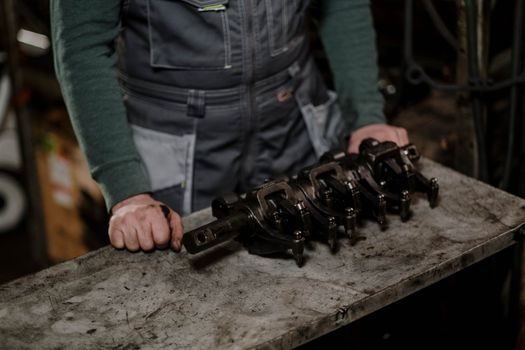
O1 is the oil-hardening, easy-to-machine grade used for general tool and die work, prototype tooling, and short-run blanks where machinability outweighs maximum wear life [S2]. A2 is air-hardening with good dimensional stability, which is why it is named for blanking and forming dies where heat-treat distortion must stay tight [S2]. S7 is the shock-resistant grade, picked for impact tools and forming operations where the failure mode is chipping, not abrasive wear [S2]. For shops that need one grade for prototyping and another for production, O1 to A2 to D2 is a defensible wear-life ladder; for impact-led work, S7 sits outside that ladder.
Selection criteria that actually drive the call
Four variables decide the grade on a real automotive RFQ: operating temperature, dominant wear mode, required post-heat hardness range, and toughness demand. On temperature, H13 is the only grade in this set specified for sustained hot work above ~500 °C; D2, D3, DB6, O1, A2 are cold work grades that lose hardness if run hot [S3][S7]. On wear mode, abrasive sheet and high-volume blanking push selection toward D2 or D3; impact and shock loading push toward S7 or DB6 [S2][S3]. On hardness, D3 reaches the highest as-quenched hardness in this set, with D2 close behind, A2 and H13 sit in a mid-band, and O1 is the softest in the as-supplied condition [S3]. Forging dies for automotive crankshafts and connecting rods, where DB6 is named, sit at the high-toughness corner of the same map [S3]. The gravity die casting machine and die casting machine references are the matching process pages for shops choosing H13.
Carbide control and heat treatment: where die life is won or lost
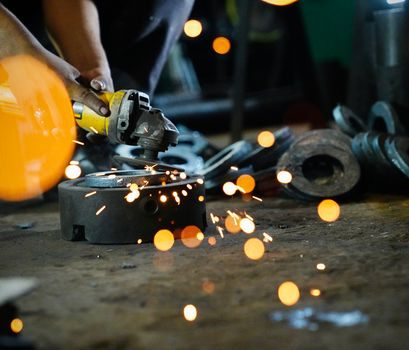
Carbide size, distribution, and morphology drive the performance ceiling of any of these grades, and advanced automotive tooling specs target isotropic carbide distributions to avoid directional property variation that triggers premature die failure [S5]. The quantitative metallography rule cited for these grades is that coarse carbides at or above 2 µm circle-equivalent diameter must keep their L/T area ratio inside a defined band, otherwise die life drops measurably in high-tonnage progressive dies [S5]. Heat treatment windows are grade-specific: D2 and D3 need controlled austenitizing and tempering to hit the wear-resistance target, H13 requires double tempering after quenching to stabilise secondary hardness, and O1 is hardened by oil quenching from a relatively narrow austenitizing range [S3]. Shops that skip the double temper on H13 typically see heat-check failures in the first few thousand die casting cycles; that is the most common field failure mode in 2026 automotive die casting service.
Supply chain and grade availability in 2026
U.S. automotive stamping supply stocks A2, D2, H13, S7, and O1 in flat bar, round bar, and plate, with cut-to-size and Blanchard grinding as standard value-added services for Tier 1 and Tier 2 automotive programs [S2]. Indian mill networks such as the one referenced by Virat Special Steels add DB6, H11, and EN31 to the same selection pool, and DB6 is explicitly pitched to domestic forging and automotive die manufacturing customers [S3]. The additive manufacturing material page is the natural follow-on for shops evaluating conformal-cooled inserts and printed die inserts, which sit beside, not inside, this conventional tool steel map. Two signals to track next: the published 2026 grade-distribution shift between D2 and DB6 in Indian forging die quotes, and any post-heat hardness data released by H13 producers for hot stamping of press-hardened boron steel, since that is where the H13 operating envelope is being pushed hardest. A side-by-side reading of these grades against other forming-related material decisions is also useful context; see Carbon Steel Selection for Oil and Gas: Spec Map and Sour-Service Gates for a different but parallel spec-first approach.