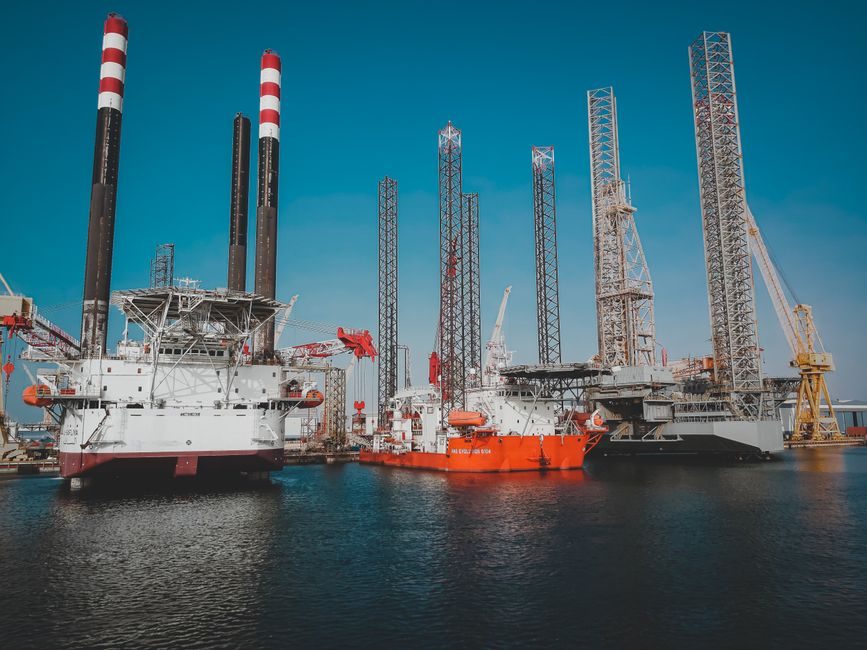
ABS AH36 and DH36, both with a minimum yield strength of 355 MPa, are the workhorse grades for ship hulls, offshore jackets, and primary load-bearing marine structures, with DH36 specified where -20°C toughness is mandatory [S3].
For most hull and structural plate, selection reduces to a corrosion-management problem solved by coatings plus sacrificial anodes rather than a base-material upgrade, which keeps fabricated tonnage within 2-3× the cost of ordinary ASTM A36 plate [S3][S4].
Grade Map: Yield, Tensile, and Toughness Anchors
Marine carbon steel grades are organised by minimum yield strength in 235/275/315/355 MPa tiers; the 355 MPa tier covers AH32/AH36, DH32/DH36, EH32/EH36, and FH32/FH36, with each letter indicating a colder Charpy-V transition (A = 0°C, D = -20°C, E = -40°C, F = -60°C) per the common classification-society scheme cited in the central-steels plate reference [S4]. ABS-certified AH36 plate typically shows 400-520 MPa tensile strength, ≥22% elongation, and Charpy-V ≥34 J at 0°C, while DH36 raises the impact test to 34 J at -20°C [S3][S4]. For general onshore fabrication that feeds marine yards, ASTM A36 sits at 250 MPa yield / 400-550 MPa tensile, with Q235 equivalent at ≥235 MPa yield and 375-500 MPa tensile under GB/T 700-2006 [S5]. Higher strength is delivered through controlled-rolling and microalloying (Nb, V, Ti) rather than higher carbon, which is why the AH/DH/EH/FH family typically holds CE ≤0.45% for weldability [S6].
Standards Governing Plate, Bar, and Pipe
U.S. federal marine rules (46 CFR 56.60-2) now reference the 2021 ASME SA-675 edition, identical to ASTM A675, for special-quality hot-wrought carbon steel bars used in pressure piping components, replacing the 1998 edition previously incorporated [S2]. Plate for pressure vessels in marine service follows ASME SA-455 (high-strength manganese carbon) and SA-442 (improved transition properties, since discontinued but historically referenced), with SA-433 covering quenched-and-tempered grades, all consolidated in the EPRI/ILZRO-style Carbon Steel Handbook lineage [S7]. For pipe couplings, ASTM F682-82a(2023) governs wrought carbon steel sleeve-type couplings, and F1007-18 covers packed-slip pipeline expansion joints for marine piping [S1][S8]. Selection of valve operators, including the manual/electric/hydraulic decision, is formalised in ASTM F1030-86(2023), which complements the bar/pipe spec chain for shipboard piping packages [S1].
Zone-by-Zone Material Choice
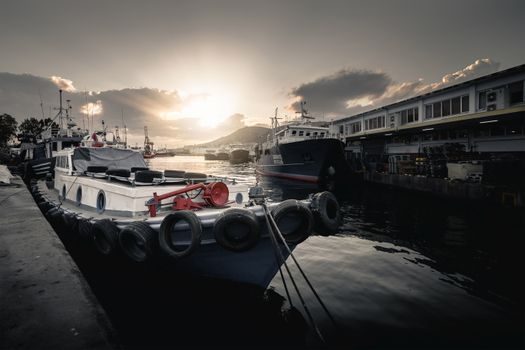
Engineers should map every part to one of three corrosion zones before quoting a grade. The submerged zone (pilings, subsea nodes) accepts marine carbon steel with cathodic protection and coating, because lower oxygen there slows uniform corrosion and makes high-cost stainless uneconomical [S3]. The splash and atmospheric zone (deck hardware, railings, fasteners) sees the most aggressive wet-dry salt cycling and the highest oxygen exposure, so 316 austenitic stainless (2-3% Mo for pitting resistance) is the conservative call; 304 is acceptable for sheltered interiors but fails faster in salt spray [S3]. The structural zone (hull plate, frames, brackets) is the domain of AH36/DH36 plate plus coating plus sacrificial anodes, balancing 355 MPa yield, ≥34 J Charpy-V, and weldable CE at roughly 30-60% of a duplex stainless cost [S3][S4]. Forged bar components that feed this same zone can be specified to ASTM A29/A29M-23 for general requirements, A696 for pressure-piping bar, and A675/SA-675 for special-quality hot-wrought bar used in couplings and flanges [S1][S2].
Carbon vs Stainless vs Alloy: Decision Comparison
Four criteria — yield strength, chloride pitting resistance, relative cost per tonne, and weldability — frame the choice cleanly. Marine carbon AH36/DH36 delivers 355 MPa yield, low pitting resistance (so it needs coating), the lowest cost baseline (1.0×), and excellent weldability with CE ≤0.45% [S3][S4][S6]. Austenitic 316 stainless raises pitting resistance sharply thanks to its 2-3% Mo content, but the yield drops to roughly 200-220 MPa in the annealed condition and cost climbs to about 4-6× carbon steel plate; weldability is good but requires controlled heat input to avoid sensitisation [S3]. Duplex stainless (e.g., 2205) pushes yield to ~450 MPa and pitting resistance even higher, but cost is commonly 5-8× carbon steel and section thickness is limited by hot-forming capability [S3]. For non-structural internals, low-carbon Q235 (≥235 MPa yield, 375-500 MPa tensile) or Q275 (≥275 MPa yield, 410-540 MPa tensile) under GB/T 700-2006 offers the cheapest fabrication stock when classification-society certification is not required [S5]. Engineers specifying for aerospace-adjacent marine work can also review Carbon Steel for Aerospace: Grade Map, Spec Range, and Where It Still Fits for cross-reference on the same base material.
Limitations, Failure Modes, and Inspection Triggers
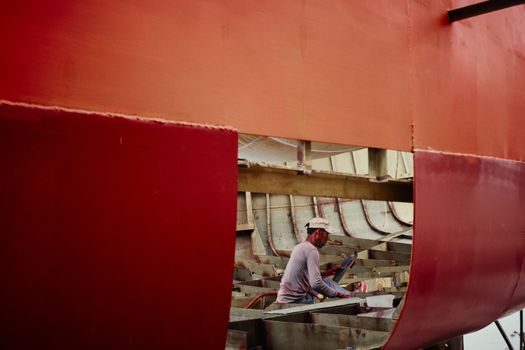
Carbon steel in marine service fails by uniform corrosion, pitting at coating breaks, and lamellar tearing in thick plate, not by SCC under typical hull stress states; the design fix is coating + cathodic protection, with potential held in the -0.8 to -1.0 V Ag/AgCl range for protected hulls [S3]. DH36 must be impact-tested at -20°C with ≥34 J Charpy-V to be valid for cold-route service, and any plate rerolled without normalised rolling can lose this guarantee — request the mill cert and the classification-society stamp before accepting heat-lot substitution [S3][S4]. Stainless 304 in the splash zone is the classic underspec: it survives fresh water but pits aggressively in chloride, so any retrofit should plan a 316 swap on the next refit [S3]. A discussion of carbon steel metallurgy in this encyclopedia entry covers the underlying strength-toughness trade-offs, while stainless steel outlines the Cr/Mo/Ni rationale for 316 and duplex upgrades.
Sourcing, Lead Time, and Documentation
For U.S.-flag and USCG-regulated vessels, bar and plate must trace to ASME SA-675 (2021) for special-quality hot-wrought bar, ASME SA-455/SA-442 lineage for pressure-vessel plate, and ASTM F682/F1007/F1030 for couplings, expansion joints, and operator selection respectively [S1][S2]. Class society approval (ABS, DNV, LR, BV) is non-negotiable for hull plate; expect 6-10 week mill lead time for DH36/EH36 in thicknesses above 50 mm and longer for FH-grade plate below -40°C service [S3][S4]. Plate outside the marine scheme is sometimes offered as A36 or Q235, which is fine for shipboard secondary structure but should never be substituted for AH/DH in primary hulls without a re-test to the relevant impact temperature [S3][S5]. For projects where fabrication also involves casting hardware, the spec map in Squeeze Casting Machine Selection for Hardware Manufacturing addresses the complementary casting side of marine fittings. Verify each heat-lot certificate shows CE (typical ≤0.45% for AH/DH), actual Charpy-V energy at the required temperature, and a classification-society stamp before releasing stock to the fabrication floor.
Component reference pages worth checking: engineering plastic.