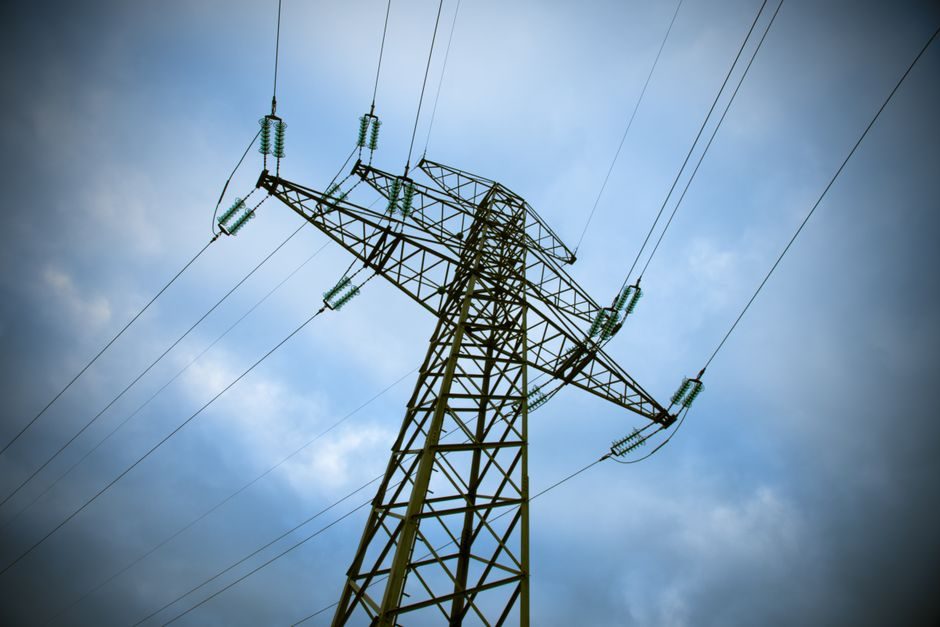
Carbon steel dominates energy-equipment fabrication because it couples predictable mechanical behaviour with global availability, and four AISI grades — 1018 (~0.18% C), 1045 (~0.45% C), 1060 (~0.60% C), 1095 (~0.95% C) — cover the bulk of wind, solar, transformer, and rotating-machinery specifications [S3].
Specifiers in 2026 are navigating the same alloy with three different rule books side-by-side: EN 10025 for structural sections with Charpy values from 27 J at -50°C up to 30 J at -20°C, ASTM/ASME for pressure and rotating equipment, and a growing layer of embodied-carbon constraints that now accompany the mechanical checklist [S5][S2].
Grade-by-grade mechanical envelope for energy duty
AISI 1018 at ~0.18% C is the workhorse for cold-formed pins, shafts, brackets, and low-stress frames; its attraction for energy cabinets, transformer housings, and solar racking is weldability plus a clean surface finish, not raw strength [S3]. AISI 1045 at ~0.45% C is the medium-carbon pivot grade, used for gears, axles, and machine-tool shafts, and after heat treatment it carries noticeably higher hardness than 1018 for the same section size [S3]. AISI 1095 at ~0.95% C is high-carbon, used for cutting tools, springs, and strong wires where edge retention or elastic limit matters more than toughness in a welded structure [S3].
Charpy toughness and low-temperature service
For structural and structural-equipment applications the European route under EN 10025 is the most explicit, with sub-grade suffixes pinning Charpy impact energy to specific test temperatures: a nominal 27 J at -20°C is the default, then L = 27 J at -50°C; for the quenched-and-tempered EN 10025-6 sub-family the codes step through 30 J at -20°C, L = 30 J at -40°C, and L1 = 30 J at -60°C [S5]. The fracture-toughness selection procedure itself is set out in EN 1993-1-10 with the associated UK National Annex, which converts the design scenario into a reference temperature TEd before the sub-grade is picked [S5]. For wind and northern-latitude solar structures, where design metal temperatures routinely sit below -30°C, the L or L1 sub-grades are the safe defaults, not the un-suffixed baseline. For rotating machinery and pressure-containing parts, ASME II-A/B and ASTM A370/A516 govern instead, and the same Charpy-vs-temperature logic applies but with different test coupons and energy-absorption conventions.
Standards landscape: structural vs pressure vs electrical
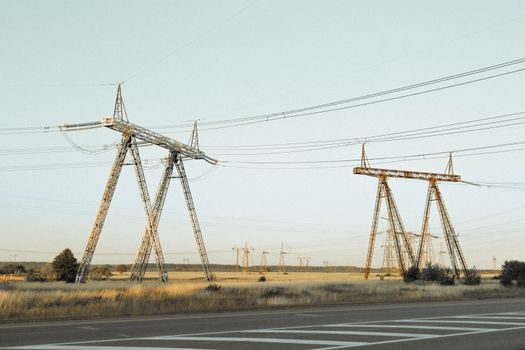
Energy equipment is unusual in that one carbon-steel plate can be in-service under three different code regimes simultaneously: EN 10025-2/3/4/6 for the structure, ASME BPVC Section II or VIII for pressure boundary, and a transformer or motor standard (e.g. IEEE/IEC specifications for electrical steel laminations) for the magnetic core, which is normally silicon steel, not carbon steel — but the tank, frame, and clamping plates are still carbon steel. The most-cited reference for the electromagnetic side remains the metallurgy data book approach, where standard H steels and standard carbon/boron H steels form a separate catalogue from the structural grades [S7]. For procurement, the safest specification is a triple-cite: AISI/UNS grade for chemistry, ASTM/EN product form for delivery condition, and a Charpy sub-grade keyed to the lowest expected service temperature [S3][S5].
Embodied-carbon overlay on grade selection
Selection in 2026 is no longer purely mechanical: each candidate grade carries an embodied-carbon penalty that increasingly shows up in tender scoring. Crude steel production sat around 1,900 Mt in 2020 with a global average emission factor of 1.85 tCO2 per tonne of steel, and roughly 8% of global energy-related CO2 is attributed to steel used in buildings and infrastructure [S2]. Process-level numbers matter for fabrication choices: hot-dip galvanising adds about 0.1–0.3 kgCO2e per kg of steel and runs in a molten-zinc bath at around 450°C, so specifying galvanised members for substation steelwork is a multi-step carbon decision, not just a corrosion decision [S2]. Recycled-route EAF steel can cut energy demand by up to 60–70% versus virgin material, and structural carbon-steel recycling rates exceed 90% in many industrial countries, which means a design that minimises section changes and keeps one grade across an assembly captures most of the available circular-economy credit [S6].
Selection criteria: a four-criteria comparison
Against the four criteria that matter for energy equipment — weldability, strength/hardness, low-temperature toughness, and embodied-carbon cost — the four workhorse grades line up as follows. 1018 leads on weldability and is the lowest-embodied-carbon choice because it is the most recycled commodity, but it sits at the bottom on strength and on Charpy at low temperature, so it is the pick for cabinets, brackets, and non-structural frames. 1045 is the balanced choice: it can be heat-treated to lift hardness meaningfully while still being weldable with preheat and procedure qualification, which is why it shows up in gear-housing walls and shaft sleeves. 1060 trades weldability for higher as-rolled hardness and is the right pick for springs, couplings, and wear parts where joining is mechanical rather than welded. 1095 sits at the extreme end of the AISI carbon-steel range and is reserved for cutting edges, blades, and high-stress springs — in energy equipment it is the least common of the four [S3].
Failure modes and constraints to design around
The three failure modes that drive grade upgrades in energy equipment are brittle fracture at low temperature, stress-corrosion cracking in H2S-containing oil-and-gas service, and fatigue at welded joints. Brittle fracture is addressed by stepping up the Charpy sub-grade in EN 10025 or the impact requirement in ASME, not by adding more carbon — going from 1018 to 1045 actually reduces toughness because higher carbon lowers the ductile-to-brittle transition temperature. Sour-service H2S exposure falls under NACE MR0175 / ISO 15156, which restricts hardness and carbon content rather than specifying a strength floor, and the practical consequence is that high-carbon 1060/1095 are usually excluded in favour of lower-carbon grades with controlled hardness. Welded-joint fatigue is governed by the joint classification, not the parent metal grade, so the carbon-steel selection for a wind-tower flange or transformer-tank weld is driven by the welding procedure and the post-weld heat treatment, not by picking a more exotic parent grade. Specifiers who fix the grade first and the weld procedure second typically overspend on material and underperform on fatigue life. [S3]
Application fit: which grade for which energy asset
For wind-turbine towers and large rotor-hub castings, the dominant specification is structural plate to EN 10025-4 or -6 with the appropriate L/L1 Charpy sub-grade, not a high-AISI number; the grade that wins is the one with the lowest carbon that still meets the section-modulus and toughness requirements. Solar racking and tracker structures are almost entirely AISI 1018 / S235 / S275 territory because the loads are static and the joints are predominantly bolted. Transformer tanks, substation steelwork, and switchgear frames run in the 1018–1045 band with galvanising for corrosion protection, which brings the additional 0.1–0.3 kgCO2e/kg process load already noted [S2][S3]. For hydro, geothermal, and biomass rotating equipment, 1045 dominates shafts and gears, while 1060 is reserved for valve springs and high-cycle loaded components. Squeeze-cast lighting-fixture housings are a separate alloy conversation, but the steel fasteners and frames around them still resolve to 1018 in most designs [S3].
Traceability and certification for energy buyers
Energy-equipment procurement — whether wind, conventional generation, or oil and gas — almost always requires a higher documentation burden than general industrial supply, and the standard ask is material test reports with chemical-composition verification, heat-treatment records, and full process records that demonstrate conformity of critical metallic components [S4]. Forged fittings, turnbuckles, swaged and welded components used in marine and offshore energy service are additionally covered by standards such as ASTM F1145, with marine-engine packages in hazardous locations covered separately by ASTM F2876 for the thermal rating and installation side [S1]. These are the documents that turn a generic AISI callout into a traceable lot, and a supplier who cannot produce them in 2026 is rarely an acceptable source for an energy buyer. Practical next steps for a specifier: lock the Charpy sub-grade against the design reference temperature from EN 1993-1-10 first, then pick the lowest-carbon AISI grade that meets strength, then layer on the recycling-route and process-carbon numbers; the two trackable signals are the mill's EAF-vs-BOF share and the lot-level NACE/ASME documentation, both of which can be requested before purchase rather than audited after delivery. For adjacent spec maps on electronics-grade carbon steel and on cast-component selection, see the Carbon Steel Selection for Electronics: 2026 Grade and Spec Map and the Squeeze Casting Machine Selection for Lighting Fixtures briefs.
Spec-level background on the components involved: carbon steel, energy meter, and anti static equipment.