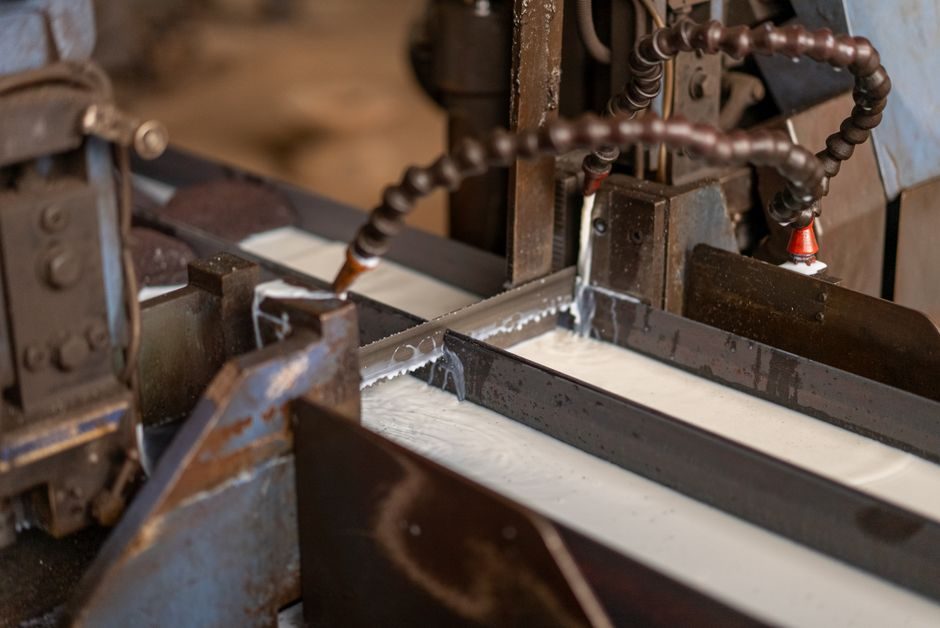
Tool steel buying decisions collapse to three constraints: the dominant failure mode in service (abrasive wear, impact shock, hot-work heat checking, or plastic-mold polishability), the closest AISI letter family — A, D, O, H, S, M, or P — and the cross-reference to a DIN/EN or GB grade a shop can actually source, e.g. 1.2344 (H13), 1.2379 (D2), 1.2738 (P20+Ni).
Current US distributor stocklists show the same working inventory pattern: cold-work grades A2 and D2, shock-grade S7, hot-work H13, oil-hardening O1, plastic-mold P20, plus high-speed M2/M42, with product forms limited to flat bar, round bar, square bar, plate, and decarb-free drill rod [S1][S3].
Cold-Work Tool Steels: A2 vs D2 vs O1 on Wear and Toughness
A2, D2, and O1 all sit in the cold-work family but trade wear resistance against toughness and dimensional stability after hardening — A2 is air-hardening with a good wear/toughness balance, D2 is high-carbon high-chromium with the best wear of the three but lower impact resistance, and O1 is oil-hardening with the simplest heat-treat but the most distortion risk [S1][S3]. For stamping and blanking dies where abrasive wear dominates, D2 (DIN 1.2379) is the default; for short-run tooling where toughness matters more than edge-holding, A2 (DIN 1.2363) wins; for repair-shop and prototype work where the shop lacks a furnace, O1 remains the practical pick.
Stocking distributors carry all three in flat bar, round bar, square bar, and decarb-free drill rod — Southern Tool Steel lists A2, D2, and O1 as separate catalog grades, and Hudson Tool Steel exposes a side-by-side "Compare Cold Work Tool Steels" tool on its technical-data page [S1][S3]. Typical working hardness windows are A2 57–62 HRC, D2 58–62 HRC, and O1 57–62 HRC after tempering; buyers should request the mill cert because chemistry variance — especially Cr and Mo — drives the wear delta more than the hardness number alone.
Shock and Hot-Work Grades: S7, H13, and the 1.2344 Cross-Reference
S7 is specified for shock-loaded tooling — punches, chisels, shear blades — where impact energy is the dominant failure mode, with a typical working hardness of 54–58 HRC after tempering [S1][S3]. H13 (DIN/EN 1.2344, GB 4Cr5MoSiV1) is the workhorse hot-work die steel for die-casting, extrusion, and forging dies running at elevated die-surface temperatures, and it is the grade Chinese mould-steel distributor Sanhexing lists as its flagship supply from EAF/LF/VD/ESR routes with a 800 T/month agreement capacity [S2].
The H13 / 1.2344 / 4Cr5MoSiV1 cross-reference is one of the few that survives intact across AISI, DIN/EN, and GB systems, and procurement teams should pin all three designations on the purchase order to avoid receiving a sub-grade such as H11 by mistake [S2][S3]. For shops that also need to compare metal families broadly, the alloy steel reference and the carbon steel reference put tool steel in context against structural grades. US service center SB Specialty Metals stocks H13 within an inventory of cold-work, hot-work, high-speed, particle-metallurgy, and plastic-mold grades across five locations [S6].
Plastic-Mold Steels: P20, 1.2738 / 718, and Polishability
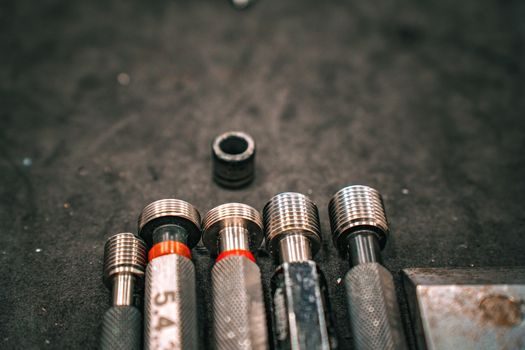
Plastic-mold steels trade hot-work strength for through-thickness hardness, machinability, and the ability to take a mirror polish for optical or high-gloss parts. P20 (DIN 1.2311) is the baseline pre-hardened ~30–32 HRC mold steel, and the nickel-bearing upgrade 1.2738 / 718 (3Cr2MnNiMo) adds toughness and through-hardening for larger molds — both are routinely stocked by US service centers and Chinese mould-steel distributors alike [S2][S3].
For molds demanding higher polishability or photo-etching, 420 stainless mold quality (S136 / 1.2083 equivalent) appears on the Hudson Tool Steel grade list alongside P20 and 1.2738 [S3]. When the application also involves a wear-prone slide or insert, the spec can mix a P20/1.2738 cavity block with a D2 or A2 core — that hybrid is common in long-run injection tooling and is one of the few places the tool die steel encyclopedia entry helps frame the decision.
High-Speed and Particle-Metallurgy Steels: M2, M42, CPM Grades
M2 high-speed steel is the standard HSS grade for cutting tools, drills, and taps, and M42 (a cobalt-bearing HSS) is the upgrade for higher hot-hardness and red-hardness on tough workpieces like aerospace alloys [S3]. Both are stocked in standard sizes by US service centers including Hudson Tool Steel, alongside CPM (Crucible Particle Metallurgy) grades 1V, 3V, 4V, 9V, 10V, 15V, and PM M4/PM T15/PM M48 for cold-work and die applications demanding more wear or impact resistance than conventional ingot metallurgy can deliver [S3].
For wear-critical cold-work tooling such as thread-rolling dies, powder-metallurgy CPM 10V (AISI A11 equivalent) typically outlasts D2 by a wide margin in field wear tests; the trade-off is cost per kilogram and longer grinding cycles during fabrication. Buyers should also note the tool die steel encyclopedia entry for cross-family terminology, since some mills still label the same chemistry under different trade names (e.g., CPM M4 vs PM M4). Hudson Tool Steel's ISO 9001:2015 certification covers its HSS and tool-steel inventory, which matters when a mill cert is required for the end-customer [S3].
Forms, Sizes, and Mill-Cert Discipline
Distributor inventories in 2026 cluster around the same product-form matrix: flat bar, round bar, square bar, plate, and decarb-free drill rod, with cut-to-size and saw-cut plate as standard services [S1][S3][S6]. Southern Tool Steel explicitly lists tool steel plate, tool steel bar, tool steel round bar, tool steel square bar, and tool steel flat bar in its catalog, and SB Specialty Metals runs a five-service-center network stocking cold-work, hot-work, HSS, particle-metallurgy, and plastic-mold grades [S1][S6].
Decarb-free drill rod is a separate product class — surface decarburization is removed at the mill, which matters for any tool where the surface is the wear surface, e.g., punches and ejector pins [S1]. For specialized procurement — open-die forgings, custom cuts, BS970 and BS EN ISO 4957 grades, or specialty ingot casting — UK stockholder Breitenfeld and UK family-run stockist Steel0 cover European-spec material with ISO 9001-accredited supply [S4][S10], while UK steel foundry Micron Alloys casts tool-steel shapes from 1989 onwards for furnace, marine, and railway applications [S7].
Selection Criteria: A Decision Table for the Buyer
Step 1 is to name the dominant failure mode; step 2 is to pick the AISI family that handles it; step 3 is to lock the DIN/EN or GB cross-reference on the PO. The table below is the working shortlist a process engineer should walk through before opening a quote request — it is built from the grades and equivalents surfaced in the source set, not invented market data. [S3]
Decision matrix by duty: (1) abrasive wear, cold-work, no impact → D2 / 1.2379, target 58–62 HRC; (2) cold-work with impact → A2 / 1.2363, 57–62 HRC; (3) repair-shop simplicity → O1, 57–62 HRC, oil quench; (4) shock / shear / punch → S7, 54–58 HRC; (5) hot-work die casting / extrusion / forging → H13 / 1.2344 / 4Cr5MoSiV1, 48–52 HRC; (6) plastic mold, small-to-mid size → P20 / 1.2311, pre-hard ~30–32 HRC; (7) plastic mold, large cavity, through-hardened → 1.2738 / 718 / 3Cr2MnNiMo; (8) high-wear cold-work with extended life → CPM 10V / A11-class PM; (9) cutting tools, general → M2 HSS; (10) cutting tools, aerospace or high red-hardness → M42 [S1][S2][S3].
Who Should NOT Default to D2 or H13
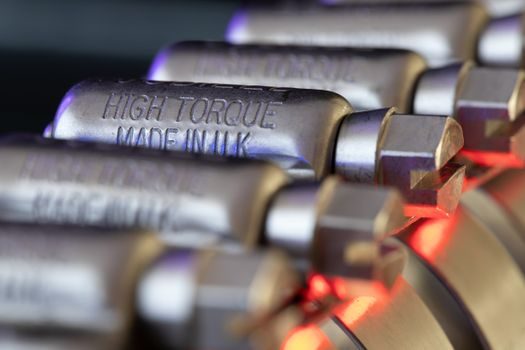
D2 is the wrong pick for any application with a real impact or bending load — the same high-Cr, high-C chemistry that gives D2 its wear resistance is what makes it chip under shock; in those duties, A2 or S7 will outlast D2 in service hours, not on a hardness chart. H13 is similarly the wrong default for cold-work stamping, where its hot-work tempering temperature (~580–620 °C) leaves the steel too soft to hold a cutting edge at room temperature; the cost of a hot-work-grade misapplied as a cold-work die shows up as edge rounding within the first few thousand strokes [S1][S2][S3].
P20 / 1.2738 is the wrong pick for any tooling that sees die-surface temperatures above ~300 °C (die casting, hot runner, sintering) — for those duties, escalation to H13 or even a higher hot-work grade is mandatory. For cutting tools, an M2 mis-pick on titanium or Inconel workpieces will burn the cutting edge; the cobalt-bearing M42 or a PM HSS such as PM M48 is the correct spec there [S3].
Standards, Sourcing, and What to Pin on the PO
The relevant designation system is AISI/SAE in the US, DIN/EN (notably EN ISO 4957 for tool steels) in Europe, and GB/T in China, with cross-references that are reliable for the major grades: D2 ≈ 1.2379 ≈ SKD11; H13 ≈ 1.2344 ≈ 4Cr5MoSiV1 ≈ SKD61; P20 ≈ 1.2311; P20+Ni ≈ 1.2738 / 718 ≈ 3Cr2MnNiMo [S2][S3][S4][S10]. US service centers such as Hudson Tool Steel are ISO 9001:2015-certified, which matters when a mill cert is required by the end customer; the cert should report C, Cr, Mo, V (and Co for M42 / PM grades) plus the heat-treatment condition and hardness [S3].
Sourcing signals worth tracking: Chinese mould-steel distributor Sanhexing reports EAF 25T, LF 20T, VD 20T, and ESR 1–10T capacity under 800 T/month agreements with Schmiede werke Gröditz, Baosteel, and Fushun special steel, with shipments to Gree, Midea, Foxconn, and BYD as well as exports to the Middle East, northern Europe, and South America [S2]; US distributor SB Specialty Metals runs five service centers stocking one of the largest tool-steel and specialty-metals inventories in the country [S6]; UK-based Breitenfeld combines stockholding with an in-group open-die forging plant (Breitenfeld Schmiedetechnik) for forged tool-steel blanks [S10]. For a broader view of the steel-family landscape, the silicon steel encyclopedia entry and the linear guide encyclopedia entry frame where tool steel sits versus other specialty and structural grades used alongside it on machine tools.
This topic is covered further in Steel Strand Installation Guide: Spec Bands, Stressing Windows and Failure Modes.