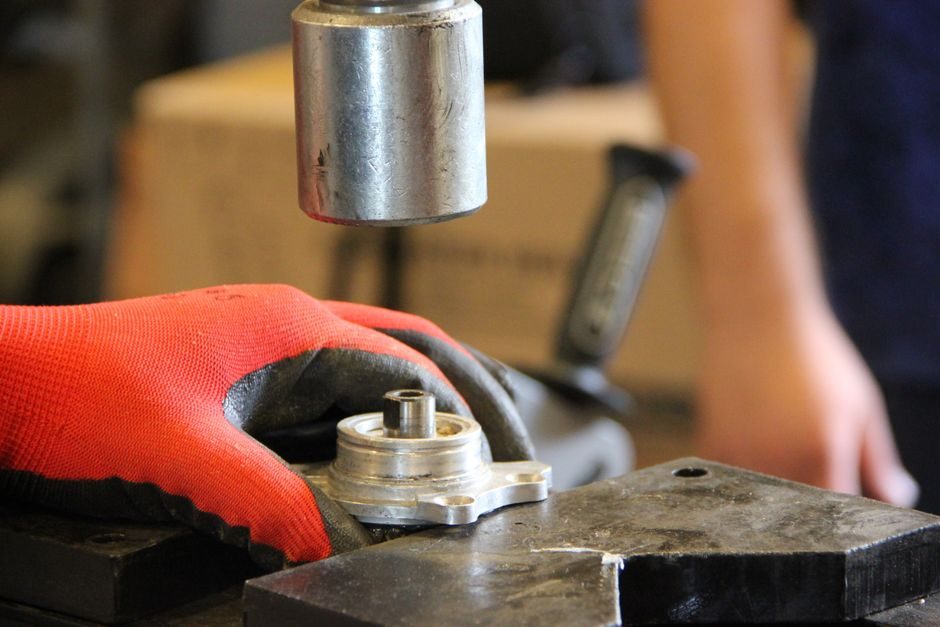
ISO 13726:2026, Edition 3, published 2026-03 by ISO/TC 131/SC 3, replaced the 2008 edition and re-pinned accessory mounting dimensions for single-rod compact cylinders rated 16 MPa (160 bar) with bores from 250 mm to 500 mm built to ISO 6020-3 [S1].
The standard covers six accessory codes: AP2 rod clevis (internal thread), AP4 rod eye (plain, internal thread), AA4-L pivot pin with locking plate, AL6 locking plate, and AA4-S / AA4-R plain pivot pins — all keyed to ISO 6099 identification [S1]. Maximum accessory forces derive from pressures and bore diameters specified in ISO 2944 and ISO 3320, and the document is 8 pages priced at CHF 67 [S1].
What ISO 13726:2026 Actually Changes for Spec Writers
The DIS ballot closed 2025-05-20, FDIS proof went to the secretariat 2026-01-05, and publication followed in 2026-03, making 2026 the first year procurement documents can cite Edition 3 [S1]. The scope is deliberately narrow: it is NOT a cylinder performance standard — that role stays with ISO 6020-3 — it only locks the interface so a 250 mm bore clevis from one supplier mates to a trunnion cap from another without rework [S1].
Design-force calculation in the new edition still references ISO 2944 (pressure ratings) and ISO 3320 (bore / rod force verification), so a buyer cannot use ISO 13726 alone — it must be read with those two companion fluid-power standards [S1]. For engineers who maintain a single interchangeability reference on the shop floor, the 8-page PDF is a drop-in replacement for the 2008 edition; tooling and fixture drawings keyed to the old code can be reissued without altering the host cylinder print.
Who the Standard Is For — And Who It Is Not For
ISO 13726:2026 is intended for procurement, quality and fixture-design engineers specifying tie-rod, welded or mill-type single-rod cylinders in the 16 MPa compact series, where bore 250-500 mm is the common mobile-equipment and press-shop envelope [S1]. It applies to OEM and MRO interchangeability, not to custom hydraulic actuators for subsea, aerospace or explosive-atmosphere service, which use different dimensional and certification regimes.
It is NOT a standard for hydraulic actuator selection, nor does it grade seal kits, rod coatings, or fatigue life — those sit in ISO 6020-2, ISO 10100 and OEM proprietary specs. If a project requires ATEX/IECEx certification, ISO 13726 will not substitute for the explosive-atmosphere conformity assessment; the buyer must still verify the cylinder builder’s Ex rating separately.
Chinese 2026-Spec Hydraulic Cylinder Suppliers Active in the Sourcing Market
Dongguan Union Industry lists 3 active products on its Made-in-China showroom, including an Avigo-General thin hydraulic cylinder at FOB US $95/piece, ISO9001-certified, double-acting, piston-type structure, with MOQ 1 piece [S3]. Guangzhou Henghuan Machinery Co., Ltd (Baiyun District, Guangdong) operates a 2026 hydraulic cylinder catalog across North America, South America and Eastern Europe export markets [S6].
HUANFENG runs a dedicated product line covering hydraulic cylinders for aerial work platforms and truck cranes, marketed explicitly as a top Chinese double-acting cylinder manufacturer [S5]. HPS Asia, with 30 years of hydraulic knowledge and a 15-year Codipro partnership, opened a Shenzhen distribution arm to cover more than 18 countries, and styles itself as creator of the block cylinder [S4]. Protorque Precision Machinery (Wuxi) lists hydraulic cylinders alongside torque wrenches and hand pumps in its 2026 supplier profile, with last-login dated late 2025 [S7].
For a buyer cross-referencing a 250-500 mm bore build to ISO 6020-3 / ISO 13726:2026, the practical question is whether the Chinese supplier can produce the AP2/AP4/AA4 accessory interface to the new code, or only to the 2008 code. A single-supplier quote sheet rarely states the standard edition, so the RFQ should pin "accessories per ISO 13726:2026 (Edition 3)" explicitly.
Spec Cutoffs and Price Bands Seen on 2026 Listings
Across the Made-in-China hydraulic-cylinder search index, single-post two-post hydraulic parking-lift cylinder packages list in the US$1,580 zone, reflecting a finished-assemblies tier rather than bare cylinders [S8]. Entry-level thin-cylinder FOB sits at US$95/piece for an ISO9001 double-acting piston unit from Dongguan Union Industry [S3].
For larger 250-500 mm bore 16 MPa builds, the bare-cylinder price band is materially higher and is normally quoted against drawing release rather than a posted catalog number — consistent with how hydraulic cylinder OEM pricing works in this size class. The price gap between thin mobile cylinders and mill-type industrial cylinders is typically a function of bore, stroke, rod diameter and seal package, not just material grade; stainless rod and chrome-plated carbon-steel rod can differ by 20-40% on like-for-like dimensions.
Decision Map: Standard Cylinder vs Block Cylinder vs Custom Actuator
For procurement teams choosing among 2026 offerings, three option families dominate: ISO 6020-3 compact single-rod cylinders with ISO 13726:2026 accessories, HPS-style block cylinders, and custom hydraulic actuator designs for subsea or explosion-proof duty. [S1]
On interchangeability, ISO 6020-3 + ISO 13726:2026 wins because accessory codes are pinned, which means a buyer is not locked to a single factory. On footprint, block cylinders (HPS Asia [S4]) win where the machine designer needs an integrated manifold and valve cavity. On certification scope, custom actuators win for ATEX/IECEx, marine class or nuclear service, but lose on lead time and unit cost. The standard compact series loses on corrosion — chrome-plated carbon-steel rod in salt-air or chemical exposure needs a separate material call-out, since ISO 13726 does not specify rod material or coating [S1].
Standards Stack to Read With ISO 13726:2026
Buyers should keep ISO 6020-3 (compact series dimensions), ISO 6099 (accessory identification codes), ISO 2944 (pressure ratings), ISO 3320 (force verification) and ISO 10100 (seal housing) on the same shelf — ISO 13726:2026 only completes the accessory interface, the rest of the cylinder design chain stays in those companion documents [S1]. For a hydraulic power unit integration, ISO 4413 governs hydraulic fluid-power system rules and should be cited in the system-level drawing, not on the cylinder print.
For servo or proportional applications, the cylinder selection needs to be cross-referenced to the hydraulic valve and hydraulic pump sizing on the circuit diagram, because ISO 13726 says nothing about damping, breakaway pressure or stick-slip behaviour. Standard cylinder suppliers rarely publish a measured breakaway-pressure figure; the buyer should request it as part of the RFQ if the application is a high-cycle press or a precision stop.
Limits, Failure Modes and RFQ Watch-Outs
ISO 13726:2026 does not grade materials, surface treatments, seal compatibility or fatigue life — those are the four areas most often mishandled in cross-supplier substitution. A buyer can swap a cylinder on paper because the bore and stroke match, but the rod-end accessory code being identical does not guarantee identical fatigue rating, identical salt-spray performance, or identical seal compound. [S1]
The DIS ballot ran 12 weeks and closed 2025-05-20 with approval for FDIS, so any factory claiming "ISO 13726:2026 compliant" before 2026-03 publication is overstating its position; a 2026 RFQ should ask for the supplier's drawing revision date and the standard edition cited in the title block [S1]. For plants running a mix of 2008-edition and 2026-edition accessories, the pivot-pin code AA4-L/AA4-S/AA4-R is unchanged, but the force tables are derived from the latest ISO 2944 / ISO 3320 reference, so a direct numerical comparison against an old print can be misleading without re-checking the force inputs.
Watch signals in the second half of 2026: the next ISO/TC 131/SC 3 work cycle on the compact series, any supplier update that pins Edition 3 in drawing headers, and any revision of ISO 6020-3 itself — the latter would be the bigger spec event for 16 MPa cylinder buyers, since ISO 13726:2026 is a downstream accessory document.
For related coverage, see Ferrochrome Market 2026: Stainless Steel Pulls FeCr Toward USD 30.59Bn by 2030.