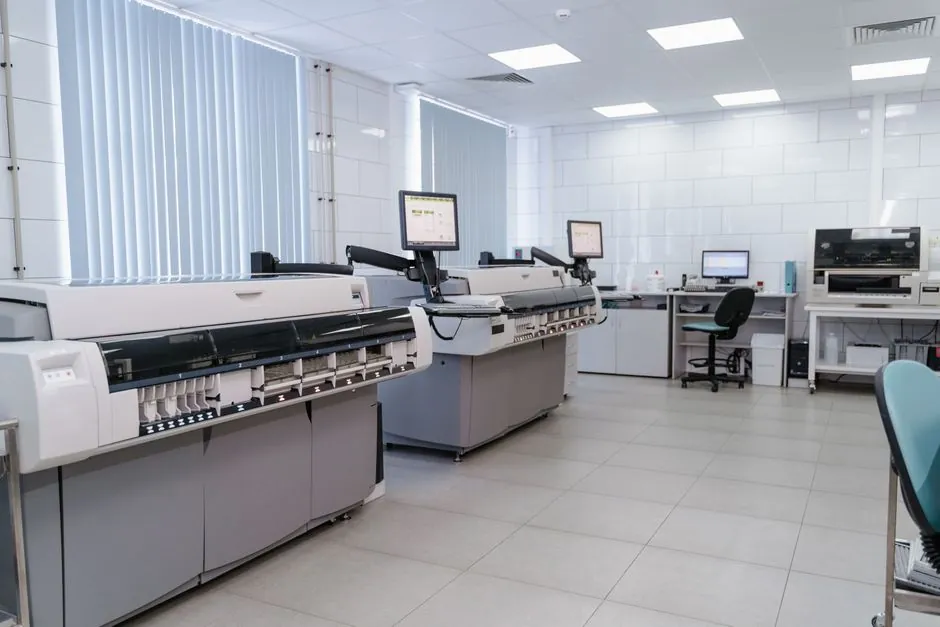
Syntegon Technology GmbH (Germany), IMA Industria Macchine Automatiche S.p.A (Italy), GEA Group Aktiengesellschaft (Germany), and ACG (India) sit at the top of the 2026 pharmaceutical manufacturing equipment supplier list, ahead of Thermo Fisher Scientific, Körber AG, Coperion, Romaco, Marchesini, and Bausch+Ströbel [S5].
For comparison, the global pharmaceutical packaging machinery market runs on a separate, faster curve: USD 6.43 billion in 2025, projected USD 17.68 billion by 2035, equating to a 10.64% CAGR across the 2026-2035 window [S2]. Mordor Intelligence values the broader pharmaceutical equipment market at USD 26.35 billion in 2026, growing at 5.16% to USD 33.87 billion by 2031 [S6]. Picking a line on a flow meter or a clean-in-place skid without checking the OEM validation stack is the most common mistake buyers make on these projects.
How the 2026 supplier list is structured
The 2026 shortlist divides into three functional clusters: process equipment (GEA, Glatt, Romaco, Coperion, Fette Compacting), packaging machinery (Syntegon, IMA, Marchesini, Bausch+Ströbel), and integrated or turnkey line builders (IMA, Syntegon, GEA, ACG) [S3][S5]. This split matters because the validation burden differs: a single granulator from GEA triggers IQ/OQ on a defined scope, while a turnkey IMA aseptic line pulls in robotics, lyophilization, and restricted-access barrier system documentation as one package [S5].
Inside the top 11, German and Italian OEMs dominate: Syntegon, GEA, Sartorius, Romaco, Fette Compacting, Glatt, Bausch+Ströbel, and Bosch/Syntegon on the German side, plus IMA and Marchesini from Italy [S3]. ACG (India) and Canaan (China) round out the field as the primary non-European suppliers for solid dosage and capsule technology [S3]. A reader scoping a new oral solid dose facility in 2026 will, in practice, be benchmarking one of these ten names.
Market size and growth signals
The pharmaceutical manufacturing equipment market is valued at USD 21.24 billion in 2026, expanding to USD 30.39 billion by 2032 at a 6.2% CAGR [S5]. Packaging-only machinery carries the higher growth rate, from USD 6.43 billion in 2025 to USD 17.68 billion by 2035, a 10.64% CAGR that reflects biologics, injectables, and serialization investment [S2]. Mordor Intelligence places the total addressable pharmaceutical equipment spend at USD 26.35 billion in 2026, reaching USD 33.87 billion by 2031 at 5.16% [S6].
Capital deployment behind those numbers is concrete. In January 2026, IMA partnered with Sharp Sterile Manufacturing to expand a sterile filling facility in Massachusetts, installing a fully automated isolated filling line for ready-to-use vials with integrated robotics, weight control, and lyophilization [S5]. In February 2026, AbbVie committed USD 380 million to new pharmaceutical manufacturing facilities incorporating advanced manufacturing technologies and artificial intelligence, which directly pulls orders through the OEM channel [S2]. The combined signal is that sterile injectable capacity, not commodity OSD, is where the 2026 capital concentrates.
Selection criteria: what separates the leaders from the rest
Five factors separate the 2026 top tier from mid-tier suppliers: equipment range, GMP/FDA compliance, validation support (IQ/OQ/PQ depth), automation level, and global service footprint [S3]. IMA scores high on all five because its portfolio spans granulation, freeze-drying, aseptic filling, labelling, and end-of-line packaging across IMA Active, IMA Life, IMA Safe, and IMA End of Line brands [S5]. GEA scores high on process engineering depth and large-scale sterile capacity; Syntegon scores high on packaging line throughput and digitalization [S3].
For a comparison snapshot: Syntegon leads on packaging throughput and digital services, IMA on integrated aseptic and solid dose lines, GEA on process engineering and large fermenter/spray dryer scope, and ACG on capsule technology and India-based cost-competitive solid dose lines [S3][S5]. Buyers looking at a sterile injectable build in 2026 should default to IMA, Bausch+Ströbel, or Syntegon; buyers scoping OSD scale-up should benchmark Fette Compacting, Romaco, ACG, or GEA. Specifying pressure transmitter ranges on a clean-steam loop without a vendor-supplied data sheet is a recurring audit finding.
What each top company actually makes
Syntegon (formerly Bosch Packaging Technology) builds capsule fillers, blister packaging lines, and turnkey processing and packaging cells, with current emphasis on sustainability, digitalization, and advanced automation [S3]. IMA delivers tablet and capsule processing equipment, granulation, freeze-drying, aseptic filling (IMA Life, IMA Safe), labelling, and end-of-line packaging [S5]. GEA provides granulators, dryers, fluid bed systems, and large-scale process skids for both OSD and sterile applications [S3][S5].
ACG (India) specializes in capsule manufacturing technology and capsule filling machines, serving as the cost-competitive alternative to European capsule equipment for generic producers [S3]. Fette Compacting focuses exclusively on tablet compression, with high-speed tablet presses as its flagship [S3]. Marchesini Group (Italy) supplies cartoning, filling, and packaging automation, typically at the end-of-line stage [S3]. Romaco (Germany) covers granulation and tableting for OSD, while Glatt (Germany) anchors fluid bed granulation and drying [S3]. Sartorius is the German outlier, focused on biopharma filtration, bioreactors, and single-use systems, not OSD [S3]. Bausch+Ströbel stays tightly focused on aseptic filling and sealing for ampoules, vials, and pre-filled syringes [S3]. For a deeper look at packaging line integration, the filling machine suppliers 2026 map breaks down aseptic versus liquid oral hardware in detail.
Standards, validation, and GMP load
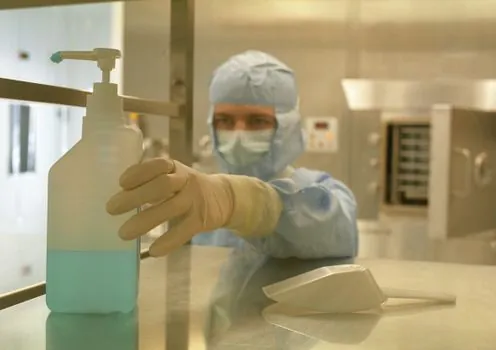
Pharmaceutical equipment selection in 2026 is governed by GMP compliance, FDA process validation guidance, and IQ/OQ/PQ documentation depth rather than headline throughput [S3]. Buyers should require documented FAT/SAT protocols, material certificates for product-contact parts (typically 316L stainless steel with documented surface finish, usually Ra ≤ 0.8 µm for injectable product paths), and validated clean-in-place / sterilize-in-place loops for any aseptic train [S3].
The market is being pulled by a specific regulatory pressure point. The World Health Organization and UNODC reported in 2025 that contaminated medicines caused more than 300 deaths since 2022 across Africa, Asia, and the Pacific, which is pushing WHO, FDA, and EU GMP inspectors toward stricter traceability and tamper-evident packaging requirements [S2]. In practice, this shifts 2026 procurement priorities toward serialization-capable packaging lines, vision inspection, and digital batch records, three areas where Syntegon, IMA, and Marchesini have already shipped production hardware [S2][S3]. Buyers who treat these as optional are signing up for retrofit cost within 24 months.
Risks, constraints, and what to track next
The main 2026 risk is lead time, not pricing. Sterile filling lines from IMA, Bausch+Ströbel, and Syntegon are routinely quoted at 14-18 months from purchase order to FAT, and lyophilizer-integrated aseptic skids run longer [S5]. A second risk is validation rework: OEMs whose IQ/OQ templates are not pre-aligned to the buyer's CSV framework force duplicate documentation cycles, which is why the measuring instruments 2026 spec guide is worth scanning even for process engineers, since sensor and instrument validation rides on the same audit trail.
Trackable signals for the rest of 2026: additional AbbVie-style capacity announcements (USD 380M in February 2026 sets the new baseline for a single-site announcement) [S2], further sterile-filling partnership deals like the IMA-Sharp Massachusetts expansion in January 2026 [S5], and any Indian or Chinese OEM breaking into aseptic filling at FDA-acceptable documentation depth, which would compress pricing on the European incumbents within 12-18 months [S3].
Component reference pages worth checking: ndt equipment.