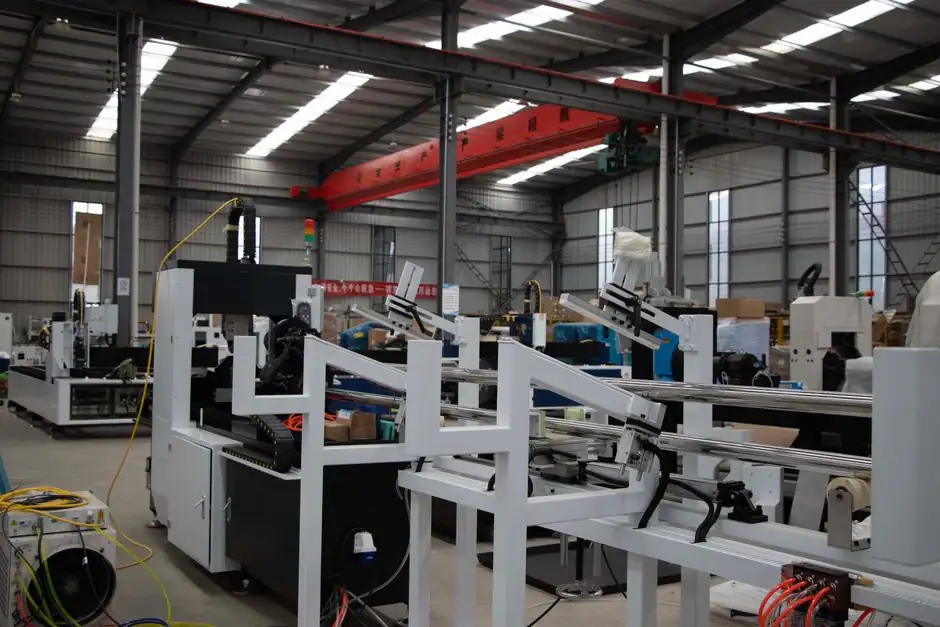
Independent B2B directories list more than 650 filling machine manufacturers and distributors globally as of 2026, with North American specialists concentrated in Pennsylvania, Illinois and the Midwest [S1][S5].
The supplier base spans tabletop piston fillers for low-volume batches to fully integrated aseptic vial lines, and the practical decision for a process engineer is which technology family matches the product, container and throughput target before a vendor is even named [S5].
Supplier tiers and what each one actually sells
Direct-from-OEM suppliers such as Philapack LLC, operating from Huntingdon Valley, PA since 1959, focus on piston fillers, cartridge fillers, dry-product cup fillers and tabletop units, and openly publish customization for viscosity and container geometry [S2][S3]. Mid-tier builders including All-Fill, Oden Machinery and Filling Equipment Inc. cover semi-automatic and automatic liquid and powder machines, with All-Fill listing auger, vibratory, volumetric cup, piston and VFFS baggers on a single product page [S2][S4][S6]. Independent marketplaces such as FillingMachines.com act as RFQ aggregators, vetting each request before routing to suppliers whose equipment matches the stated product, container and rate [S5].
The GlobalSpec industrial sourcing index records 656 active filling machine manufacturers and distributors on its category page, useful as a first-pass count when scoping a sourcing project [S1]. The mix means a buyer can either approach a single OEM with a custom spec or push one RFQ to a curated network, which is usually the faster route when the filling technology is still under evaluation [S5].
Nine filling technologies buyers shortlist against
For liquids, the standard shortlist is piston, gravity, overflow, pump, flow-meter, peristaltic and time-pressure; for powders and dry product, auger, volumetric cup and net-weight dominate; for preformed containers, VFFS, premade pouch and tube fillers round out the field [S5]. All-Fill's product page explicitly markets auger fillers for powders, vibratory fillers for free-flowing items, and piston fillers for liquids as the three core dosing mechanisms on its VFFS platform, which is a useful sanity check on the taxonomy [S4].
Piston vs. overflow is the most common liquid-vs-liquid decision: overflow is preferred for foamy products because it fills to a consistent level, while piston fillers deliver higher accuracy on viscous products and can be set to a fixed volume per stroke [S4][S5]. For free-flowing pellets, tablets and capsules, vibratory feeders and counting heads typically beat auger or volumetric cup fillers on both accuracy and gentle handling, which matters for nutraceutical and pharmaceutical SKUs [S4][S5].
Semi-automatic vs. automatic: the real trade-off
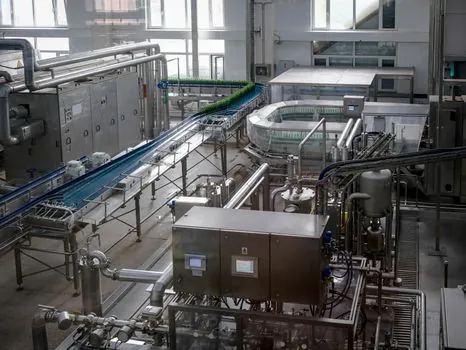
Semi-automatic filling machines are the cost-effective choice for small and medium producers with variable SKUs, because they accept manual container loading in exchange for lower capital cost and simpler maintenance [S4]. Automatic machines deliver high-speed, consistent performance for continuous production, with a higher initial investment that is justified by labor reduction, scrap reduction and steady fill weight on long runs [S4].
All-Fill positions automatic weighing and filling platforms, including VFFS, as tools to cut labor, reduce material waste and lift throughput versus manual batching, with the caveat that each bag is filled to an exact target weight or volume to eliminate overfills and underfills [S4]. For a buyer, the practical rule is that a line below roughly 30 containers per minute rarely justifies the cost delta of going fully automatic unless cGMP or sanitary design forces it [S4][S5].
Industry fit and regulatory overlay
Supplier directories segment buyers by food, beverage, dairy, pharmaceutical, nutraceutical, chemical, household products and automotive fluids, and each segment implies a different duty cycle, surface finish and documentation package [S5]. Pharmaceutical and sterile filling requires cGMP-compliant aseptic fillers for vials, syringes, bottles and tubes, which is a separate supplier tier from general industrial packagers [S5].
For chemical and household products, compatibility with solvents, acids and surfactants is the gating spec, and a filling machine selected purely on throughput will fail if seals, wetted parts and CIP cycles are not matched to the chemistry. For dose-by-weight applications in food and pharma, a filling weighing scale integrated into the line is the practical way to hit net-weight tolerances on powders and granules without overspec'ing the volumetric stage [S4][S5].
How to run an RFQ without wasting a week

FillingMachines.com routes one detailed RFQ to suppliers whose equipment fits the product, container and rate, rather than blasting the whole directory, which shortens vendor response time on technical-fit questions [S5]. A disciplined RFQ should state the product viscosity or bulk density, target container size and material, required accuracy in percent or grams, target rate in containers per minute, and the cleaning or sterilization regime expected of the line [S4][S5].
OEMs such as All-Fill offer lab testing services to confirm that a chosen dosing mechanism works on the actual product before tooling is cut, which is the single most effective step to avoid commissioning surprises [S4]. For buyers integrating filling into a wider material-handling line, conveyor and dock-equipment decisions are often the gating item on installation, and the overhead conveyor types and classifications: a 2026 selection reference covers the upstream side that feeding a filler at rated throughput. Where bag and pouch output is being added, the filling scale selection for e-commerce fulfillment: a spec map lays out the weigh-and-fill side of the same problem.
What to verify before signing a PO
Confirm the supplier's installed base in the relevant industry, ask for a list of repeat customers running the same product class, and request a factory acceptance test plan that includes accuracy, repeatability and changeover time on the actual container [S4][S5]. For sanitary or sterile applications, ask for documentation against 21 CFR or equivalent cGMP clauses, surface finish certificates on wetted parts, and validation protocols for CIP and SIP cycles [S5].
Track two signals over the next quarter: how many suppliers on the directory add aseptic vial-filling SKUs as the pharmaceutical outsourcing wave continues, and whether mid-tier OEMs like All-Fill, Oden and Philapack expand their customization options for sustainable packaging formats such as mono-material pouches [S3][S4][S5][S6].
For component-level specifications, see construction machinery and equipment.