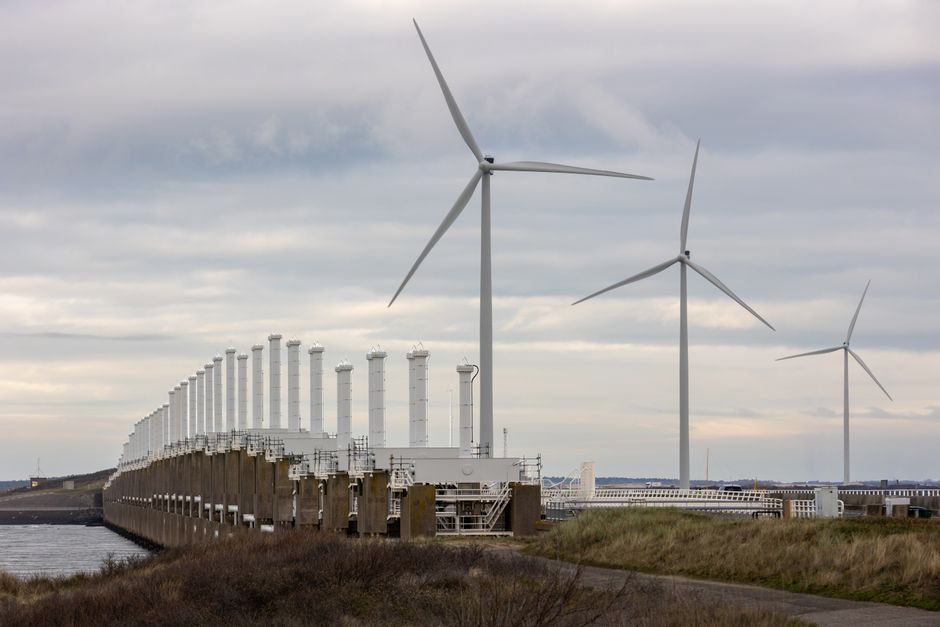
Wind turbine sourcing in 2026 is shaped by a tri-polar reality: European OEMs dominate the utility-scale offshore and onshore segments, Chinese manufacturers are scaling aggressively across the 1 kW to 300 kW class with CE certification, and the wind turbine components market is forecast to expand briskly through 2030 [S7].
The reference event on the engineering calendar is the 2026-06 Düsseldorf Wind Turbine Blade Manufacture congress, where value-chain experts convene on blade design, materials, inspection/testing, O&M, and end-of-life recycling as rotor diameters continue to grow and OEMs face margin pressure from low-cost blade competition [S8].
Utility-Scale OEM Landscape: Who Still Owns the Megawatt Class
At utility scale, the 2026 OEM field is consolidated around five European and Asian players: Vestas (Denmark), Siemens Gamesa (now Siemens Energy, Germany/Spain), GE Vernova (USA), Goldwind (China) and MingYang (China). European OEMs retain leadership in offshore via direct-drive and modular nacelle architectures, while Chinese OEMs lead onshore capacity additions through scale and domestic supply integration [S7].
The differentiation metric in 2026 is rotor diameter per MW rating, not nameplate MW. Larger swept area drives LCOE down, which is why blade manufacturing has become the bottleneck: blade moulds, dry-fibre infusion, and in-field NDT for >100 m blades now determine OEM throughput more than nacelle assembly. This is the precise gap the 2026-06 Düsseldorf congress is positioned to address [S8].
Gearbox versus direct-drive remains the architectural split. Direct-drive permanent-magnet machines eliminate the gearbox failure mode but bind the OEM to rare-earth magnet supply chains and to large-diameter stator winding. Geared drivetrains with medium-speed PMSG or DFIG converters are the dominant cost-engineered choice for onshore 3-6 MW platforms. Procurement teams should track IEC 61400-27-1 type-validated simulation models when comparing availability claims between the two architectures.
China Micro/Utility Turbines: CE-Certified, FOB-Banded, MOQ-Driven
The China-supplied small-wind segment is the most active 2026 sourcing lane. Made-in-China lists CE-marked vertical-axis turbines (30 kW, 50 kW, 100 kW, 200 kW, 300 kW) at US$1,400-1,800 per piece FOB with 1-piece MOQ from Cemi (Suzhou) Intelligent, and CE-certified low-rpm 800 W units at US$400-450 per set from Wuxi Rexco Technology [S6].
Mid-range horizontal-axis turbines (1 kW, 2 kW, 3 kW, 5 kW, 10 kW) for off-grid and on-grid hybrid use are listed at US$15,000-35,000 per set from Qingdao Greef New Energy, with the manufacturer showing ISO 9001 certification valid from 2025-07-04 [S5]. Micro rooftop turbines in the 2 kW / 48-96 V class land at US$480-500 per set FOB from Wuxi Rexco, also with a 2024-09-26 CE certificate [S1].
The CE-validity caveat is consistent across all three Made-in-China entries: certificates issued in 2024-2025 carry the explicit "contact issuer for current status" disclaimer [S1][S5][S6]. For a 2026 procurement audit, that means treating the CE mark as a snapshot, not a guarantee, and demanding the current EU type-examination certificate with its notified-body number and expiry before issuing a PO.
Selection Criteria: Five Spec Gates That Matter in 2026
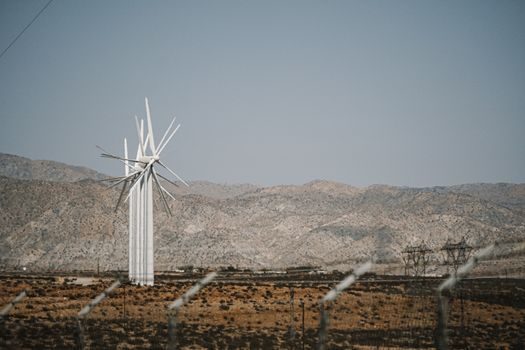
1) Rated power and swept area: 800 W-2 kW micro units suit telecom/cabin loads; 30-300 kW class feeds commercial sites or hybrid microgrids; 3-15 MW platforms are utility-scale. Sweep area scales roughly with the square of rotor diameter, so capacity factor improves sharply once the rotor crosses ~140 m on land-based platforms [S7].
2) Generator type and grid interface: low-rpm direct-drive PMSG for variable-speed micro turbines, doubly-fed induction or medium-speed PMSG for utility-scale. Mating this with a pressure transmitter suite in the hydraulic pitch system matters for type-validated plants.
3) Certification currency: CE (EU), IEC 61400 design conformance, grid-code compliance (e.g. EN 50549, IEEE 2800), and the 2024-2025 issue dates on the certificates listed in the Made-in-China catalogue [S1][S5][S6].
4) MOQ and FOB band: 1 piece/set MOQ is the norm in the micro/utility split, with FOB ranges of US$400-500 (800 W-2 kW), US$1,400-1,800 (30-300 kW VAWT), and US$15,000-35,000 (1-10 kW HAWT) [S1][S5][S6].
5) Blade material and recyclability: glass-fibre/epoxy dominates; carbon-fibre spar caps appear above 80 m blades. End-of-life blade recycling is on the 2026-06 Düsseldorf agenda, signalling that procurement specs will increasingly ask for documented recycling pathways [S8].
Vendor Comparison: Micro Chinese Suppliers vs European OEMs
For sourcing decisions below 1 MW, the relevant question is rarely OEM prestige — it is CE currency, FOB band, MOQ and lead time. A structured comparison: [S1]
Wuxi Rexco Technology: 800 W low-rpm US$400-450 FOB, 2 kW rooftop US$480-500 FOB, CE from 2024-09-26, 1 set MOQ [S1][S6]. Best fit: telecom back-up, cabin hybrid, low-noise sites.
Cemi (Suzhou) Intelligent: 30-300 kW vertical-axis US$1,400-1,800 FOB per piece, CE from 2024-09-26, 1 piece MOQ, 3-phase 24/48 V [S6]. Best fit: commercial buildings, urban microgrids with turbulent inflow.
Qingdao Greef New Energy: 1-10 kW horizontal-axis US$15,000-35,000 FOB per set, ISO 9001 from 2025-07-04, on/off-grid hybrid [S5]. Best fit: village electrification, agri-processing, hybrid PV-wind-diesel.
For utility-scale, Vestas/Siemens Energy/GE Vernova retain the moat on direct-drive offshore, type-validated availability and grid-services support; Goldwind and MingYang compete on onshore LCOE. The procurement gate at this scale is pressure sensor instrumentation within the pitch and yaw hydraulics rather than the turbine itself.
Failure Modes, Constraints and Sourcing Risks

The dominant 2026 failure modes are: (1) blade leading-edge erosion on offshore platforms, which forces OEMs to add leading-edge protective tape and tap-test NDT into O&M; (2) gearbox bearing spalling in the DFIG segment, which is why medium-speed PMSG architectures are gaining share; and (3) pitch-system hydraulic leakage detected by pressure transmitter drift, the most common sensor-induced false-code path in service. [S2]
Recycling is the binding constraint for blade manufacturing economics. With first-generation blades reaching end-of-life, the 2026-06 Düsseldorf congress frames recycling as a sustainability mandate, not an option [S8]. Buyers specifying new turbines in 2026 should request documented blade take-back commitments.
Supply-chain risk sits in three places: rare-earth magnets (NdFeB for direct-drive PMSG), carbon-fibre for spar caps, and large-diameter rolling-element bearings for main shafts and gearboxes. Each is dual-sourced but geographically concentrated. The reference frame for tier-1 procurement is whether the OEM publishes a bill-of-materials provenance map.
Standards and Compliance Snapshot for 2026 Builds
Wind turbines in 2026 are specified against IEC 61400-1 (design requirements), IEC 61400-2 (small wind turbines), IEC 61400-3-1 (offshore fixed) and IEC 61400-27-1 (electrical simulation models). For grid connection, EN 50549-10 applies in the EU and IEEE 2800 in the US. The micro/CE segment additionally requires EN 61400-2 type certification, and the Made-in-China listings state CE certification with 2024-2025 issue dates [S1][S5][S6].
For plant-level instrumentation surrounding the turbine, the industrial valve and flow meter selections for the hydraulic and cooling loops are governed by ASME B31.3 and ISO 5167 respectively, independent of the turbine standard stack.
Component-level data: the global wind turbine components market is expected to grow briskly through the forecast period per the 2025 Grand View Research report, with the application for electricity across the world projected to enhance the industry further [S7]. The 2026-06 Düsseldorf congress is sized to be the value-chain event where blade design, materials, inspection/testing, O&M, and recycling standards are recalibrated for the next platform generation [S8].
Trackable signals into the next 90 days: CE-certificate renewal filings for the 2024-09-26 issued certificates held by Wuxi Rexco and Cemi (Suzhou); the 2026-06 Düsseldorf congress proceedings for blade-recycling guidance; and the Q3 2026 capacity-add announcements from the leading Chinese OEMs as onshore commissioning continues. Cross-reference the wind-utility instrumentation lane in PLCs for pitch and yaw control to size the wider controls scope.