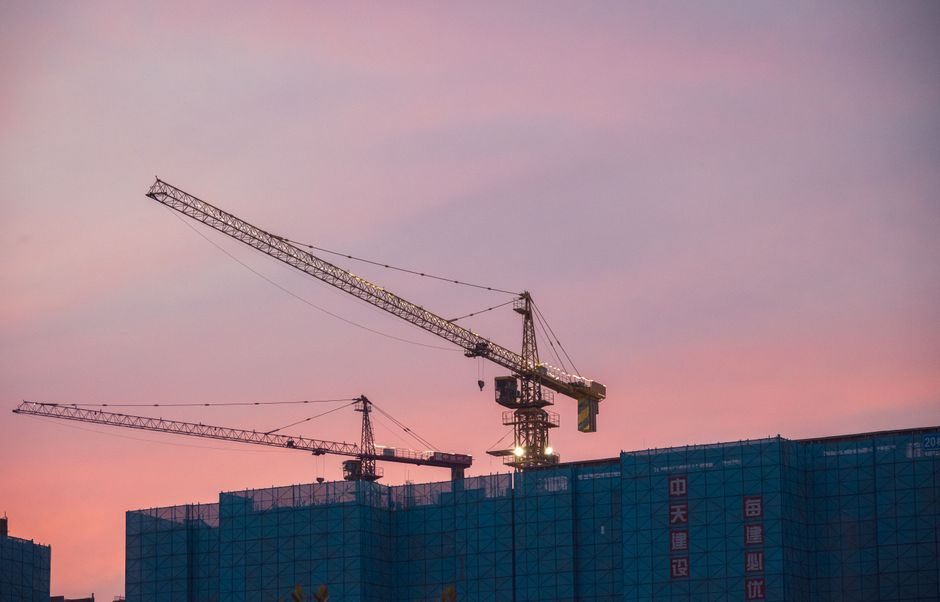
A 2026 tower crane quote is driven by five engineering parameters before any commercial talk: max lifting capacity, max tip load at full jib radius, independent (free-standing) height, maximum hook height with tie-ins, and jib length — the latter four are documented on Chinese OEM data sheets such as the TC6024 at 10 t max load, 2.4 t tip load, 50.5 m independent height, and 200 m max hook height [S7].
Specifying a tower crane is fundamentally different from a mobile or crawler unit because the machine is a permanent or semi-permanent part of the site for months, not days; buyers in Brisbane, Puerto Rico, and the Gulf routinely run 12- to 24-month hire contracts with suppliers such as Boland Cranes and Forteza Equipo LLC [S1][S3].
Three Crane Families, Three Job Sites
Hammerhead (cat-head) cranes remain the cheapest per-tonne on open high-rise sites, with self-erecting mini units from Xuzhou Jiufa listing at US$ 24,500-25,800 for a 1 t mini-mobile model and US$ 48,100-49,200 for a wireless-operation self-erecting variant on 2026 Made-in-China spot quotes [S2].
Flat-top (topless) cranes have become the default on dense urban and high-rise sites because the absence of the cat-head / tie-rod system cuts the overlap radius and lets two cranes cross over each other in tight footprints — for background on the architecture itself, the tower crane overview is the cleanest starting reference. Luffing-jib cranes cost 20-40 % more than flat-tops of equal capacity but solve the airspace and neighbour-swing problem on airport, hospital, and CBD-adjacent jobs.
The Five Spec Numbers You Cannot Skip
On any OEM data sheet — Redcrane, XCMG, Zoomlion, Potain, Liebherr — the spec block is in the same order, and the buyer who skips any of these five numbers will regret it during erection planning: (1) max load (chassis close to the tower), (2) tip load at full jib, (3) jib length range, (4) independent height without ties, and (5) max hook height with full tie-in count [S6][S7].
The relationship between max load and tip load is the single biggest trap: a 10 t / 2.4 t unit like the TC6024 cannot lift 10 t past about 20 m radius, and the load chart drops on a quadratic curve, not linear [S7]. Buyers running precast panels or formwork at 30-40 m radius should spec the tip load at that exact radius, not the headline max.
New vs Used, Buy vs Hire, China vs Domestic
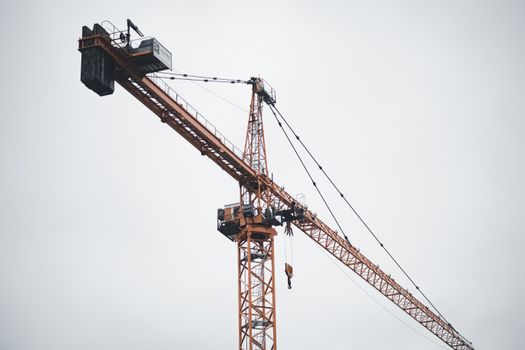
2026 spot pricing on Chinese OEM channels puts a 1 t self-erecting mini crane at roughly US$ 24,500-25,800 ex-works with 1-piece MOQ, while a wireless-operation 1 t self-erecting unit from the same Xuzhou supplier lists at US$ 48,100-49,200 [S2]. For capacities above 6 t, new factory direct from China is roughly 60-70 % of an equivalent Potain or Liebherr new-unit price, but the buyer carries the freight, the erection crew, the commissioning engineer, and the spare-parts inventory.
For short-cycle builds under 9 months, hire wins on total cost of ownership: Boland Cranes in Brisbane packages 30+ years of operator and rigging experience into the day-rate [S3], and Forteza Equipo LLC in Puerto Rico sells the same risk-transfer model to Caribbean contractors who do not want a tower standing in a hurricane corridor [S1]. For projects over 18 months, especially repeat-bracket residential or data-centre work, ownership amortises the freight, foundation, and dismantle costs across multiple sites.
Site Geometry, Tie-Ins, and Foundation Loads
Independent height of around 50 m is the practical ceiling for a base-mounted tower on a standard cruciform foundation without tie-ins; the TC6024 data sheet at 50.5 m independent / 200 m max hook is a clean reference point for what 'standard' means in 2026 Chinese OEM specs [S7]. Above that, the buyer must plan tie-in floors to the host structure every 20-30 m, which means the structural engineer and the crane supplier must agree on tie-in locations, embed plates, and sleeve tolerances before the slab is poured — not after.
Foundation reaction loads on a 10 t / 60 m unit are typically 600-900 kN vertical and 100-200 kN overturning moment, and undersizing the foundation is the most common cause of crane stoppages in month 3 of a build. Site soil bearing capacity should be confirmed with a plate-load test, not assumed from the geotech report alone.
Compliance, Standards, and Operator Licensing

For European and Australian sites, EN 13000-series hoisting-appliance rules and the local WHS / OSHA-equivalent operator-licensing framework govern erection, climbing, and dismantling sequences; buyers should demand the OEM's CE / AS / OSHA compliance file before signing the PO, not after delivery. Chinese OEM data sheets frequently state "CE certified" on the listing page with a "(contact issuer for current status)" caveat — that language means the certificate exists but the validity date must be re-checked [S2].
Wind-speed operational limits are the next compliance gate: most hammerhead and flat-top units derate above 72 km/h (20 m/s) operating wind and must be parked in free-weather vane mode above 100-110 km/h, with typhoon / cyclone protocols in hurricane and tropical-storm regions adding a dismantle cost that buyers often forget. For site engineers comparing lifting options, the truck-mounted crane vs tower crane cut walks through the reach and sourcing trade-off line by line.
Sourcing Channels and What 2026 Listings Actually Mean
Three sourcing channels dominate 2026: (a) domestic dealer / hire-fleet operators (Forteza [S1], Boland [S3], Redcrane [S6]) for risk transfer, (b) Chinese OEM B2B platforms (Made-in-China [S2], Okorder [S7], Go4WorldBusiness [S5]) for direct factory pricing, and (c) auction and used-fleet channels for sub-6 t refurbished units. On Chinese B2B listings, the lead-time on a 6-10 t flat-top is typically 30-60 days production plus 30-45 days sea freight to the US Gulf or EU port, with commissioning crew billed separately.
The cheapest listing is rarely the cheapest delivered crane: factory price excludes foundation steel, tie-in kits, anemometers, anti-collision modules (if multiple cranes on one site), operator training, and the year-one spare-parts kit — line items that routinely add 15-25 % to the ex-works price. A practical buy-side spec sheet for sub-10 t work should also compare against a truck-mounted alternative for short-cycle jobs; the 5 engineering gates buyers run before RFQ is the most concise process map for that side-by-side.
Common Buying Mistakes and Failure Modes
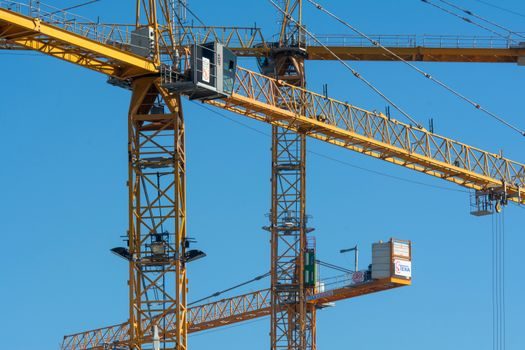
Three patterns repeat on failed tower-crane procurements: (1) buying max capacity instead of tip-load-at-working-radius, (2) ignoring independent-height vs max-hook-height, leading to a mid-project tie-in retrofit, and (3) treating the Chinese OEM CE mark as evergreen without re-checking validity dates, which is exactly what the 2026 Made-in-China spot listings flag with the "contact issuer" caveat [S2].
A fourth pattern is the single-crane site that quietly needs two: many 2024-2026 high-rise pours assume anti-collision / overlap coverage from a second unit, and adding a crane after the slab is poured is roughly 3-4x the cost of including it at initial spec. The 200 m max hook height on the TC6024 class [S7] is a useful upper bound — any job that genuinely needs that lift height should also be planning a second crane or a climbing internal shaft system.
Trackable signals for the next procurement cycle: (1) Chinese OEM data sheets published on Made-in-China and Okorder from May-June 2026 continue to show tip loads of 1.8-2.5 t at 60-65 m jib as the dominant sub-10 t specification; (2) hire-fleet operators in non-domestic markets (Brisbane [S3], Puerto Rico [S1]) are extending contracts rather than expanding owned fleets, which is a useful read on demand temperature for late 2026; (3) Western OEMs have not closed the price gap with Chinese factory output, so the buy-vs-hire decision in 2026 still tilts toward hire for under 12-month sites and toward Chinese factory direct for over 18-month sites.
For component-level specifications, see linear guide, and crossed roller guide.