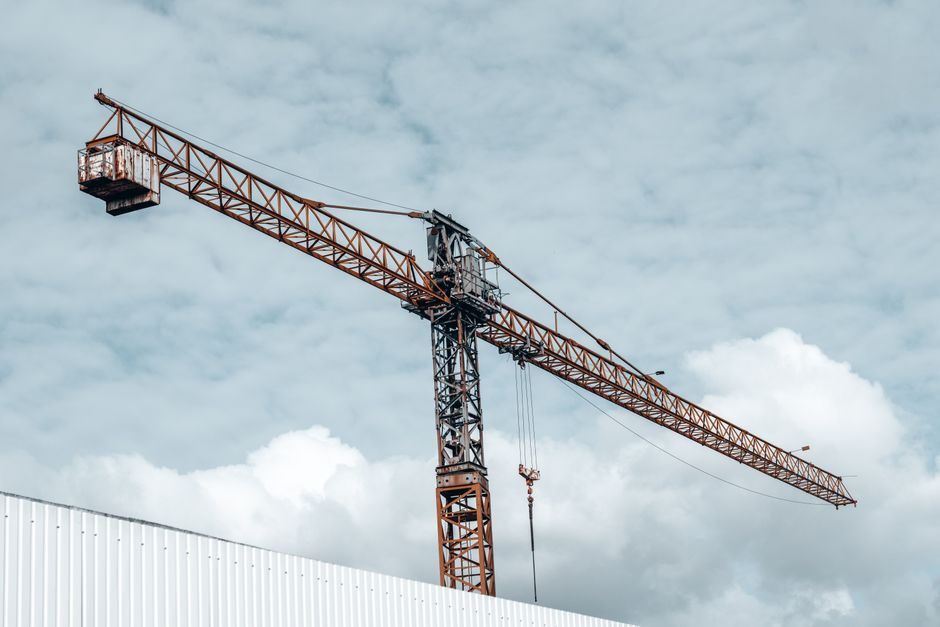
On a typical 2026 mid-rise project, the structural engineer hands the lift planner three numbers — heaviest single pick, maximum radius required, and tip load at that radius — and the entire tower crane selection reduces to a load-chart cross-check against the crane's free-standing height plus tie-in count.
This guide walks through the four hard gates (load, reach, height, footprint), the three head types, the self-erector branch, and the supply-side reality in 2026, where Potain-class electric top-slewing units dominate commercial hire fleets in Australia [S2][S5], flat-top and luffing-jib units dominate dense urban and process-plant sites [S9], and Chinese OEM flat-tops and hammerheads price as low as US$123,000 ex-works for an 8 t class [S7].
Load, Reach, Height, Footprint: The Four Hard Sizing Gates
Every tower crane selection starts by plotting the heaviest single pick (with rigging + hook block weight) on the proposed jib radius, then reading the manufacturer's load chart to confirm a positive margin between the chart's rated capacity and the required net capacity at that radius, with the typical engineering practice demanding a 25 percent minimum margin on the rigging-inclusive pick [S3][S4]. A crane whose chart reads 4.8 t at 50 m cannot lift a 4.0 t panel with a 0.5 t rig on the hook if 4.0 + 0.5 = 4.5 t leaves less than 0.3 t margin against the next tie-in or slewing restriction.
Height is split into two numbers: free-standing height (tower above the base or first tie-in, typically 40–60 m for hammerhead, lower for luffing) and total hook height with one or more tie-ins. Australian hire fleets document Potain-class units covering low-rise up to 18-storey buildings on electric power [S5]; beyond that, tie-in spacing shrinks and the structural cost of wall brackets starts to dictate the build as much as the crane does. Footprint gates the head type before the jib length does, because a luffing-jib with its 7–9 m tail radius will fit a site a flat-top cannot, but only if the radius envelope is met.
For a quick comparison of the four gates against the three head types, the common engineering heuristic is: hammerhead wins on pure radius × cost in open sites; flat-top wins on multi-crane overlap and reduced overhead airspace; luffing-jib wins where the site is boxed in and the boom must clear adjacent structures or flight paths [S3][S9]. Where lift planners need a deeper dive into neighbouring mobile-crane duty cycles, the truck-mounted crane sizing guide covers the reach-and-axle gate logic that overlaps with the yard-crane branch of this selection.
Flat-Top vs Hammerhead vs Luffing-Jib: Head-Type Decision Matrix
Flat-top tower cranes carry the jib tie cables and counter-jib cables internally or above the slewing table, eliminating the pendant lines that hammerhead (cat-head) designs drop from a top tower section; this gives the operator a smaller clearance envelope, which is why oil-and-gas process plant sites with dense pipe-rack airspace specify flat-tops almost exclusively. Hammerhead designs, sometimes called cat-head or A-frame top, remain the lowest-cost-per-tonne at long radius in open ground because the pendant cables shorten the jib's structural span and lift the chart's tip load. Luffing-jib designs use a pivot luffing point — typically 30° to 75° above horizontal — to fold the jib up and clear adjacent buildings, transmission lines, or helipad airspace, at the cost of a heavier hoist mechanism and a more complex slewing table [S3][S9].
For oil, gas, and refining work specifically, the luffing-jib vs flat-top vs hammerhead comparison for oil and gas duty lays out the same three-way matrix against process-plant overhead constraints. The flat-top and hammerhead categories often get confused at the RFQ stage because both are top-slewing with horizontal jibs, but the giveaway is the pendant lines: if the top tower has a pyramid cap with hanging cables, it is a hammerhead; if the cap is clean and the tie rods run through the jib structure, it is a flat-top.
On price, the 2026 export market for Chinese-built flat-tops and hammerheads sits around US$123,000 ex-works for an 8 t class PT6016 with 60 m jib [S7], and Chinese OEM mast sections, fixing angles, slew mechanisms, and wire ropes are routinely shipped as spares to fleets worldwide [S6]. That price point is the floor; European-built equivalents from the same 8–10 t class typically run three to four times that figure once freight, duty, and commissioning are added, which is why hire fleets in the Caribbean, Africa, and Southeast Asia are dominated by Chinese OEM product [S8].
Self-Erecting Cranes: The Sub-2 t / Sub-30 m Branch
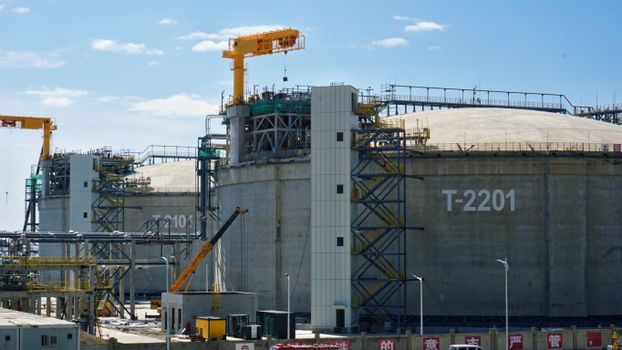
Self-erecting tower cranes — sometimes called "self-climbing" or "folding" jib units — typically cover the 1.5–2.5 t at 12–28 m radius envelope with a hydraulically folded transport position that lets one truck deliver, rig, and set the unit in under a day [S9]. North American distribution of self-erectors has consolidated around FB GRU, with KRAXCLE tracked and wheeled self-driven undercarriages, ASCOREL zoning and anti-collision systems, and AUTEC remote controls as the typical accessory stack on a self-erector fleet [S9]. The branch is the right pick for low-rise residential (3–8 storeys), school and hospital infill, and roof-top mechanical lifts where a 40 m mobile crane cannot reach and a top-slewing unit's foundation cost is uneconomic.
The hard limit on self-erectors is the chart's 1.5–2.5 t envelope: a 3 t HVAC module with a 1.5 t pick-and-rig assembly will not lift on a self-erector, no matter how close the crane is positioned. The other hard limit is wind: most self-erectors are derated or stowed above 50–60 km/h, and the operator's manual will pin a precise slewing lock and out-of-service wind speed, so the lift planner must check the project's wind statistics for the construction window, not the annual mean.
Free-Standing Height, Tie-Ins, and Wall Brackets
Free-standing height is the height of tower above the base or first tie-in column before the crane's overturning moment exceeds the ballast and base reaction; for a typical 10 t-at-50 m hammerhead with 6 m ballast, free-standing height is around 45–55 m, and every metre above that requires either a wall tie-in (anchored to the structure at roughly 3–4 tie-in spacing) or a reduced ballast configuration. The European standard for tower crane structural design, EN 13001-1 / EN 13001-2, governs the strength and stability calculations, with FEM 1.001 / ISO 4301-1 setting the duty group classification (typically S3 to S5 for construction tower cranes) [S3][S4].
Tie-ins shift the lateral load on the structure from the crane's own ballast to the building under construction, so the structural engineer must confirm wall-bracket reaction loads (typically 30–80 kN vertical and 10–30 kN horizontal per bracket) against the slab or column capacity before each tie-in pour. Self-erectors with hydraulic climbing systems get around this by sitting on a stub column and climbing the structure as it rises, at the cost of a smaller chart and a higher unit price per metre of lift [S9].
Anti-Collision, Zoning, and Slewing Limits in Multi-Crane Yards
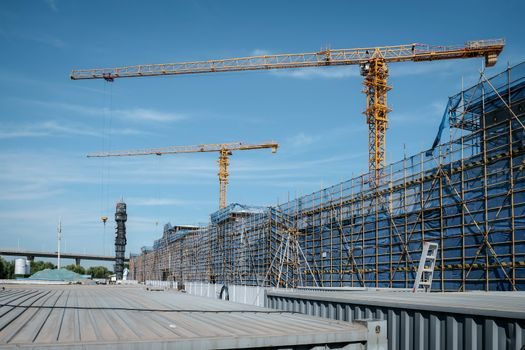
Where two or more tower cranes overlap on radius — common on high-rise sites and process-plant rebuilds — anti-collision systems (zone limiting, slewing arc lock, height lockout) are mandatory in most jurisdictions, and the dominant 2026 vendor stack in North American supply is ASCOREL zoning, with AUTEC remote controls as the typical pendant-replacement or cabin-supplement [S9]. The same zoning logic is what gets a flat-top selected over a hammerhead on a tight site, because the flat-top's lower headroom allows the slewing arc to swing under a neighbouring crane's jib without a hard mechanical interlock.
For lift planners familiar with the limit switch and safety relay logic that backs these interlocks, the principle is the same as a two-hand control: a single failure must not allow the crane to enter a forbidden zone, and the zoning system typically uses SIL 1 or SIL 2 architecture per IEC 62061 / ISO 13849-1, depending on the consequence of a missed interlock on a particular site. Crews in Australia run "wet hire" (crane + operator + dogman) as the default, with "dry hire" (crane only) reserved for projects with their own certified rigger crew [S5].
Foundations, Base Reactions, and Site Assembly
Tower crane foundations are either a ballasted concrete pad (cross-shaped or cruciform, typically 4 m × 4 m × 1.5 m deep for a 10 t class), a grillage base on H-piles, or a foundation anchor bolt cage cast into a structural slab. Base reaction loads on a 10 t class at 50 m jib typically run 600–900 kN vertical, 100–200 kN horizontal, and 1,500–3,000 kN·m overturning moment, and these are the numbers the geotech hands back to the structural engineer for slab design [S3][S4]. Assembly is either by mobile crane (the standard method for top-slewing units, with a 100–200 t mobile needed for an 8–10 t class), by hydraulic climbing from a stub column (self-erectors and internal-climbing units), or by strand jack jacking (rare, confined to retrofits inside existing structures).
On a 2026 hire yard, the standard commercial terms across Australian suppliers run on a minimum hire period (typically 3–6 months), with a monthly rate that covers the crane, an operator, and standard consumables (wire rope, sheaves, lubrication) but excludes the foundation, tie-ins, and dismantling [S2][S5]. The same hire-vs-buy decision tree that gets walked for truck-mounted cranes — see the truck-mounted crane guide for the rental-economics branch — applies in miniature to tower cranes: a 12-month-plus project on a known site buys; anything shorter hires.
2026 Supply-Side Reality: OEM Map, MOQ, and After-Sales

The 2026 OEM map splits into three clusters: European builders (Potain, Liebherr, Wolff, Terex Comedil) dominating the high-rise and oil-and-gas hire fleets in North America, Europe, and Australia; Chinese builders (SYM, Fangyuan, Zibo Yichi, Yongmao, Dahan) dominating the 6–25 t flat-top and hammerhead export market with ex-works pricing from US$123,000 for an 8 t class [S6][S7][S8]; and a long tail of regional assemblers who import mast sections, slew mechanisms, and hoist mechanisms from Chinese OEM suppliers and brand them locally [S8]. MOQ on the Chinese OEM side is typically 1–5 sets for finished cranes and 50–200 units for spares like mast sections and fixing angles, with 1-year warranty on finished units and FOB Chinese port as the default Incoterm [S6][S7].
After-sales is where the European and Chinese stacks diverge: European builders carry a global dealer network with factory-trained service crews and guaranteed 24–72 hour spares dispatch from a regional depot; Chinese OEM after-sales is typically email-and-time-zone, with 30–60 day spares shipping from China for anything not stocked at the importer's warehouse. For buyers in the Caribbean, Africa, and Southeast Asia, that gap is the deciding factor on price-vs-availability, and the typical compromise is a Chinese OEM crane with a local service agent carrying the top 20 line items in stock [S8][S9].
The 2026 fleet signal worth watching is the consolidation of self-erector distribution in North America around FB GRU with KRAXCLE undercarriages and ASCOREL / AUTEC controls as a bundled stack [S9]; the second signal is the continued Chinese OEM push on the 6–16 t flat-top class into Latin American and African project tenders at sub-US$150,000 price points [S7][S8]. A third trackable signal is the European builders' launch cadence on 40–80 m radius luffing-jibs aimed at the high-rise and bridge-pylon segment — historically a Liebherr-Potain ring, with Wolff and Terex Comedil competing on tip-load charts in the 2024–2026 product cycles.
For component-level specifications, see tower crane, linear guide, and crossed roller guide.