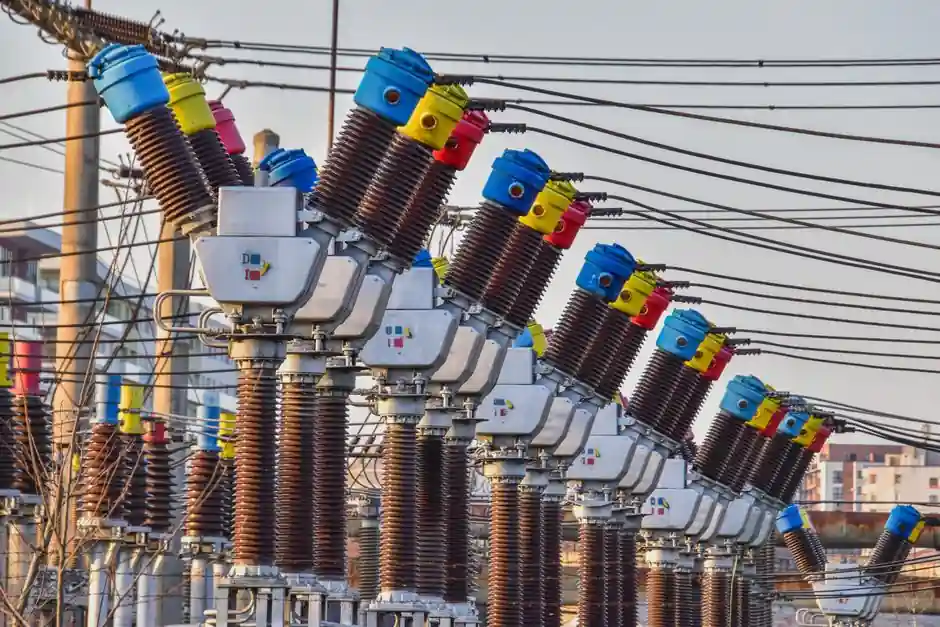
Large power transformer lead times in the U.S. now commonly run 2-3 years, up from 4-6 weeks five years ago, with the most specialized generator step-up units quoted out near four years [S5][S2]. Costs have climbed roughly 60-80% since 2020, and roughly 80% of large power transformers installed in the U.S. are imported, making the grid exposed to a tightly concentrated set of overseas mills and fabricators [S2][S4].
A transformer is not a single supply chain but several converging at once: grain-oriented electrical steel (GOES) for the core, copper or aluminum for the windings, insulation systems, bushings, tap-changer assemblies, and a long pool of skilled winding labor, with each feedstock on its own pricing and capacity curve [S4]. The bottleneck, according to NEMA, is now equipment availability rather than capital or permitting on most grid and industrial projects [S5].
What actually goes into a transformer
Each large power transformer is built around a core of grain-oriented electrical steel, a specialty product where the steel is rolled so its magnetic grains align in one direction to reduce core losses, a process only a handful of mills worldwide can perform [S4]. The windings are copper or aluminum, and the choice is increasingly a commercial and weight decision as well as an electrical one. Insulating oil, paper, and pressboard form the dielectric system, while bushings (porcelain or composite) and on-load tap changers are sourced from a separate set of specialist suppliers.
Large power transformers are typically engineered per project rather than pulled off a shelf, so the manufacturing cycle includes custom winding, vacuum drying, oil impregnation, and a sequence of factory acceptance tests that can run for weeks before a unit is released [S4]. That custom-engineering layer, stacked on top of the materials, is why no two transformer order books look alike and why buyers cannot easily switch suppliers mid-cycle. For context on the broader grid upstream of these units, see this reference on Tier-1 Transformer Suppliers 2026: Specs, Pricing, and Sourcing Map.
Why lead times stretched past two years
Demand surged while manufacturing capacity stayed flat: grid modernization, renewable interconnection, building electrification, and a wave of data-center construction all called for larger and more numerous transformers at the same time [S4]. On the materials side, grain-oriented electrical steel prices roughly doubled since 2020, and copper moved sharply higher over the same window, with both inputs running on constrained mill capacity [S4]. Wood Mackenzie data cited by IEEE Spectrum puts the average power-transformer wait at roughly 50 weeks in 2021 and closer to two years by late 2024, with large power transformers (LPTs) up to four years [S2].
Aging fleet replacement is the third leg. A large share of the installed base is past its design service life, so steady replacement demand sits on top of new-build demand from renewables and load growth. National Renewable Energy Laboratory modeling projects U.S. electricity demand up almost 16% by 2030, which translates into more units and bigger MVA ratings, both of which are on the long-lead end of the catalog [S5]. Schneider Electric's North American transformer business has stated that "projects have been postponed one to two years already" because of the supply gap, with no near-term relief visible [S5].
The import-dependence problem

Industry analyses cited in 2026 reporting estimate that roughly 80% of large power transformers used in the U.S. are imported, and domestic GOES capacity is so concentrated that reporting has identified effectively a single domestic producer of grain-oriented electrical steel [S4]. That leaves critical grid equipment exposed to global demand spikes, shipping constraints, and trade dynamics far outside any single utility's procurement cycle, and it explains why a strike, a tariff, or a port delay at a foreign port can move U.S. energization dates by quarters.
The distribution-transformer layer is not identical: pad-mounted and pole-type units are more often built domestically, but a 2022 episode in Clallam County, Washington, where new home-construction requests were denied because pad-mounted distribution transformers could not be sourced, shows the same dynamic can reach the residential meter when regional inventories are thin [S2]. Silicon Ranch, a Nashville-based solar developer, responded by ordering custom transformers years ahead of need, a practice that works for a developer with a project pipeline but does not scale across a utility's distribution system [S2].
Selection criteria and how the options differ
The main types a buyer is choosing between are distribution transformers (pad-mounted, pole-type, typically 5 kVA to 2,500 kVA), medium power transformers (2,500 kVA to roughly 100 MVA, used in substations and industrial plants), and large power transformers (above 100 MVA, including generator step-up units at power stations) [S4]. Each sits at a different point on the lead-time curve: distribution units have moved from 4-6 weeks to 12-18 months or more, while LPTs run 2-4 years depending on voltage class and short-circuit impedance [S5][S2].
Beyond MVA and voltage class, the decision criteria that move the supply picture are: (1) grain-oriented electrical steel availability, which gates every laminated-core build; (2) copper-versus-aluminum winding, where aluminum is lighter and cheaper but trades off against footprint and short-circuit withstand; (3) bushing and OLTC supplier diversity, since a single-sourced tap-changer brand can stall an otherwise complete unit; and (4) whether the design is custom or based on a previously type-tested platform, the latter being a real lever for cutting engineering hours [S4]. Buyers who can accept a standardized footprint, standard impedance, and standard accessories typically slot into shorter queues than those who require project-specific short-circuit or noise specs. A useful adjacent reference is this IGBT key components and bill of materials: a process engineer's reference, which applies similar materials-and-bottleneck logic to a different power-electronics stack.
What is being done to shorten the timeline

Policy and industry responses cluster into four levers. First, domestic manufacturing and fabrication capacity: the U.S. Department of Energy has flagged distribution-transformer supply constraints as a grid-priority issue and supports retooling for higher domestic output [S1]. Second, single-source fabrication, where a domestic fabricator takes responsibility for core cutting, winding, and assembly under one roof, removing the inter-supply-chain handoffs that stretch schedules [S4]. Third, standardization of substation transformer designs, which lets manufacturers run repeat production rather than engineer each unit from a blank sheet, a change NEMA has described as necessary but slow because it requires utility and policymaker alignment [S5].
Fourth, condition monitoring and life extension. Dynamic dissolved-gas-analysis, bushing, and on-load tap-changer monitoring can defer replacement by years on units that are aging but still serviceable, a strategy that does not add factory capacity but reduces the demand pressure on it [S3]. Engineering work is also targeting designs that use less GOES per MVA, that accept higher operating temperatures, or that fold in power-electronic conversion to handle AC/DC interfacing for renewables and storage, with the IEEE Spectrum reporting this as an active redesign direction across the industry [S2]. None of these levers is fast on its own; the realistic near-term signal to watch is whether utility orders placed in 2024-2025 actually deliver on the quoted 2-3 year window, or slip into the 3-4 year band, and whether domestic GOES capacity expands beyond the single incumbent producer [S4][S5].
Trackable next nodes: DOE distribution-transformer program milestones and any 2026-2027 awards to domestic GOES or core-cutting capacity, plus NEMA's quarterly lead-time survey prints, which currently anchor the public dataset on how stretched the queue really is [S1][S5].
For the relevant spec sheets and selection criteria, see power supply, dc power supply, and switching power supply.