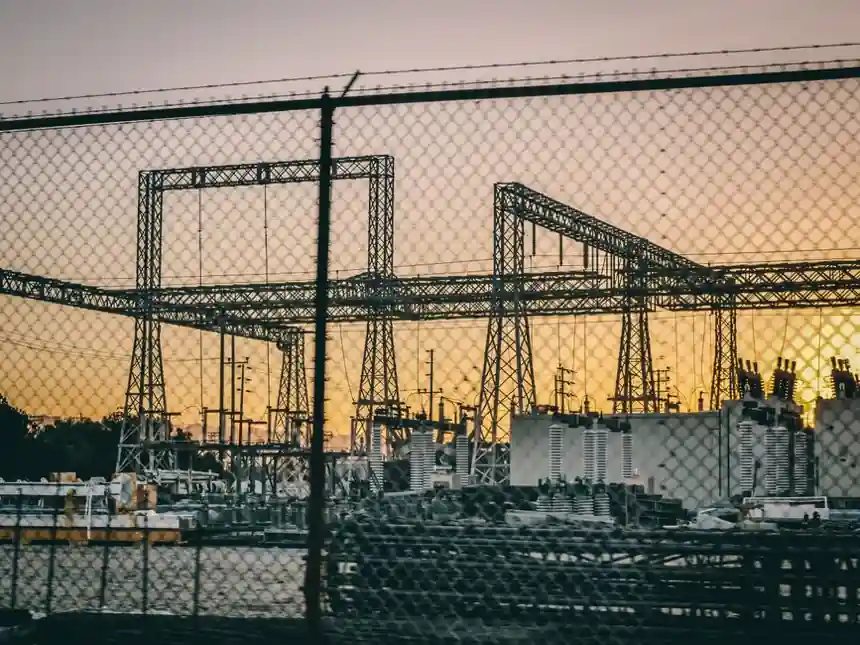
Transformer raw material sourcing in 2026 is constrained by an aging grid, AI-data-center demand, and concentrated mill output, with U.S. large power transformer lead times now running 3-5 years and transformer unit prices up 60-80% since January 2020 on roughly doubled commodity input costs [S1][S2].
The bottleneck is upstream: roughly 70% of U.S. transmission lines and large power transformers (LPTs) are over 25 years old against a 30-40 year design life, and hyperscale data centers are pulling fresh capacity through "behind-the-meter" generation, which adds new step-up and step-down transformer demand on top of utility replacement cycles [S1]. The five inputs that actually decide whether a transformer ships on time are winding conductor, core steel, core alloy, insulating oil, and insulating paper or pressboard, each with a separate supply chain risk profile.
Winding Conductor: Copper vs Aluminum Decision Matrix
Electrical-grade copper remains the default for high-voltage and dense urban distribution transformers because of its higher electrical conductivity, which lets manufacturers hit lower no-load current and tighter temperature-rise limits on a given kVA frame [S1]. Aluminum is the lighter, lower-cost alternative gaining share in pad-mounted and dry-type form factors for commercial and light industrial loads, trading raw conductivity for weight and price stability [S1].
Where the choice actually matters on the spec sheet, copper windings run hotter-tolerant per ampere and tolerate higher short-circuit stress, while aluminum windings demand larger cross-sections, careful termination geometry, and anti-oxidation compound at joints to avoid creep and hot spots. For a dry-type transformer build, aluminum is now commonly used up to medium voltage classes, but copper still wins where the spec is IEEE C57.12.91 temperature-rise, low partial discharge, or any Class H upgrade. Sourcing risk is identical in direction but different in shape: copper supply is tied to scrap availability, Chilean and Peruvian cathode output, and shipping; aluminum is more tied to Pacific smelter capacity, power prices for the Hall-Héroult cells, and the Midwest premium.
Core Steel: CRGO vs Amorphous vs Nanocrystalline
The four core materials that handle the overwhelming majority of transformer builds are silicon steel (CRGO), amorphous metal, nanocrystalline, and ferrite, with CRGO and amorphous dominating power and distribution units [S3]. CRGO (cold-rolled grain-oriented steel) is iron alloyed with a few percent silicon, then rolled so the grain runs in one direction; flux rides that grain with very low loss, which is why it is the workhorse of power and distribution cores [S3].
Amorphous ribbon drops no-load loss by roughly 60-70% versus CRGO at the same flux density, but it is thinner, more brittle, harder to cut, and only available from a small number of global melt-spinning lines, which is what makes it a supply risk despite its efficiency upside. Nanocrystalline cores sit in the high-permeability, high-frequency niche (precision current transformers, high-frequency chokes), and ferrite handles switch-mode and electronics-grade frequencies where silicon steel cannot run. For a power transformer spec, the practical decision is CRGO M3-M6 grade at 0.23-0.30 mm thickness for cost-driven builds, or amorphous ribbon (typically 25 micron thickness) where DOE 10 CFR 431 efficiency or utility Tier-2 no-load targets are binding.
Insulating Oil, Paper, and Pressboard

Mineral transformer oil still dominates fluid-filled units, with the key spec numbers being dielectric breakdown (ASTM D877, typically minimum 30 kV at 2.5 mm gap), interfacial tension, and inhibitor content, with naphthenic-base oil preferred over paraffinic for low-temperature performance. Pressboard and kraft paper are the second-tier supply risk: TIV (transformer insulation varnished) paper and high-density pressboard are made by a handful of mills, and lead times for calendered, diamond-dot pattern paper routinely extend to 12-20 weeks on large LPT orders. [S1]
Natural ester (FR3, Envirotemp) and synthetic ester (Midel 7131) fluids are now specifiable as fire-safer alternatives with K-class fire point above 300 C, and they buy headroom on the transformer footprint for indoor and vault installations, but ester-compatible gasket materials (acrylic, nitrile) and the higher fluid cost roughly 3-5x mineral oil must be built into the BOM. For most data-center substations, the spec is moving to natural ester for fire load reduction; for transmission LPTs above 100 MVA, mineral oil still rules on volume and proven impulse strength.
Secondary Materials That Quietly Break Schedules
Three inputs rarely make headlines but routinely cause 8-16 week schedule slips: copper or aluminum foil for winding shield, tank-grade structural steel (ASTM A36 plate, plus A516 for pressure parts), and bushings. Winding foil below 0.2 mm with controlled grain and burr-free edges is a constrained product, and ASTM A516 Grade 70 plate for transformer tanks is on multi-quarter backorder at most U.S. service centers. [S1]
Bushings are the single most fragile node: paper-OIP (oil-impregnated paper) bushings above 138 kV have lead times of 40-70 weeks at several major OEMs, and RIP (resin-impregnated polyester) alternatives are catching up electrically but still face qualification cycles at many utilities. Tap changers, especially on-line vacuum types for LPTs, are another chokepoint with only a handful of qualified global suppliers, and the power semiconductor supply chain intersects this when active front-end rectifiers or STATCOM packages ride alongside the transformer scope.
Supplier Diversification and Contracting Strategy
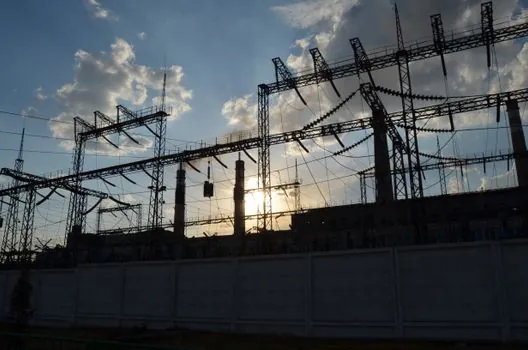
Three contracting structures are working in the 2026 market: multi-year mill-direct volume contracts on copper cathode and aluminum billet, indexed pricing with ceilings and floors rather than fixed-price, and dual-sourced CRGO with at least one qualified Asian and one domestic mill [S1]. Spot-market reliance is the single most common failure mode in transformer manufacturing, because transformer lead times of 30-50 weeks historically have now stretched to 3-5 years for large power units, and a single missed coil can stall a finished-goods build indefinitely [S1][S2].
For manufacturers, the practical moves are: qualify a second copper and aluminum mill every 12 months, hold 4-6 months of CRGO and amorphous ribbon inventory on a Just-In-Time-plus buffer model, run parallel sourcing for tank steel and bushings even at slight cost premium, and treat mineral or ester oil contracts on the same index terms as the conductor. The IGBT supply chain picture is instructive here: similar mid-cycle wafer and module constraints, similar need for multi-source qualification, and the same lesson that supplier risk is a spec input, not a procurement afterthought.
Standards, Specifications, and What to Verify on the Mill Cert
Four documents gate raw material acceptance at most transformer plants: ASTM B49 for copper rod, ASTM B233 for aluminum conductor, ASTM A677 or A876 for CRGO (M3-M6 grades, loss values in W/lb at 1.5 T/60 Hz), and IEC 60422 for mineral insulating oil monitoring. The CRGO loss number on the mill cert is the single most chased value in any procurement dispute, and buyers should pin both the grade (M3, M4, M5, M6) and the guaranteed maximum specific loss at the test flux density, not a nominal mid-range value. [S1]
For amorphous ribbon, the spec is more variable and usually negotiated: ribbon thickness (typically 25 micron), saturation induction (around 1.56 T for Metglas 2605SA1), and core loss in W/kg at 1.3 T/50 Hz or 1.4 T/60 Hz. For copper, ASTM B49 with continuous cast rod, oxygen below 400 ppm, and resistivity at or below 0.15328 ohm-g/m^2 at 20 C is the buyer's floor. Material traceability under ISO 9001 plus a PPAP-style First Article for each new coil or lamination run is the difference between an on-time build and a six-month delay on a $4M LPT.
2026 Watch List: Signals Worth Tracking Through Year-End
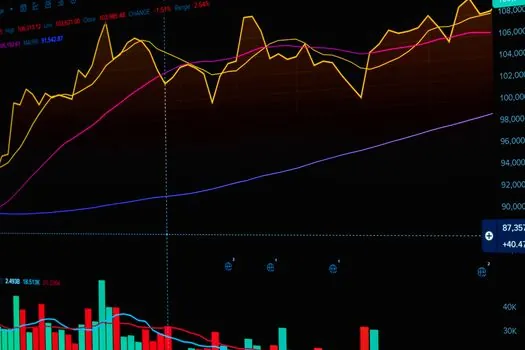
Three signals to track through 2026: L1 copper and LME aluminum contract pricing versus the 12-month rolling average, because transformer price escalation clauses index on these; CRGO M4 and M5 spot availability in North America, which has tightened since Q1 2026; and amorphous ribbon capacity additions, with a new Asian melt-spinning line expected to come online in late 2026 and ease the 6-9 month queue for distribution-class amorphous cores [S1][S2].
Buyers should also watch the harmonic filter sizing market for a related tell: harmonic filters ride on the same copper and magnetic-steel supply chain, and lead-time spikes on detuned reactors usually precede transformer raw material tightening by 4-8 weeks. For now, the hard constraint is not transformer design capability, it is the upstream queue at the copper refinery, the aluminum smelter, the CRGO mill, and the bushing supplier, all of which run hotter than at any point since 2008 [S2].
Spec-level background on the components involved: linear guide.