
A transit mixer is the rotating-drum truck used to move ready-mix concrete from a central batch plant to the job site, and the same vehicle is also called an agitator truck or a ready-mix truck depending on which spec sheet you are reading [S2][S4].
The confusion comes from three overlapping uses: "transit mixer" describes the equipment, "agitator" describes a legal operating mode with a higher published volume rating, and "ready-mix truck" describes the payload the truck is certified to haul [S1][S2]. The three terms refer to the same chassis-and-drum assembly, but the rated capacity, mixing protocol, and even the washout procedure change with the label you put on the side of the drum.
Dual Capacity Rating: Mixer vs Agitator Mode
TxDOT's rigid pavement construction manual states that a single concrete mixing truck carries two capacity ratings, one as a mixer and one as an agitator, and the agitator rating is "usually significantly larger" than the mixer rating [S1]. The reason is mechanical: when the drum is acting as a mixer, the internal blades shear the batch and force compaction; the same volume then has to leave room for that compaction to occur, so the legal mixing payload is smaller. Once the batch has already been mixed at the plant, the truck only needs to agitate (keep the concrete from settling) and can be legally loaded closer to the drum's geometric volume, hence the higher agitator number stamped on the nameplate [S1].
For a typical North American chassis, the National Ready Mixed Concrete Association figure cited by Amcorp puts the standard truck size at 9 to 11 cubic yards because of highway weight laws [S2]. Drum rotation during the agitator phase runs at roughly 2 to 6 RPM, which is enough to keep the mix homogeneous without further hydration work [S2]. This is the operating point most dispatch software assumes when it calculates drum status from a GPS feed.
Ready-Mix Truck vs Volumetric Mixer: Same Site, Different Choreography
A ready-mix truck loads pre-batched concrete at the plant and transports it in a rotating drum; a volumetric mixer carries cement, aggregate, and water in separate bins and combines them with an on-board auger at the pour location [S3]. The two chassis share the same job site, but they differ on every operationally relevant axis: mixing method, flexibility, wastage, timing, quality control, and washout [S3].
On quality control, ready-mix wins because the batch is mixed under plant-scale automation; volumetric wins on flexibility because mix design can be changed mid-pour by adjusting the bin ratios [S3]. On waste, volumetric reduces leftover concrete since the operator can stop the auger the moment the form is full, while ready-mix trucks must drum the batch to the end of the 90-minute working window and then wash out at a designated area [S2][S3]. The washout step is itself a compliance issue: ready-mix trucks usually return to a plant washout, whereas volumetric augers and chambers can be flushed on-site, which is faster and generates less returned concrete [S3].
Cement Truck vs Concrete Truck: The Dry vs Wet Distinction
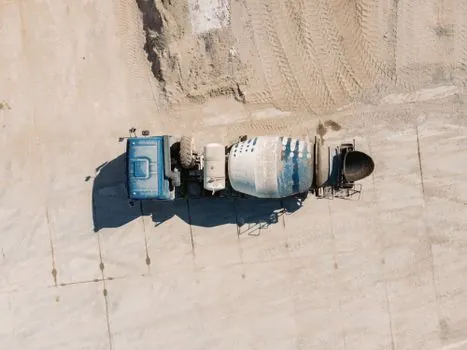
SANY's 2026 buyer guide draws a hard line between cement trucks and concrete trucks: a cement truck carries raw cement powder or dry mortar without water on board, while a concrete truck carries wet, pre-mixed concrete in a rotating drum [S5]. Conflating them on a purchase order or dispatch manifest is a common error that produces either hardened cement in a non-agitating hopper or, worse, concrete arriving on a job that has no water source for re-mixing [S5].
The right vehicle depends on whether the delivery is upstream (cement powder to a batching plant, or dry mortar to a lay-down yard) or downstream (ready-mix concrete to a pour) [S5]. Cement trucks feed the plant; concrete trucks feed the form. Both trucks have a rotating drum on the spec sheet, but only the concrete truck adds water to the equation.
Drum Specs and Timing Envelope
The 90-minute shelf life from the moment water touches cement to the moment the last of the load is in the form is the single most-cited operating number in ready-mix dispatch, and it shows up in both the Amcorp writeup and SANY's comparison piece [S2][S5]. Outside that window, slump loss and setting begin to compromise the batch unless retarders have been dosed at the plant, which extends workability but does not stop the hydration reaction [S2].
Drum speed is not free to choose: 2 to 6 RPM is the agitation band, with the higher end used to push concrete out of the drum at discharge by reversing the rotation direction [S2]. Discharge rate is then a function of drum speed and chute angle, not pump pressure, which is why a concrete mixer truck on a chute cannot match the pour rate of a boom pump but also does not require a separate pump operator on site.
Selection Matrix by Use Case
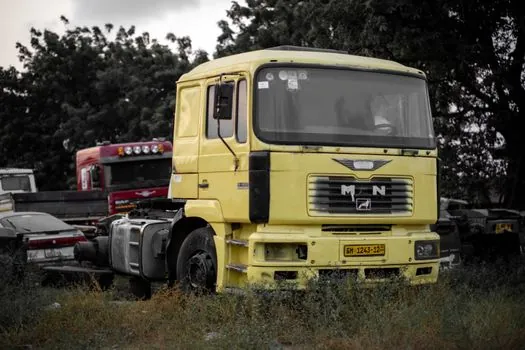
Use a standard transit mixer (ready-mix truck) when the pour is large, the plant is within roughly a 45-minute drive, and the mix design is fixed before the truck leaves the batch plant; this is the default for foundations, bridge decks, and paving [S2][S3]. Use a volumetric mixer when the mix design may need to change mid-pour, the site has multiple small pours in one day, or leftover concrete is unacceptable [S3]. Use an agitator-only mode (chassis already at the site) when the plant has pre-mixed a load for a remote project and the truck's only job is to keep the concrete alive during a long haul [S1].
Do not use a cement truck to carry wet concrete, and do not dispatch a ready-mix concrete truck thinking the drum volume equals the legal payload in agitator mode; the two ratings on the truck nameplate are not the same number [S1][S5]. For operations where the truck is paired with a stationary batch plant and the chassis is selected mainly for drum output rather than off-road capability, the transit mixer drum capacity by axle configuration decision matrix walks through how axle count caps legal payload and drum size. For projects that also need a separate compaction pass after the pour, pairing the ready-mix truck with a power mixer or walk-behind trowel is the typical workflow, and the productivity trade-off is covered in the walk-behind vs ride-on power trowel comparison.
Failure Modes and Dispatch Constraints
Three recurring failure modes show up across the reference material: drum rotation stop, washout compliance, and tipping risk on uneven ground. A drum that stops rotating during a traffic jam will start segregating aggregate within minutes and will exceed the 90-minute working window before the truck reaches the pour [S2]. A truck that cannot reach a designated washout area creates an environmental compliance issue, which is why volumetric mixers are sometimes specified on remote sites solely for their on-site flush capability [S3]. Top-heavy loaded trucks on slopes or soft ground tip easily, and driver training is called out as a hard requirement, not a soft suggestion [S2].
Weather is a fourth, less obvious constraint: high ambient temperature accelerates setting, and rain at the plant or en route can shift the effective water-cement ratio, which in turn changes the strength development curve of the delivered batch [S2]. Retarders and ice-water batching are the standard mitigations, and dispatchers will frequently swap a truck for a closer plant rather than gamble on a long haul in July.
Standards, Documentation, and Source Discipline
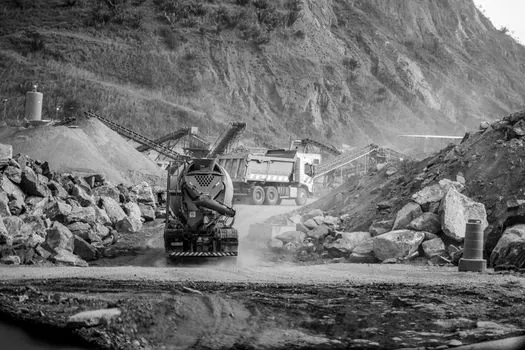
There is no single international standard that defines "transit mixer" or "agitator truck" as a vehicle class; the terminology is set by owner-agency manuals such as TxDOT's rigid pavement construction manual and by industry associations such as the National Ready Mixed Concrete Association [S1][S2]. Manufacturer guides and OEM service documentation treat the mixer and agitator ratings as two distinct data points on the same nameplate, and the legal payload on a public road is the smaller of those two numbers and the highway weight cap, whichever is lower [S1][S2].
The concrete mixer entry in the broader equipment encyclopedia covers the stationary and portable side of the same family (twin-shaft, planetary, and drum mixers used at the plant), which is useful background when the readymix truck arrives at a pour that is being fed by a stationary sand mixer or pan mixer. Where the chassis is the question rather than the drum, the related dump truck reference covers the non-rotating-haulage cousins of the transit mixer and is the right comparison when the project is moving aggregate rather than wet concrete.
Trackable signals for the next planning cycle: any revision to state DOT mixer-vs-agitator rating rules, plant-side adoption of higher-RPM drum drives for shorter haul windows, and OEM rollout of telematics that publish the actual drum rotation rate rather than just GPS position.