
A transit theodolite is a theodolite whose telescope is short enough to rotate a full 360 degrees about the horizontal trunnion axis, turning the scope through the vertical plane and its zenith [S3]. The verb "to transit" denotes the act of making that reversal in the instrument's supports without lifting the telescope, a definition formalised in the NSPS "Definitions of Surveying and Related Terms" [S2].
In non-transit theodolites, vertical rotation of the telescope is restricted to a limited arc, which historically forced the operator to physically lift and re-seat the instrument to reverse the line of sight [S3]. That mechanical limitation is the single feature separating the two families today, and it is the reason a theodolite specification sheet either lists a "transit" telescope or a "Y" or "dumpy" yoke.
Transiting the Telescope: What Actually Happens Mechanically
Transiting is a physical reversal of the telescope about the trunnion (horizontal) axis inside the instrument's two standards, performed without removing the scope from its bearings [S2]. Once the line of sight has been flipped through the zenith, the observer can immediately re-sight the back station, which lets the surveyor double the angle by face-left then face-right readings and cancel most collimation and index errors [S1].
A specialised variant, the broken-telescope transit, routes incoming light through a prism set into the trunnion axis so the eyepiece exits through the hollow axis beyond the support; this geometry is reserved for precise astronomic transits where the observer cannot stand behind a long objective tube [S2]. Most construction-grade transits use a straight-through telescope, which is also the configuration sold today as a lightweight backup instrument on jobsites where total stations are the primary tool [S1].
Accuracy Envelope: Where Transits Stop and Theodolites Start
Direct-reading optical transits historically resolved angles to 30 arc-seconds on the horizontal circle, and many entry-level units did not measure vertical angles at all [S1]. A modern theodolite, by contrast, is expected to resolve angles in the arc-second range, with the best instruments reaching microradian-class accuracy for geodetic triangulation [S3].
That 30-arc-second floor is the practical reason the transit has drifted toward a construction helper role rather than a survey primary. Electronic theodolites and total stations offer arc-second readouts with onboard data logging, so the manual transcription step that defined the older transit workflow has effectively disappeared from new procurement [S1][S3]. See the broader construction machinery and equipment family for the current placement of transits alongside levels, total stations, and builder's levels.
Optical Theodolite vs Total Station vs Builder's Level: A Criteria Comparison
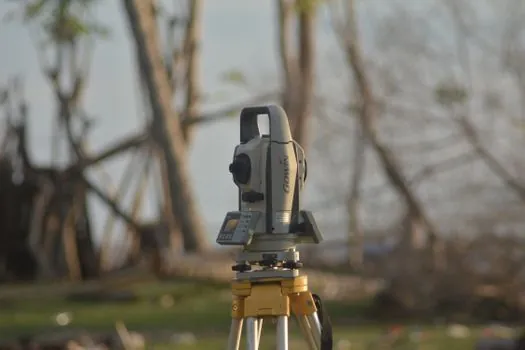
Three instruments get confused on the same jobsite, and the table below lines them up against the four criteria a buyer actually weighs: angle measurement, vertical-angle capability, typical accuracy, and data output. [S1]
Optical theodolite: measures both horizontal and vertical angles on exposed or internal scales, reads to arc-seconds on a vernier or optical micrometer, angles recorded by hand [S1][S3]. Transit theodolite: same two-axis geometry but with a telescope short enough to rotate fully about the trunnion; horizontal resolution to about 30 arc-seconds on common models, and some units omit the vertical circle entirely [S1][S2][S3]. Total station: combines an electronic theodolite with an electronic distance measurement (EDM) module and onboard or tethered data-collector software, logging both angles and slope distances digitally [S1][S3]. Builder's level (often mis-labelled a "transit level"): no angle measurement at all, just a telescope plus bubble that establishes a horizontal line of sight; the user reads a graduated rod by eye [S1].
On accuracy the ranking is total station > electronic theodolite > optical/transit theodolite > builder's level, while on operator skill the ranking inverts, with the builder's level requiring the least training. A useful cross-reference is the related rotary laser benchmark elevation transfer workflow, which has displaced builder's levels for long-run height transfer on modern site grading.
Who Should Still Specify a Transit in 2026
Transits remain appropriate for short-range construction layout, rough angle doubling on a backsight, and as a low-cost backup when a robotic total station fails in the field [S1]. They are also widely used in training programmes and on cadastral or boundary work in regions where 30-arc-second horizontal precision is acceptable and EDM is not yet standard.
Transits are not the right tool where vertical angles must be read to arc-second precision, where distances are needed in the same setup, or where digital deliverables are contractually required; in those cases an electronic theodolite or total station is specified instead [S1][S3]. A non-transit theodolite is functionally obsolete for new survey procurement because the operator has to lift the instrument to reverse the line of sight, which prevents clean face-left / face-right averaging [S1].
Field Setup Steps Common to Both Transits and Theodolites
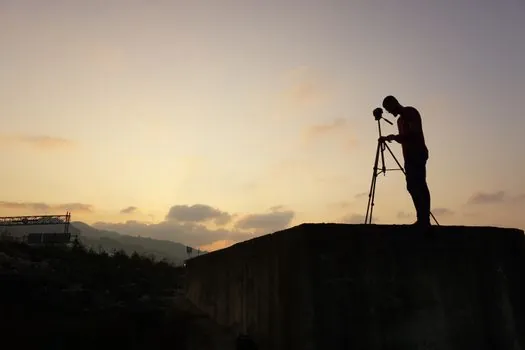
Temporary adjustment at every station follows the same four-step sequence regardless of whether the instrument is a transit or a non-transit theodolite: set up on a tripod with approximate levelling, centre the vertical axis over the station mark using a tribrach, level the base with the in-built bubble to make the vertical axis truly vertical, and focus the eyepiece and objective to remove parallax [S3].
Once sighted, the surveyor reads the horizontal and vertical circle values, records them, and moves to the next target without disturbing the tripod; the angle-difference arithmetic, not the instrument, is what produces the angular result delivered to the plan [S3]. When angle-doubling is required, the observer transits the telescope through the zenith and re-sights the back station, then averages the two faces to suppress residual collimation error [S1][S2].
Trackable Signals for Buyers and Specifiers
Two signals are worth monitoring through 2026: continued OEM discontinuations of optical transit lines as the same vendors push 2-arc-second electronic theodolites into the price band the transit once occupied, and the residual secondary-market price of used 30-arc-second transits, which is the cleanest indicator of how much construction work is still being done with non-digital angle measurement. [S1]
Spec-level background on the components involved: checking and testing apparatus.