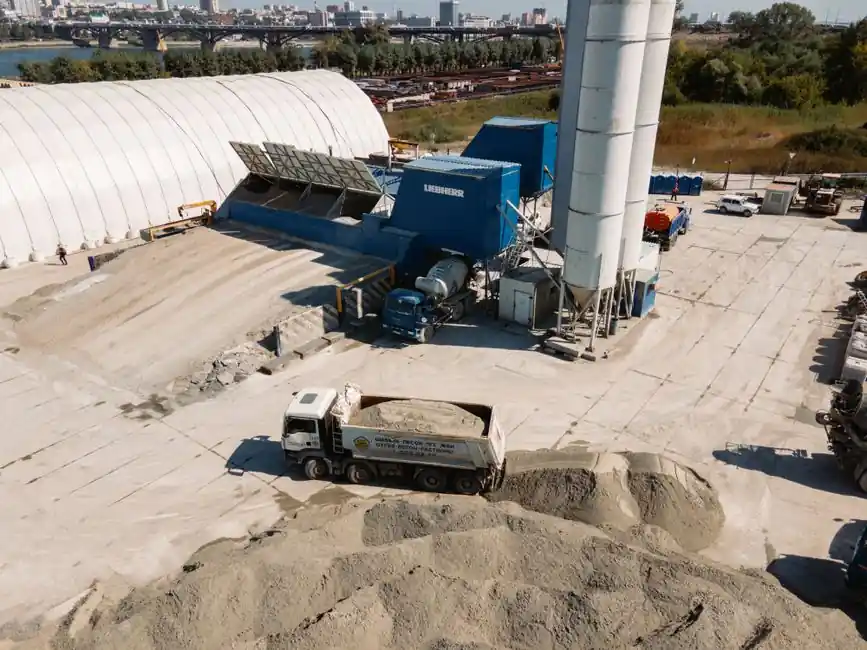
A truck-mounted concrete pump entering a sanitary process line site must clear a 32-point daily inspection built on ACI 304.2R, with the operator carrying an ACPA Certified Operator card and the unit itself compliant with OSHA 1926.20 general-duty inspection plus OSHA 1926.1417 operability marking [S4][S5].
Sanitary process line work (food, beverage, pharmaceutical, wastewater) raises the bar on washdown, contamination control, and pipeline integrity, so the standard 6-section pump checklist expands with hopper residue checks, water-box draining logs, and a documented clean-out sequence before the truck leaves the pour zone [S1][S3].
Which standards govern a truck-mounted concrete pump on a sanitary pour
ACI 304.2R is the controlling American Concrete Institute document for placing concrete by boom pumps, and the DigiDocs 6-section, 32-checkpoint daily form is built directly against it, covering Outriggers & Setup, Boom Hydraulics & Pin Locks, Hopper & S-Valve, Wear Plates & Pipeline, Remote Controls, and Documentation [S4]. The same form cites OSHA 1926.20 (general industry safety training and competent-person inspection duties), OSHA 1926.1417 (operability marking for mobile cranes, which OSHA applies to boom-type concrete pumps as analogous equipment), FMCSA motor-carrier rules, and ASME B30.27 for the placing boom itself [S4].
Operator certification sits on a separate axis: the American Concrete Pumping Association (ACPA) Certified Concrete Pump Operator program is the only industry-recognized written-assessment certification in North America, valid for two-year terms after a passed exam and prerequisite safety training [S5]. The card is wallet-size, employer-neutral, and ties to specific equipment class experience, which matters because sanitary work frequently demands both a boom pump and a separate placing boom on towers, and the operator must be class-rated for the unit actually in use [S5].
For a truck-mounted concrete pump being mobilized to a sanitary process line site, three documents must travel together: the ACPA operator card, the daily ACI 304.2R inspection record, and the unit registration plus oversize/load permits if the boom exceeds state road limits [S1][S4].
The 32-point ACI 304.2R daily inspection, section by section
Section 1, Outriggers & Setup, is the section that fails the most and causes the most catastrophic incidents: an outrigger pad on unprepared ground without crane mats produces a slow-motion tipover that is almost always fatal to anyone under the boom [S4]. The inspection requires visible verification of pad size relative to soil bearing pressure, full extension of all outriggers, load-chart confirmation against the planned reach, and a level indicator reading inside the manufacturer's tolerance band [S1][S4].
Section 2, Boom Hydraulics & Pin Locks, is the second-highest-fail section: the boom-pin lock must be positively engaged after every boom move because the unfolding sequence depends on it, and a missed pin can let a section walk out under load [S4]. Inspectors check each pin retainer, boom-section cracks, hydraulic cylinder rod condition in both extended and retracted positions (leaks often appear only under directional pressure), slew ring bolts, and the stow/lock mechanism that holds the boom for road transit [S1].
Section 3, Hopper & S-Valve, drives the cleaning decision: a worn S-valve seal sprays concrete back at the operator on every stroke, and a worn cutting ring or wear plate past spec generates pipeline thrust that cascades into joint failure downstream [S4]. Daily checks cover S-tube gap measurement, wear-plate inversion or replacement criteria, hopper grate integrity, and hopper safety switch function (a bent grate bar that lets a hand reach moving parts is a lockout condition) [S1][S2].
Section 4, Wear Plates & Pipeline, is where the sanitary-process-line requirement adds strictness: pipeline sections are tapped with a mallet and listened for dull thuds indicating internal concrete buildup (a contamination and pressure-loss risk on long sanitary runs), and every gasket, clamp, and end-hose coupling is verified [S1]. The 36 safety-hand-signal standard from ACPA, ASME B30.27 placing-boom rules, and pipe-section wear limits defined by the OEM all intersect here [S5].
Section 5, Remote Controls, fails when an E-stop battery is low and the operator only finds out at the worst possible moment during a pour [S4]. The checklist mandates a function test of every E-stop on the pendant while the hydraulic system is under load, confirmation of remote battery state, and verification that the hopper grate safety switch trips the radio link [S1][S3].
Section 6, Documentation, ties the inspection to the unit registration, insurance, operator manual, prior inspection records, and required road/oversize/special permits, plus the operator's pre-job briefing notes [S1][S3].
Pre-start checks operators run before they leave the yard

The free pre-start checklist for boom and line pumps separates the daily ACI inspection from the operator's pre-departure walk-around, and covers engine fluids, hydraulic oil level, hydraulic leaks, boom fold sequence, outrigger function, hopper cleanliness, and safety devices including the hopper grate interlock [S6][S3].
Operators also verify water tank and water-box levels (the water tank is used for washout and pump prime), the auto-greaser reservoir state, remote-control battery and signal, light and switch functions, and a full boom-and-chassis leak walk with the boom in both folded and partially extended positions [S3]. End-of-shift procedures call for draining the water box, setting the parking brake, and securing the boom in road-stow before the unit is released [S3].
A 2024 safety-checklist guide consolidates the same pre-start items into a 5-block structure: documentation and operator credentials, machine condition, boom and outrigger setup, pump and pipeline, and emergency systems, with a final go/no-go sign-off [S7]. This is the structure a sanitary-site permit writer should mirror when reviewing a contractor's submitted pre-start record [S7].
Most common failures, ranked by consequence
Tipover from outrigger pads on unprepared ground is the number-one catastrophic risk; the failure mode is slow, but the outcome is fatal to anyone near the boom envelope, which is why competent-person sign-off on the soil bearing check is non-negotiable under OSHA 1926.20 [S4]. The second-ranked failure, an unconfirmed boom-pin lock, lets a section telescope under load and produces a partial collapse that the operator usually survives but the pour loses [S4].
Third, an S-valve seal sprayed back on every stroke burns through a cleaning shift and exposes the operator to high-pressure concrete in the face; this is also the most common cause of "wet concrete everywhere" complaints on sanitary process line sites where washdown discipline is critical [S1][S4]. Fourth, a deferred wear-plate replacement past spec produces pipeline thrust that cracks couplings and is the leading mechanical cause of pipe-joint failure on long horizontal runs [S4]. Fifth, a remote E-stop with a low battery leaves the operator with only the cab-mounted Estop, which the radio link may not reach in dense rebar or shielded tank interiors [S3][S4].
Sanitary process line: what changes versus a general pour
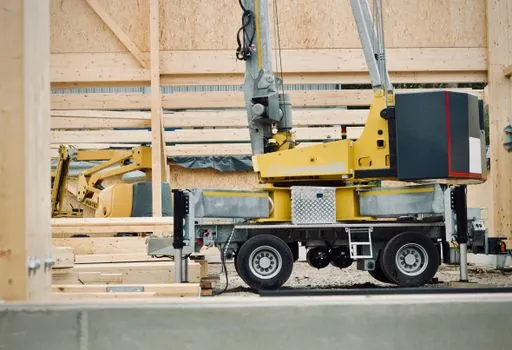
A sanitary process line site (CIP systems, open-process tanks, food-grade floors, pharmaceutical slab work) adds three demands to the standard 32-point list. First, hopper residue control: the hopper, S-tube, and water box must be fully drained and inspected for leftover material before the truck leaves the site, because open-process tanks and CIP loops downstream are intolerant of foreign concrete contamination [S3].
Second, water management: the water tank is the source of washout water, and on sanitary sites the discharge point is often controlled; the daily log must record water tank level at arrival, level at end of pour, and discharge location, and the concrete mixer truck or pump operator must coordinate washout to stay inside the site's drainage permit [S3][S6].
Third, pipeline integrity: long sanitary runs use small-diameter pipe (typically 4 to 5 inch) with high system pressure, so the wear-plate and cutting-ring replacement interval is shortened, and the inspection form should record wear-plate cycles since last inversion or replacement as a trackable trend [S1][S4]. Pipeline tap-with-mallet checks become more frequent, and any dull-thud sections are replaced rather than left in service [S1].
How to verify a supplier's certificate is real and in scope
Step 1, ask for the ACPA Certified Operator card and verify the operator's name, card expiration, and the equipment class (line pump, boom pump, separate placing boom, high-pressure) against the unit that will arrive on site; ACPA certification is class-specific and time-bounded, and the card must be in date for the exact unit class on the work order [S5].
Step 2, ask for the prior 30 days of daily ACI 304.2R inspection records, signed and timestamped by the operator, and confirm the unit serial number on the records matches the truck on site; a digital record from an inspection platform such as DigiDocs, Mitti, or an equivalent app is preferred because it carries the operator e-signature, photo attachments on failure, and a deficiency log routed to a mechanic for closure [S3][S4].
Step 3, ask for the unit registration, insurance, and any required oversize/load permits for the route the boom will travel, plus the operator manual that covers the specific boom configuration; a unit without current registration or an out-of-date operator manual for the boom section count on the truck is a permit-writer red flag and should be sent back before mobilization [S1].
Buyers evaluating a truck-mounted concrete pump for fleet addition should keep this 32-point form as a contract attachment, and require the supplier to provide a 90-day field-failure log demonstrating closure rates on the top five failure modes (outrigger pad, boom pin, S-valve, wear plate, remote E-stop) before the unit is accepted into sanitary service [S4]. For spec-side guidance on adjacent equipment classes, the safety certification reference covers the cross-program logic, and the concrete mixer truck page covers the washout and water-box requirements that pair with the pump on sanitary pours.
Track these signals over the next quarter: any ASTM or ACI committee update to 304.2R revision text on outrigger soil-bearing math, and any OSHA interpretation letter on 1926.1417 operability marking applied to boom-type concrete pumps, will shift the daily form's red-tag thresholds, and any expansion of ACPA class ratings to cover electric-driven placing booms (which currently have a separate study-guide section) will change which operators are eligible for a given unit [S4][S5].
This topic is covered further in Aluminum Ladder Certification Checklist for Structural Fabrication Jobs.