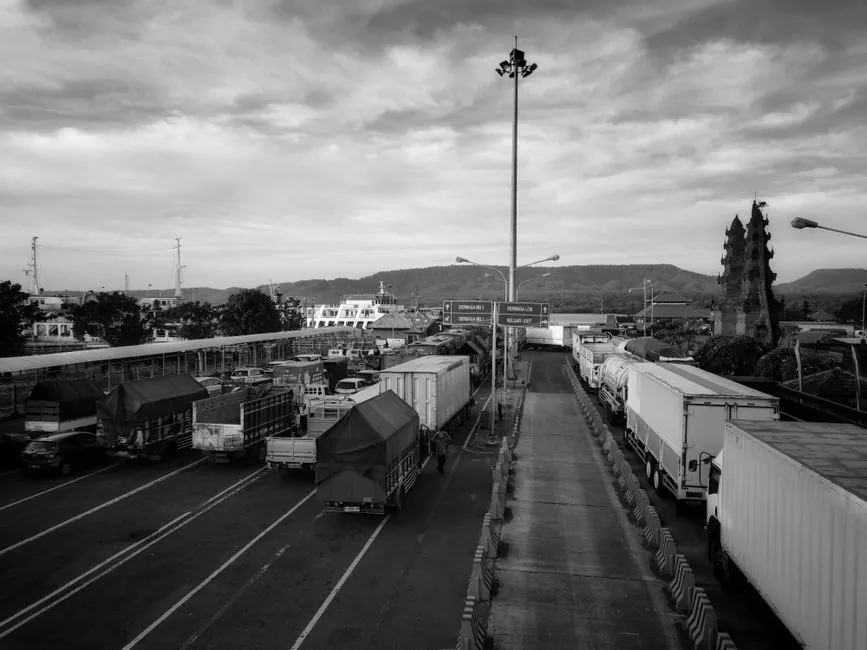
A 30-80 t pit-style truck scale becomes the right primary weighbridge for air-cargo handling the moment a single Unit Load Device (ULD) or PGA pallet clears 1,500 kg, or when a consolidated consignment crosses 6,000 kg gross, per air-freight scale-selection guidance published in 2025 [S3].
Below those thresholds, platform scales (150-500 kg, 0.5 kg resolution) and pallet-jack scales (1,000-2,500 kg) cover the bulk of belly-hold work, where LD3/LD7 containers are rated 1,588-3,175 kg and standard pallets stay under 2,273 kg [S1][S3]. Choosing the wrong class of scale costs money: under-declared weight triggers airline reweighing fees of EUR 25-75 per shipment plus delay, while over-declared weight inflates the chargeable figure against the airline's gross-vs-volumetric comparison [S3][S4].
Why ULD Geometry Forces the Scale Decision
IATA ULD Regulation (ULDR) data for 2026 leaves the four reference footprints unchanged: PMC/PAG pallets at 318 cm x 244 cm, PAC at 244 cm x 318 cm, LD3/LD7 containers at 160 cm x 244 cm base with 163 cm height, and freighter PGA/P6P pallets at 317.5 cm x 243.8 cm with up to 300 cm vertical clearance on a B747F main deck [S1]. Pallet bases add roughly 15 cm to overall height, leaving 145-148 cm for cargo stack on a 163 cm envelope [S1].
Gross-weight limits widen on the same ULDs by an order of magnitude: 2,273-6,123 kg for PMC/PAG, up to 2,273 kg for PAC, 1,588-3,175 kg for LD3/LD7, and up to 11,340 kg for PGA/P6P main-deck pallets [S1]. That 1,588 kg to 11,340 kg spread across the four common ULD types is the single biggest driver of scale-class selection, because no one indicator matches all four.
Scale Classes and Their Air-Cargo Fit
Air-freight scale guidance published in 2025 partitions weighing equipment into four bands [S3]. Digital bench scales (30-50 kg capacity, 0.1 kg resolution, EUR 30-80) handle individual courier pieces and under-30 kg shipments. Platform or floor scales (150-500 kg, 0.5 kg resolution, EUR 200-600) cover cartons, small pallets, and the typical LD3 break-bulk case loaded to 1,200-1,800 kg when distributed over multiple pieces. Pallet-jack scales (1,000-2,500 kg integrated lift) suit warehouse throughput where a forklift pass is the bottleneck.
Truck scales and crane scales (2,000-5,000 kg capacity) sit at the top of the equipment ladder and are typically installed at the air-cargo terminal apron or warehouse dock [S3]. For main-deck freighter buildup, where a single PGA/P6P can carry up to 11,340 kg, pit-type truck scales in the 30-80 t range are the only equipment that can weigh a build-up pallet, tow-tug, or roller-bed trailer in a single pass without rehandling [S3]. Note that narrow-body aircraft impose per-piece limits of 80-150 kg while wide-body freighters accept up to 250 kg per piece, so even within a single freighter, the weighing strategy splits between piece-level and ULD-level [S3].
Calibration, Accuracy, and the Chargeable-Weight Audit
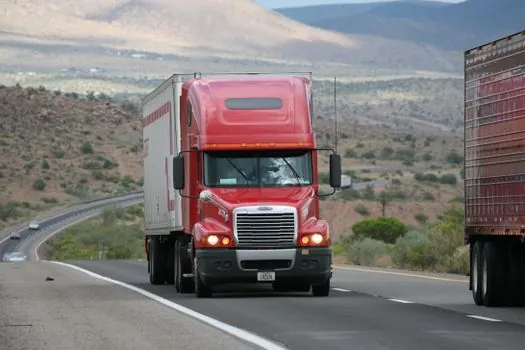
Air-freight scale guidance recommends calibration every 12 months at minimum and every 6 months for high-volume operations, with trade-approved (certified) scales required for commercial use in most jurisdictions [S3]. Accuracy classes of 0.05% (OIML R76 Class III) are typical for a 30-80 t pit installation, which keeps a worst-case 11,340 kg PGA reading inside +/- 5.7 kg, well below the granularity of any airline reweigh dispute.
Chargeable weight is the higher of gross weight and volumetric weight, calculated as (L x W x H cm) divided by a carrier divisor of 6,000 for international air freight or 5,000 for some European road-air combinations [S4]. Rounding convention is to round up gross weight to the nearest 0.5 kg; an under-declared 47.3 kg is recorded as 47.5 kg, never 47.0 kg [S3]. Volumetric weight applies the same rule: a mis-declared dimension of 5 cm in any axis on a 1.5 m x 1.2 m x 1.6 m LD3 box shifts the divisor-derived weight by roughly 1.6 kg, enough to flip the gross-vs-volumetric comparison in either direction.
Who Needs a Truck Scale at the Air-Cargo Site
The need case is narrow. A truck-scale weighbridge is justified when a handler regularly processes main-deck freighter ULDs (PGA/P6P), consolidated 11,340 kg build-up pallets, or air-road intermodal trailers arriving on a dump-truck-style roller bed that cannot be broken down to pallet-jack scale capacity [S1][S3]. Forwarders handling only passenger belly-hold volume (LD3/LD7, PAG) rarely need more than platform and pallet-jack scales because the per-piece envelope stays under 3,175 kg.
It is not justified for e-commerce integrators shipping individual parcels under 30 kg, for courier depots, or for any operation that never sees a single piece above 1,500 kg [S3]. In those lanes, a EUR 30-80 digital bench scale covers the work and the truck-scale install (typically EUR 25,000-60,000 for pit, plus foundation and calibration) does not pay back.
Decision Matrix: Scale Class vs ULD Type
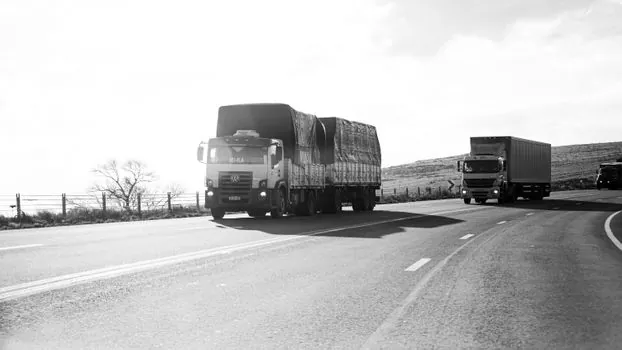
For an air-cargo terminal weighing ULDs and loose cargo, four decision criteria separate the scale classes: maximum single-piece weight, accuracy, deck size, and throughput. Bench scales max out at 50 kg and read to 0.1 kg on a 30-50 cm deck, suiting piece-level courier work but failing on any ULD. Platform scales (150-500 kg, 0.5 kg, 1-1.5 m deck) cover loose LD3 break-bulk and piece-by-piece AWB recording up to roughly 500 kg per piece. Pallet-jack scales (1,000-2,500 kg, 1 kg, pallet-width fork) handle PMC/PAG and LD3/LD7 single-ULD weighing at warehouse throughput, and are the practical workhorse for belly-hold integrators [S1][S3].
Truck scales (30-80 t, 0.05%, 3 m x 18 m deck) cover PGA/P6P main-deck pallets, full freighter build-ups, and intermodal trailers in a single pass, and they double as the certified weight source for Air Waybill gross-weight declaration at the gate [S3]. Crane scales (2,000-5,000 kg, 0.5-1 kg, suspended) fill the gap for awkward loads that cannot land on a deck, such as engine stands or unit-load devices without forklift pockets. Per-piece narrow-body limits of 80-150 kg and wide-body freighter limits of 250 kg mean that even on a single freighter, handlers usually weigh at piece level for documentation and at ULD level for ramp control [S3].
Operational Constraints and Failure Modes
The single most common failure mode is the LD3/LD7 container on a 244 cm x 160 cm base that overhangs a 1.5 m platform scale deck, producing a falsely low reading because the load is not fully supported on the weigh platform [S3]. Operators must ensure the entire ULD footprint is on the deck; if not, the load moves to a pallet-jack scale, a truck scale, or a crane scale. Pallet-jack scale readings drift by 1-2 kg if the jack is not centred on the weigh platform or if the load is lowered before the indicator stabilises [S3].
Truck-scale drift is more subtle. Foundation settlement on a poorly cured pit can shift zero by 10-30 kg over 12 months, which the 12-month calibration cycle catches but the 6-month cycle prevents. International air cargo volumes increased 6% year-over-year in May 2025 while spot rates fell 4%, signaling that carriers are highly sensitive to efficiency and precision in load planning [S2]. A 0.05% accuracy class on a 50 t scale, verified twice a year, removes essentially all dispute risk at the Air Waybill gross-weight line.
Standards, Sourcing, and What to Verify
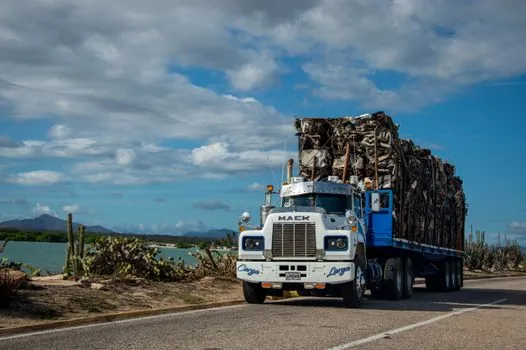
Relevant standards for an air-cargo truck scale installation include OIML R76 for non-automatic weighing instruments (Class III for trade-approved platforms in the 30-80 t band), and the IATA ULD Regulations (ULDR) for the dimensional and gross-weight envelope of the load being weighed [S1][S3]. Local trade-certification rules apply to the commercial use of the scale: in the EU that is typically the 2014/31/EU MID framework, in the US it is NTEP Handbook 44, and in most APAC jurisdictions it is a national metrology act referencing OIML R76 directly. Calibration certificates must be on file and presented on airline or customs request [S3].
When port-logistics or chemical-shipping sites already run a similar weighbridge, the same selection logic applies; see the Truck Scale Selection for Port Logistics: 2026 Spec Map for apron-side criteria and the Truck Scale Selection for Chemical Shipping: Spec Gates and Compliance Map for the hazardous-material lane. A 30-80 t pit installation with OIML R76 Class III certification, 0.05% accuracy, and a 3 m x 18 m deck is the right answer for a handler moving 11,340 kg PGA/P6P main-deck pallets through the gate on a regular basis; below that, a EUR 200-600 platform scale plus a EUR 1,500-3,000 pallet-jack scale is the more economic answer for the belly-hold lane.
Component reference pages worth checking: air pick.