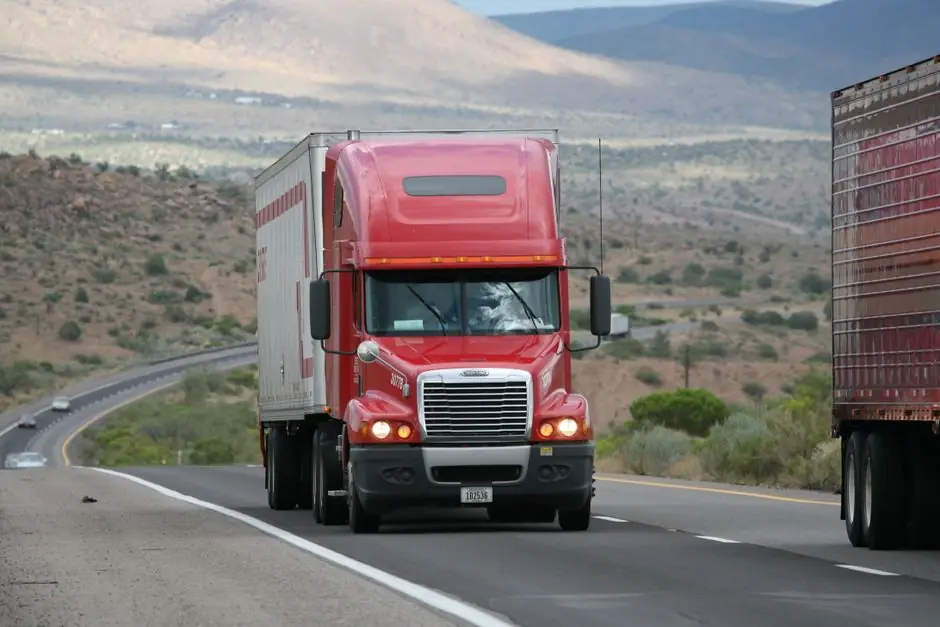
For port and intermodal terminals, a truck scale is a Class III legal-for-trade platform on a 9-36 m deck, sized to handle 60-150 t GVW tractor-trailers with 20-50 kg verification steps and either analog column or IP69K digital load cells. Sizing rules, legal-metrology class, and corrosion duty are the three specs that lock 70-80% of lifetime cost before concrete is poured [S5][S1].
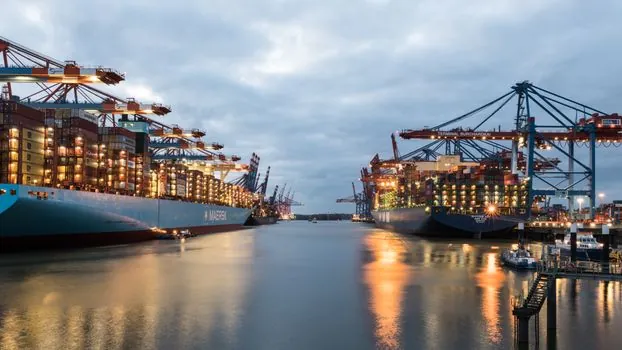
Port duty differs from quarry, grain, and waste sites in two ways: chloride-driven deck corrosion from sea air, and continuous 24/7 cycle pressure from vessel-call bursts. The truck scale you spec for a terminal gate has to weigh a laden container truck in under 60 s, survive salt spray, and pass OIML R76 or NTEP HB44 inspection on first attempt, or the lane goes dark.
Capacity and Deck Length for Tractor-Trailers and Container Haulers
Standard full-size weighbridges span 9 m, 12 m, 18 m, 24 m and 36 m deck lengths with 3.0-3.5 m clear width; the 18 m / 60 ft deck is the workhorse for Class 8 tractor-trailers and tri-axle dumps that dominate port gate traffic [S5]. GVW capacity on offer runs 60 t, 80 t, 100 t, 120 t and 150 t, and the 80 t deck on six analog column load cells is the price-leader configuration for medium-duty port and intermodal work [S5].
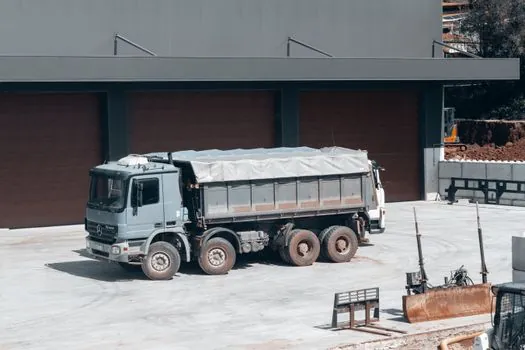
For a typical port that runs T3S2 (tractor + semi + 2-axle dolly) and T3S3 (tri-axle trailer) configurations, the 18 m deck length at 80 t gross capacity is the spec line that covers over 80% of gate moves; anything shorter forces split weighing or two-pass workflows, and anything longer over-specs capex without raising throughput [S3][S5]. Light-duty trucks under 30 t sit on 6-10 m platforms, while 50-100 t medium-duty and select long-haul vehicles require 12-18 m decks, and over-100 t heavy haul drops into the 24-36 m range with 8-10 load cells [S1].
Legal-Metrology Class: OIML R76, NTEP HB44, and Multi-Interval Steps
OIML R76 Class III multi-interval platforms (typically 20 kg verification step up to a 60-80 t max) and the equivalent NTEP HB44 n=5000 / n=10000 multi-interval are the commercial-vehicle baseline in 2026, and the legal-for-trade approval country (OIML, NTEP, Measurement Canada, SABS, CPA) must be written into the RFQ before quoting, not after delivery [S5]. A multi-interval deck gives the resolution needed for 20 kg axle-weight audits without forcing the full 80 t range to a coarser step; single-range platforms still exist but are uncommon for in-motion truck weighing [S5].
Class III accuracy with a 10 kg scale interval is the floor for commercial trade settlement and meets the majority of port and industrial invoicing [S1]. For axle-group weight audits on container haulers and chassis, a 20 kg / 50 kg dual-step multi-interval deck is the practical spec, and 50 kg single-range is acceptable only for bulk aggregate sites where axle-level resolution is not billed out. Picking the wrong class costs the project in two ways: a non-OIML deck will not pass first inspection at a customs-bonded terminal, and an over-precise single-range deck inflates load cell and indicator cost without raising commercial value [S5][S6].
Analog Column Load Cells vs Digital IP69K Networks
The traditional analog column load cell (30-50 t per cell, compression-type, IP68/IP69K) dominates the mid-market in 2026 on cost-per-cell, but a digital CAN-bus network with per-cell active diagnostics is the reliability upgrade for 24/7 port operations [S5]. An analog 6- or 8-cell deck with a remote summing junction box is typically 15-25% cheaper at first install, and a single failed cell is replaceable with a generic compression load cell of matching mV/V and impedance [S5].
A digital network deck is 20-30% more expensive at install but exposes cell-level health (temperature drift, mV/V trend, seal integrity) to the indicator; on a 4-cell digital network, one failed cell still allows the scale to weigh on the remaining three and flag the bad cell remotely instead of going fully blind [S5]. For 24/7 quarry, port and rail-truck operations the digital network is the lower-total-cost option over a 15-20 year service life, while for a seasonal grain elevator that can absorb a half-day outage, analog still wins on capex [S5]. For a port gate that handles 200-400 truck moves per day, the analog trade-off is hard to defend: every blind weigh event blocks a revenue lane.
Deck Material: Steel, Concrete, and Composite Trade-offs
Orthotropic steel deck (8-10 mm chequer or smooth plate welded to I-beam stringers) is the lightest option at 6-9 t of steel, ships in 3-4 sections, and is the only sensible choice for portable and relocatable port installations [S5]. Reinforced concrete deck (cast-in-place on a prepared pit foundation) is the volume baseline for 80-120 t gross capacity permanent pit-style ports, with the trade-off of 4-6 week cure time before calibration and longer foundation engineering [S5][S3].
Steel-concrete composite decks (concrete poured onto a steel tray with shear studs) combine the corrosion top surface of concrete with the structural stiffness of steel stringers, and are the spec-of-record for high-cycle port and mining duty where both chloride exposure and impact loading are daily events. The deck-rolling decision matrix breaks down on four axes: estimated start-up time, initial investment, resistance to corrosive environments, and number of relocations [S3]. For a greenfield container terminal, concrete is the spec; for a brownfield expansion or a leased berth, steel or composite is faster to install and easier to relocate at contract end [S3][S5].
Installation Profile: Pit vs Above-Ground vs Portable
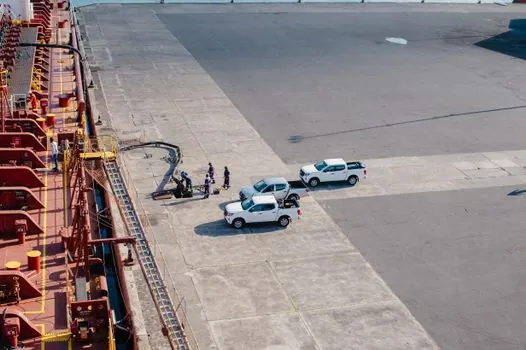
Above-ground scales install fast and allow under-deck service access, but require 6-10 m approach ramps on each side, which consume apron space that ports rarely have at the gate; pit-type scales sit flush with the apron, fit high-traffic port gates, and need a deeper foundation with drainage and a sump pump [S1]. For a port with a hard stand apron and high move counts (300+ trucks/day), the pit profile is the spec; for a temporary inspection lane or a leased berth, the above-ground profile cuts 2-3 weeks off the install critical path [S1][S3].
Portable axle-pad scales and semi-portable modular decks exist for short-term port projects and survey lanes, but they do not match Class III legal-for-trade accuracy on a 80 t GVW, and they are spec'd for overflow or audit lanes, not primary gate weighing. The site-space rule is direct: the larger the available apron, the more sense an above-ground scale makes, and the tighter the gate throat, the more a pit scale earns its foundation cost [S3].
Corrosion, IP Rating, and Port Environment
Port environments degrade weighbridges in three identifiable ways: chloride-driven corrosion on the deck and steel stringers, water-ingress failure in the load cell and junction box, and chemical attack on any exposed polymer seals or cable jackets [S4]. Hot-dip galvanizing to ISO 1461 (85-100 µm typical) on the steel deck, plus 316 stainless steel hardware on the load cell mounting hardware, is the minimum corrosion package for a site within 1 km of breaking saltwater [S1][S4].
Load cells specified for port duty should carry IP68/IP69K ratings, meaning dust-tight, continuous-submersion-rated to 1 m+, and steam-clean capable; analog junction boxes need the same IP69K rating, and any indicator cabinet at the gate must be either stainless or powder-coated aluminum with a Gore vent to manage thermal cycling [S5]. Stainless deck options are available for special corrosion environments, and the upgrade is justified at coastal terminals where deck service life drops below 10 years on standard mild steel [S1].
Selection Criteria Matrix for Port Scale Buyers
For a port-logistics buyer comparing the three common scale families on the same site, the spec trade-off breaks down on four axes. On capex, an analog above-ground steel deck is the price-leader at 15-25% below a digital pit concrete deck; on uptime, the digital IP69K network wins because a single cell failure does not blind the lane; on corrosion life, concrete or composite deck with galvanized stringers outlasts bare steel by 5-10 years within 1 km of saltwater; on legal-metrology, both analog and digital can ship OIML R76 Class III multi-interval, but the digital network is easier to re-verification on a 3-year cycle [S5][S1][S3].
Concrete-deck pit, 80-120 t gross, OIML R76 multi-interval with digital load cells, hot-dip galvanized approach ramps, and IP69K junction boxes is the spec-of-record for a 2026 greenfield container terminal gate. The same site with a brownfield apron and 200-300 truck moves per day can run an 80 t analog pit at 20-25% lower capex, accepting the higher blind-failure risk in exchange for first-cost savings. For a port chemical-shipping line, the deck, finish, and washdown spec is closer to the truck scale spec gates used in chemical shipping than to a bulk aggregate pit [S5].
RFQ and Sourcing Discipline
The four scoping questions that every port buyer must answer before requesting quotes are: installation profile (pit / above-ground / portable), weighing element (analog load cell column vs digital network), legal-metrology class (OIML R76 / NTEP HB44 multi-interval vs single-range, plus the country approval), and deck construction (orthotropic steel / reinforced concrete / steel-concrete composite) [S5]. Load-cell count, foundation type, and NTEP/OIML accuracy class are the three decisions that lock 70-80% of the lifetime cost before the deck is poured [S5].
For a typical port, the verification signal to watch over the next 12 months is NTEP Certificate of Conformance amendments for digital load cell networks, plus OIML R76 test certificates for the 80-150 t multi-interval decks that the 18-24 m port spec requires. Buyers who need to compare scale spec gates against related port-yard equipment (platform trolleys, reach trucks, dump trucks) can cross-reference the broader port logistics packaging and yard equipment spec map and the dump truck axle envelope to confirm the deck length and GVW class line up with the haul fleet.