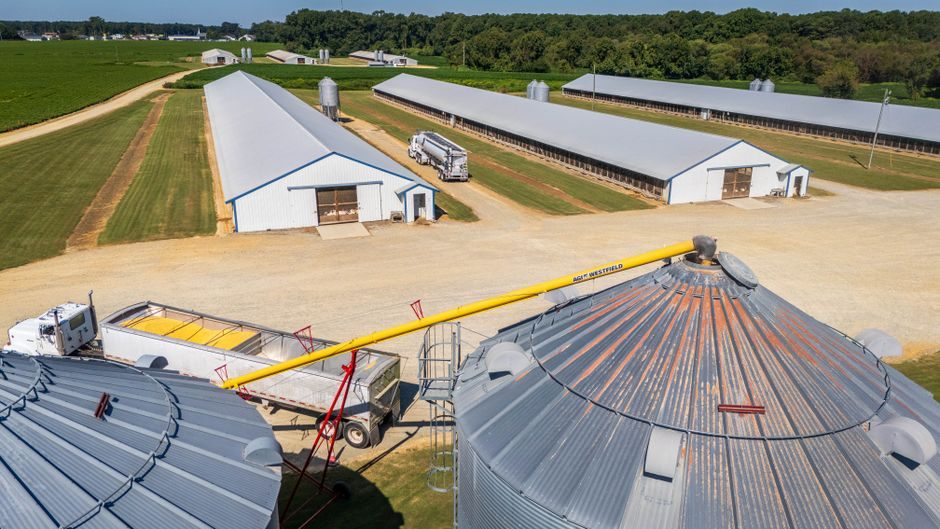
A truck scale is a pit-mounted or low-profile weighbridge designed for full-trailer gross weights, typically 60,000-120,000 lb capacity over a 70-80 ft steel or concrete deck [S3]. A filling-weighing scale is a high-speed process scale sized for one container at a time, normally 5-500 kg, integrated into a filling machine or checkweigher line [S2].
Because the operator sits 3-4 m above the deck in a truck cab on one end and 0.5-1.5 m from a filler head on the other, the human-machine interface, sightline, and alarm logic for each class are engineered around completely different distances and dwell times [S1].
Reading Distance and Display Architecture
Truck-scale operator visibility is dominated by remote displays because the driver never leaves the cab. Cardinal SB250, Kazel WA-1 Optima 2, and Rice Lake 167091 4-digit LED remote displays are listed as standard 2-4 inch character, 6-inch wide-angle long-range units sized for cab-readable distances up to 30-50 ft [S3].
Filling-scale operator visibility is close-range: a panel-mount indicator at 1-2 m, typically a 5-7 inch colour HMI showing recipe number, target weight, tolerance band, and batch counter, with a foot switch so the operator can keep both hands on the container [S1]. The Mettler Toledo IND360 automation indicator and IND400/IND700 controllers fall into the truck-scale cab-readable end, but they also serve checkweigher/filling HMI roles in process cells [S1].
Deck size forces a second visibility rule on truck scales: 80 ft weighbridges need stop/go traffic signals (Rice Lake 179525 Stop/Go 4 LED remote display) to tell drivers when to pull on and off, because the scale operator cannot see the rear axle from the indicator stand [S3].
Data Density and Audit Trail
Truck-scale ticket printing captures one transaction per truck: vehicle ID, gross, tare, net, axle weights, timestamp, and commodity. A standard printer-port ticket is read once and archived for 90 days minimum for road-weight compliance in most US states, longer for DOT audits [S1].
Filling-scale data density is two to three orders of magnitude higher: a filling-weighing scale at 20-60 cycles per minute generates 1,200-3,600 weight records per hour per head, each tied to a batch, SKU, and operator ID for SQF/BRC food-safety or 21 CFR Part 11 pharma records [S2]. Storage therefore matters more than screen size.
For both classes, Ethernet and serial comms are standard, but truck scales predominantly use RS-232/485 to ticket printers and remote displays, while filling scales shift to PROFINET, EtherNet/IP, or OPC UA for line-level SCADA integration [S1].
Comparison: Operator Visibility Criteria Side by Side
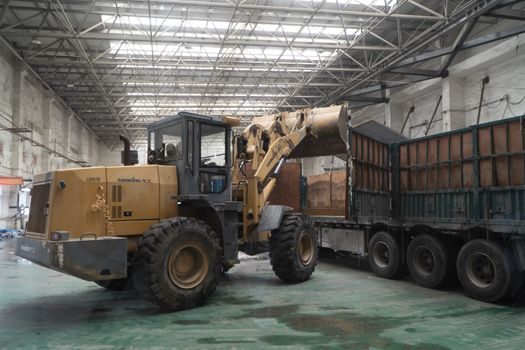
On four decision criteria the two scale classes diverge: (1) Typical read distance - truck scale 10-30 m to a remote LED, filling scale 0.5-2 m to a panel HMI. (2) Display type - truck scale 2-6 inch seven-segment LED, filling scale 5-7 inch colour TFT with touch. (3) Operator location - inside cab vs at filler head, often with both hands occupied. (4) Record rate - 1-10 tickets per shift per lane vs 600-3,600 weight events per hour per filler [S1][S3].
On cost-of-ownership: a used 70 ft x 11 ft concrete-deck truck scale lists around $69,900 on the secondary market (Rice Lake OTR in Missouri, July 2026), while a multi-head filling-weighing scale frame with load cells typically runs $4,000-12,000 new per station [S3].
On lifecycle: truck-scale load cells (Mettler Toledo Powercell PDX, Rice Lake RL20001) are rated 1-2 million cycles at full truck-scale capacity, whereas filling-scale load cells (single-point 50-500 kg) target 5-10 million cycles at lower per-event load [S3].
Use Cases Where Visibility Rules Differ
Aggregate yards, scrap recyclers, and grain elevators buy 70-80 ft truck scales with traffic-light remote displays, because the operator runs gate-in / weigh-in / load / weigh-out cycles and the driver never leaves the cab [S4]. Mid-America Scale's TS Series electronic low-profile steel deck is sold into this lane with the indicator and remote display quoted as a matched package [S4].
Food, chemical, and pharmaceutical filler lines buy filling-weighing scales where the operator must see under-weight, in-tolerance, and over-weight status at a glance 30-60 times per minute per head; a multi-head weigher running 8-14 heads in parallel pushes visibility into a SCADA HMI rather than a per-head screen [S2].
For dump-truck-mounted on-board scales, visibility shifts again: a 7-inch in-cab display plus external LED load indicator bar is common, because the dump body obstructs the operator's view of the ground-level load, and a dump truck weighing cycle is a single load event per truck, not a multi-axle gross weighment [S1].
Selection Criteria Map

Pick a truck scale when the load unit is a complete vehicle weighing 20,000-120,000 lb, the operator is remote from the load, dwell time per weighment is 30-120 seconds, and the legal-for-trade ticket is the primary deliverable [S1][S3].
Pick a filling-weighing scale when the load unit is a single container from 0.5-500 kg, the operator is adjacent to the load, dwell time is 0.5-3 seconds, and batch traceability into MES/ERP is the primary deliverable [S2].
Avoid specifying a truck-scale indicator for a filling line: 7-segment LEDs at 10 m read distance are unreadable at 1 m, and the absence of recipe/batch logic forces every changeover into manual parameter entry [S1]. Conversely, a filling-scale TFT HMI in a 100 ft weighbridge cab is unreadable and adds cost without function [S3].
On hazardous-area duty, explosion-proof scale indicators (Mettler Toledo ICS and IND-EX lines) and remote displays are required for both classes in ATEX/IECEx Zone 1 and Zone 21/22, but the indicator enclosure rating and cable gland specification are the same, so the visibility spec is set by zone first, class second [S1].
Integration with Forklift and Yard Equipment
Forklift scales read weight on the mast with an in-cab 4-5 inch display so the operator sees load weight without dismounting, bridging truck-scale and filling-scale visibility logic: remote read, fast cycle, single event per load [S1]. A reach truck with an on-board scale uses a similar 4-digit indicator, while an aerial work truck with a load-moment indicator adds a bar-graph visibility layer for boom-angle-derived lift capacity.
For pallet and parcel dimensioning, Mettler Toledo's Pallet and Parcel Weighing plus Dimensioning sub-line shows the operator the cubi-scan and weight on a 10-15 inch colour screen at 1-2 m, which sits in the filling-scale visibility band but with a slower cycle, since parcels weigh one at a time at 3-6 per minute [S1].
What Goes Wrong in the Field
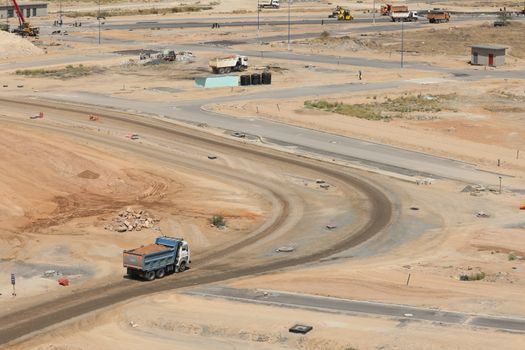
Most truck-scale operator-visibility failures are glare and angle: a 2-inch seven-segment LED in direct summer sun is unreadable at 15 m, forcing operators to walk to the cab window or squint; the field fix is a 4-inch or 6-inch LED with anti-glare hood (Cardinal RD2x4-2, Kazel WA-1 Optima) [S3].
Most filling-scale visibility failures are tolerance-band ambiguity: a 0.1 g resolution on a 5 kg scale shows too many digits, so the operator cannot tell in-tolerance from over-weight at glance speed. The fix is a 3-colour bar (green/yellow/red) on the HMI, not more digits [S2].
Truck-scale weighments are also vulnerable to off-centre loading: an axle placed 6 in off the centreline of a 70 ft deck introduces a small but legal-for-trade error, and the operator's only visibility is the remote display showing total weight, not load distribution. End-of-deck guide rails (Thurman portable scale frame guide rails) and stop/go signals are the practical mitigation [S3].
Filling-scale off-centre loading matters less because the platters are 200-400 mm and the load cell is single-point, but vibration from a conveyor above can blur the last digit; vibration-isolated mounting and 10 Hz output filtering are the standard fix [S2].
Standards, Compliance, and Sourcing Signals
For US legal-for-trade truck scales, NTEP Certificate of Conformance (CoC) is mandatory, and the indicator plus load cells must appear on the same CoC; the operator's visibility is the readout of a NTEP-certified weight, not a marketing display [S1].
For US legal-for-trade filling scales, NTEP CoC also applies, but with stricter resolution and stability-class rules; the operator's visibility must include a NTEP-marked weight display plus a non-NTEP process-status display for under/over alarms [S1].
Two trackable signals for the next 6 months: (1) NTEP CoC renewals for Mettler Toledo Powercell PDX load cells in 2026, which set the spare-part and calibration supply for used truck scales listed on secondary markets [S3]; (2) integration of filling-weighing scale recipes into cloud MES via OPC UA over MQTT, which shifts the operator visibility question from local HMI to remote dashboards.
For related coverage, see Terminal Block Selection Criteria for Packaging Line Retrofits.