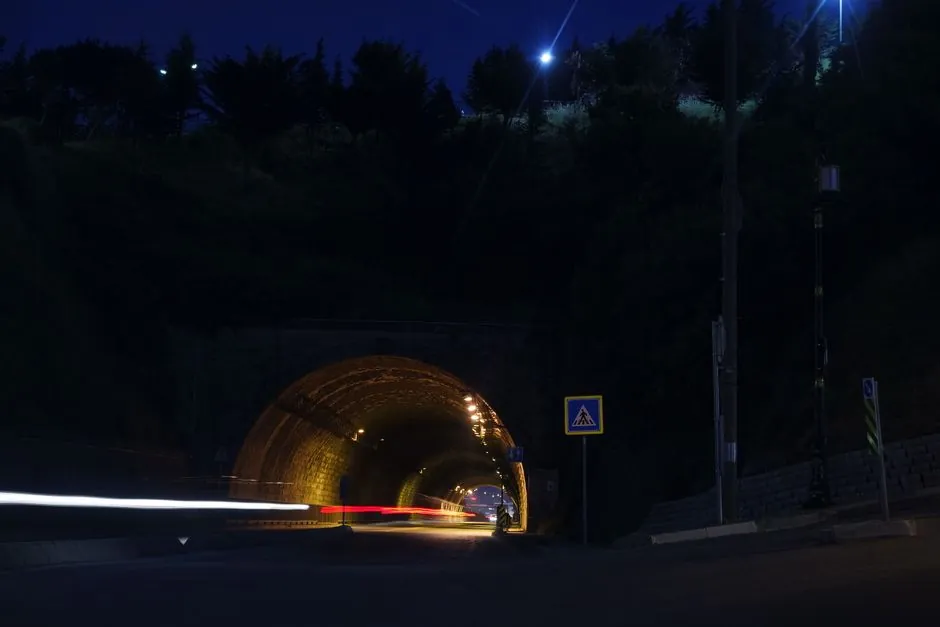
Tunnel invert paving and cut-and-cover deck resurfacing demand asphalt pavers with track undercarriages, working widths under 3.0 m, and Tier 4 Final diesel or Stage V engines certified for low-ventilation work environments [S1].
For confined tunnel cross-sections below 80 m², compact tracked pavers with overall widths of 1.5–2.5 m and electric-heated screeds in the 1.8–3.0 m range are the dominant specification, paired with high-pressure hydraulic systems rated for 35–42 MPa continuous duty [S2].
Tunnel Cross-Section Constraints and Paver Geometry
Tunnel invert paving typically operates inside 50–120 m² cross-sections, where overall machine width becomes the primary gating dimension: machines above 2.55 m body width cannot transit single-lane tunnel bores without partial disassembly, and any paver with retractable extensions must collapse to 2.0 m or less for low-bore work [S1].
Cutting height of the auger chamber, generally 400–600 mm, also matters for inverts where the asphalt lift is thinner (40–80 mm) than open-road placement; matching screed plate extension range to 1.8–3.0 m gives contractors a single platform for both 2-lane tunnel decking and adit resurfacing without a second machine [S2].
Track vs Wheel: Why Rubber Track Dominates Underground
Tracked undercarriage is the engineering default for tunnel pavers because wheel pavers lose traction on tack-coat-sprayed steel-reinforced invert surfaces and cannot maintain the 3–5 m/min placement speed required for continuous paving trains [S1].
Pneumatic-tired pavers are restricted to cut-and-cover access ramps and open tunnel approaches where ground pressure is distributed, while tracked pavers with 300–400 mm wide rubber belts and 2.0–3.0 m ground contact length maintain mat quality on freshly shot-blasted or milled surfaces, an approach covered in detail for adjacent haul road applications.
Engine Emission Tier and Ventilation Compatibility

Modern tunnel asphalt placement increasingly requires diesel oxidation catalyst (DOC) plus diesel particulate filter (DPF) aftertreatment rated to EPA Tier 4 Final or EU Stage V, because tunnel ventilation budgets in the 15–25 m³/s range cannot absorb uncontrolled particulate output from Tier 3 or older machines [S1].
Screed Selection: Vibratory, Electric Heat, and Crown Profile
Electric-heated screeds with front-mounted extenders are specified for tunnel work because propane heating is excluded in confined spaces, and vibratory frequencies of 50–70 Hz on the main screed plus 80–100 Hz on extension plates deliver 90–96% Marshall density in single-pass placement [S2].
Screed plate width should be selected at 200–400 mm wider than the placement width, so the 1.8 m nominal screed covers a 2.0 m invert strip, and the operator can shift the screed laterally without a reposition cycle that costs 8–12 minutes per shift in tight clearance work.
Wear-Parts Inventory for Underground Service
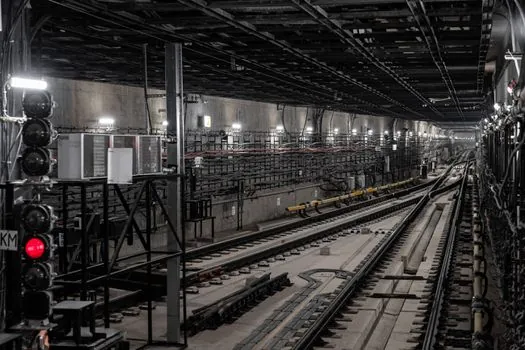
Tunnel invert paving accelerates wear on augers, conveyor chains, floor plates, and undercarriage rollers because of constant tack-coat exposure and steel-fibre aggregate from mill-and-fill work, so contractors standardize on paver wear parts in the 600–1,200 hour replacement band rather than the 1,500+ hour open-road interval [S2].
Common spares stocked for tunnel-rated pavers include auger flight segments, conveyor chain links with 76.2 mm pitch, hydraulic return filters rated to 10 µm, and undercarriage track shoes with 300–400 mm width; this is the same wear-parts pattern documented for adjacent cold milling operations on the same tunnel corridor.
Hydraulic and Material-Flow Capacity
Tunnel pavers need independent hydrostatic drives for tracks, conveyors, and augers fed by a 35–42 MPa variable-displacement pump, with flow split biased toward auger/conveyor (60–70%) to maintain a constant head of material in front of the screed at placement speeds below 4 m/min [S2].
Hopper capacity in the 6–10 tonne range matches shuttle-truck cycle times typical of tunnel access, and the receiving hopper wings must be hydraulic-folding rather than manual, since crew cab clearance to the crown is often less than 1.0 m and manual wings cannot be cycled safely.
Selection Criteria Summary: Track Pavers vs Wheel Pavers vs Specialty Invert Machines
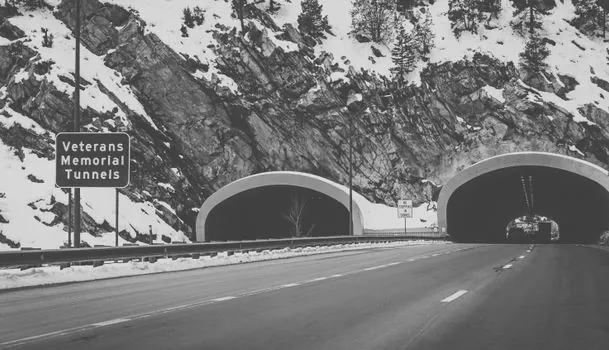
Three paver categories compete for tunnel work, and the decision matrix is driven by width, ventilation, and lift thickness. Compact tracked pavers (1.5–2.5 m width, 55–75 kW, 6–10 t hopper) handle 80% of underground and cut-and-cover work. Wheel pavers (2.4–3.0 m width, 75–110 kW) are restricted to open tunnel approaches and access ramps with 200+ mm lift capability. Specialty zero-side-clearance machines (1.2 m body width, 35–50 kW) cover rail-tunnel and service-adit invert strips below 2 m width. [S1]
Compact tracked pavers paired with 1.8–3.0 m electric-heated screeds remain the strongest specification for tunnel invert and deck work, and contractors operating on shared mining-haul-road contracts can dual-deploy the same machine fleet, with haul road paving handled during day shift and tunnel invert placement at night when ventilation is throttled.
For component-level specifications, see asphalt paver, pressure transmitter, and flow meter.