A turbidity meter is a single-parameter optical instrument that reports suspended-solids load as NTU/FNU by measuring light scattered at 90°, and is built for continuous, in-line process use in liquids [S6][S8]. A gas chromatograph is a multi-component separation-and-detection system that vaporizes a sample, splits it on a capillary or packed column, and quantifies each peak with FID, TCD, ECD, or mass-selective detection.
For a process engineer, the choice is rarely "either/or" — it is whether the question is "how much particulate is in this stream right now?" (turbidity) or "which compounds and at what concentrations are in this gas or volatile liquid?" (GC). Specifying the wrong one wastes both capex and bench time.
What Each Instrument Actually Measures
Compact portable turbidity meters such as the Lovibond TB 211 IR and TB 210 IR cover 0.01–1100 NTU using an infrared source and 90° scattered-light geometry in compliance with EN ISO 7027 [S1]. The portable Extech TB400 (distributed via Sigma-Aldrich) spans 0–1000 NTU at 0.01 NTU resolution, is CE-marked, and is designed to the same ISO 7027 compliance statement [S9]. In-line process turbidity sensors (METTLER TOLEDO InPro / M800 transmitter family) are specified for continuous suspended-solids monitoring in crystallization, phase separation, biomass growth (cell density), and beer filtration [S6][S7][S8].
A gas chromatograph, by contrast, accepts a discrete or on-column injection, vaporizes it through a heated inlet, and resolves analytes against a temperature-programmed column. The Viking GC-MS experiment, summarized in a Springer paper published 2026-05-04, demonstrated identification of both known and unexpected organic compounds in a synthetic mixture and in a Murchison meteorite aliquot — the canonical example of what a GC platform is built to do: separate and identify complex organic mixtures at low concentrations [S3].
Decision Criteria: Turbidity vs Gas Chromatography
The two instruments do not overlap in capability, so a side-by-side comparison reads as a mismatch — which is the point. Use the table below to shortlist correctly on the first pass. [S1]
Criteria 1 — Analyte type: turbidity meters quantify a bulk physical property (scattered light from particulates) and do not identify chemical species [S1][S6]. A gas chromatograph identifies and quantifies individual volatile or semi-volatile chemical compounds, typically at ppm to ppb levels [S3]. Criteria 2 — Output: turbidity delivers a single real-time NTU/FNU value suitable for closed-loop control on a conductivity meter-style 4–20 mA or digital bus, supporting proactive process control [S2][S8]. A GC delivers a chromatogram with peak areas, requiring run times of minutes to tens of minutes per injection. Criteria 3 — Sampling: turbidity is non-destructive and in-line, with probes that sit in the pipe or vessel [S4][S6]. GC requires a discrete sample, an injection valve or autosampler, and carrier gas (He, H₂, or N₂) plus consumable columns. Criteria 4 — Standards anchor: turbidity in water and beverage work tracks EN ISO 7027 for the optical method [S1][S9]. Gas chromatography is governed by method-specific ASTM/EN procedures (e.g., EPA TO series for volatiles) and is sensitive to flow accuracy of carrier and detector gases — for which a counter meter or electronic pressure controller is essential [S10].
Who Should Specify a Turbidity Meter — and Who Should Not

Spec a turbidity meter when the question is "are we filtering enough?" — drinking-water clarification, CIP return-line verification, yeast/cell-density trending in fermenters, beer filter monitoring, and crystallization end-point detection. The METTLER TOLEDO InPro 86x0i beer turbidity and color sensor is designed specifically for upstream/downstream brew-house use with multi-point calibration to reject background color [S7]. Continuous in-line turbidity meters are pitched for "proactive process control with uninterrupted, real-time turbidity monitoring" [S8], which is the right framing for any closed-loop control application.
Do not specify a turbidity meter if you need to know what the contaminant is chemically — turbidity cannot distinguish a yeast cell from a silica fines particle from an oil droplet, because all three scatter light. It also cannot quantify dissolved species, which are invisible to 90° nephelometry. For an analyzer that does, see the electricity-meter-class analog I/O discussion on choosing a process analyzer for context on multi-parameter transmitter architectures that pair turbidity sensors with pH, DO, and conductivity on a single bus [S5].
Who Should Specify a Gas Chromatograph — and Who Should Not
Spec a GC when the process or laboratory must separate, identify, and quantify individual organic (or inorganic, with appropriate detector) components in a mixture: natural-gas composition (C1–C5+), refinery gas, trace volatiles in environmental samples, beverage flavor/aroma profiling, impurity profiling in solvents, and reaction off-gas analysis. The Viking GC-MS work illustrates the upper bound: a properly configured GC-MS can resolve and identify organics in a complex extraterrestrial matrix [S3].
Do not specify a GC if you only need a bulk property of a liquid stream (total suspended solids, total organic carbon, total carbon) — those are cheaper, faster, and more robust measurements made by turbidity, TOC, or conductivity-based instruments. GCs also make poor real-time control devices on a sub-minute time scale: carrier-gas flow stability, column thermal mass, and detector cycle time typically cap reliable cycle times at 2–30 minutes [S10].
Failure Modes and Gotchas in Field Deployment
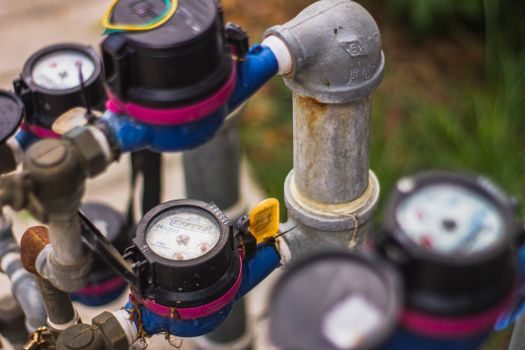
Turbidity probes fail for two main mechanical reasons: fouling of the optical window by the very particulates they are meant to measure, and condensation or air bubbles on the 90° scatter path that mimic high-NTU spikes. In-line turbidity transmitters such as the M800 are designed as multi-parameter analytical transmitters with a full-color touchscreen, intended for continuous service, but even so require scheduled cleaning cycles in high-broth fermenters and beer filtration lines [S5][S6][S7]. Portable units like the TB400 run on six AAA cells (~320 g, IP-rated hand-held form factor) and are useful for spot checks, not for permanent installation [S9].
GC failure modes are dominated by carrier-gas flow accuracy, septum and liner contamination, column bleed, and detector fouling. Sigma-Aldrich's flow-measurement technical document makes the operational case directly: "many chromatographers rely on electronic pressure control (EPC) for setting flow rates, however a flowmeter is still an essential tool to have in case troubleshooting is necessary" [S10]. Volumetric bubble meters and electronic mass-flow readers both have a place on the GC bench; what matters is that the carrier and detector gas flows are verified at the column outlet, not just trusted from the EPC setpoint. Older GCs without EPC absolutely require an external flow path to set flows manually [S10].
Standards, Methods, and How to Anchor Your Spec
For turbidity, the binding optical method is EN ISO 7027 (90° scattered light, IR source preferred for color-immune measurement); both the Lovibond TB 211 IR / TB 210 IR and the Extech TB400 are explicitly designed against it [S1][S9]. For process applications, reference the supplier's stated compliance with the method, and for water/wastewater reporting, anchor the spec to nephelometric NTU per the same standard.
For gas chromatography, anchor to the method number that matches your analyte class (e.g., EPA Method TO-14/TO-15 for air volatiles, ASTM D1946 for natural gas composition, ASTM D4815 for oxygenates in gasoline), and require carrier-gas flow verification per an external counter meter or bubble meter on the bench for systems without EPC [S10]. When ordering a process GC, insist on a documented detector linear range, repeatability, and method SOP — not a vendor brochure. For a related side-by-side spec frame on continuous in-line process analyzers, see the comparison at turbidity meter selection criteria for clean-in-place verification and the analyzer I/O architecture notes at pressure gauge vs differential pressure transmitter: 2026 selection criteria.
Trackable signals to watch on 2026-06-22 and forward: (1) the next revision cycle of EN ISO 7027 and any move toward multi-angle (in addition to 90°) scatter for sub-0.01 NTU ranges, and (2) tighter ASTM/EN method updates for process GCs that cite a defined flow-verification tolerance for carrier and detector gases rather than leaving EPC calibration as the only check [S10].