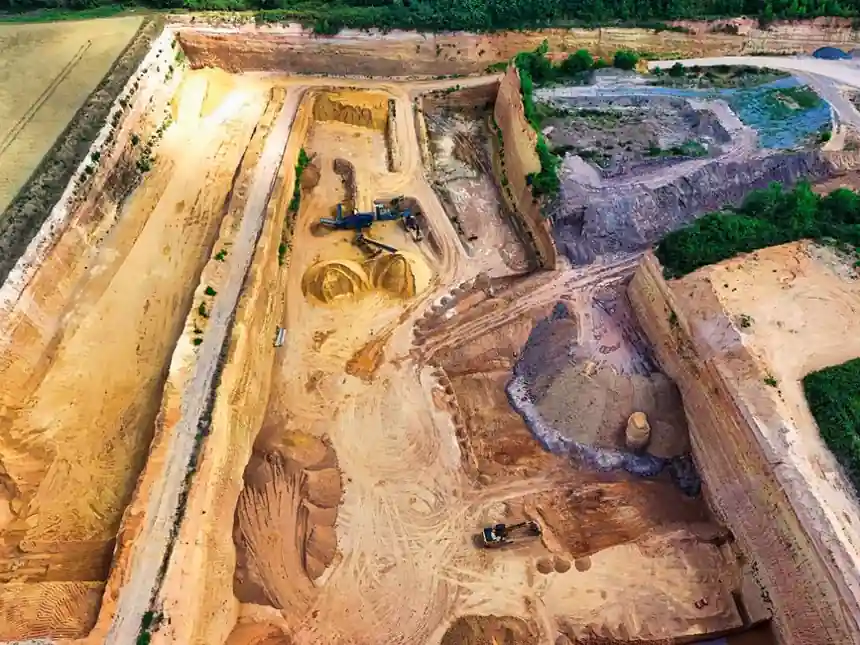
Two-hand control devices for mining applications must satisfy ISO 13851 simultaneous-operation logic, with each actuator requiring a defined spatial and temporal relationship before machine motion is permitted [S2][S4].
Selection in cement, mining, and port environments is driven by three factors: the hazard type, the entry point of the hand into the hazard, and the material conditions of the task [S1]. For pinch, crush, caught-between, impact, cut, and abrasion exposures, a two-hand control circuit is the engineered control that forces both hands away from the danger zone during the actuation stroke.
When Two-Hand Control Applies, and When It Does Not
Two-hand control is the correct choice for tasks where a single unintentional hand movement could trigger crush, pinch, or strike injuries, such as drill feed, rotation, and bolt-tensioning strokes on underground roof bolters [S2]. It is NOT a substitute for isolation: every conveyor, crusher, chute, hopper, screen, or rotating-equipment intervention requires LOTO confirmation before any manual or tool-assisted contact [S1].
For low-cycle, low-energy, or remote-actuation tasks, two-hand control adds cost without reducing risk; lighter enabling devices or single-hand guarded trips may be more appropriate. The decision rule is whether the operator's hands can remain outside the hazard point during the dangerous part of the machine cycle, which only simultaneous two-hand actuation can guarantee [S4].
Spec Bands: ISO 13851 Logic, Timing, and Handle Differentiation
ISO 13851 specifies the synchronism requirement: both actuators must be operated within a defined time window, typically 0.5 seconds, and the machine must stop if either actuator is released, preventing single-hand re-initiation [S2][S4]. Hydraulic implementations on QDS bolter platforms use Bosch Rexroth and Wandfluh proportional elements with SUN Hydraulics cartridge valves to meet MDG 35.1 "two-handed operation" requirements in Australian underground coal [S2].
Tactile differentiation matters in the field. Each handle on a multi-function mining control station uses a different shape so operators can identify rotation, feed, and jack functions by touch alone in dark or dusty conditions, addressing the MDG 35.1 "control selection error" failure mode [S2]. A comparison of the main options:
Option A, mechanical two-hand lever station: lowest cost, passive logic, suitable for hydraulic press or punch applications outside hazardous-zone classifications. Option B, ISO 13851 electronic two-hand module: integrated timing relay, EDM output, and Cat 3/PL d or higher safety rating, default for underground mobile equipment [S4]. Option C, hydraulic two-hand valve bank with load-sense proportional sections: required where both hands control a high-flow hydraulic function on a bolter, with synchronism enforced in valve logic rather than electrical relay [S2].
Risk Assessment Logic and Relevant Standards
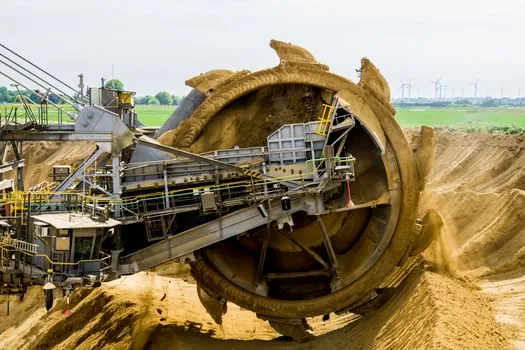
Machine risk assessment for two-hand control circuits sits inside a broader framework anchored on ISO 12100 for hazard identification, ISO 13849-1 for safety-rated control architecture, and IEC 62061 for quantified safety-function reliability [S4]. The Australian MDG 35.1 guideline adds domain-specific requirements for underground coal equipment, where dust, water, and confined-space work amplify the cost of a control selection error.
Pre-work inspections are non-optional: approximately 30% of machinery-related injuries involve amputations or deep lacerations, and a missing guard or bypassed two-hand circuit is a direct path to that outcome [S4]. OSHA machinery requirements, the EU Machinery Directive, and Australian WHS Regulations all converge on the same expectation, that two-hand control is selected after, not before, a documented risk assessment that names the hazard, the entry point, and the energy isolation method [S4].
Field Failure Modes in Mining Service
Single-hand bypass is the headline failure mode: a mechanically held-down actuator, a wedged pushbutton, or a jumpered valve solenoid defeats the entire control logic. Two-hand circuits that use the same hydraulic supply for both actuators without cross-check valves are particularly vulnerable because a single stuck spool can simulate simultaneous input [S2].
For mining dump-truck and conveyor systems, complementary controls such as pull-cord emergency stops, belt-edge guarding, and access control at equipment housings reduce the probability that an unqualified or fatigued operator reaches the control station in the first place [S3]. A control cable for the safety circuit should be specified with oil, abrasion, and cut resistance matched to the cable carrier or conduit routing; underspec'd cable jackets fail first in roof-bolter and load-haul-dump service.
Integration with Workforce Controls and Conveyor Safety
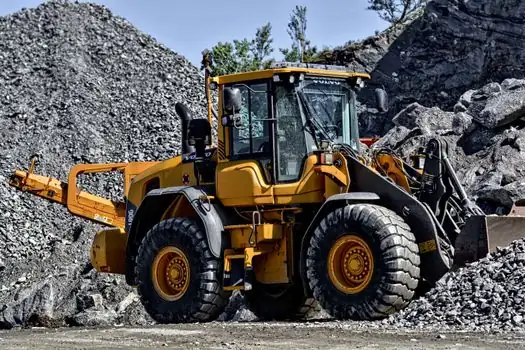
Two-hand control devices gate a single machine function, but the operator using them must already be qualified, fit for work, and authorized to be at the station. Skills-to-task tracking at the access door prevents an uncertified operator from reaching a two-hand control station on a bolter or a mining dump truck [S3]. Layered authentication, including dual authorization for high-risk zones, plus fatigue and alcohol screening through regulated-zone tracking, materially reduces the human-factor contribution to two-hand control failures [S3].
Conveyors deserve specific attention: belt, roller, pulley, and idler handling during maintenance, plus clearing jammed material from transfer points, remain the highest-frequency hand-injury tasks in cement, mining, and ports [S1]. Two-hand control on a conveyor take-up or tracker is rarely the right answer; full LOTO plus a distance tool is. Reserve two-hand logic for the drilling, cutting, and pressing functions where a guarding solution is impractical.
Selection Checklist Before Spec Issue
Confirm the task: drill feed on a roof bolter, hydraulic press stroke on a maintenance fixture, or guillotine cut on a sample-prep bench. Confirm the standard: ISO 13851 for the logic, ISO 13849-1 for the performance level (PL c minimum, PL d typical for mining), and any domain overlay such as MDG 35.1 for Australian underground coal [S2][S4]. Confirm the handles are physically separated, the timing is enforced by a safety relay or redundant valve logic, and the PLC integration drops the machine run signal on either-actuator release.
Confirm the environment: dust rating, water ingress, vibration, and ambient temperature range of the underground face. Confirm the maintenance path: cartridge valves from established hydraulic brands (Bosch Rexroth, Wandfluh, SUN) simplify field service over proprietary manifolds [S2]. Confirm the audit trail: the risk assessment, the validation test, and the training records must all reference the same two-hand circuit by tag number.
Track these signals going forward: revised MDG 35.1 guidance on electronic versus hydraulic synchronism enforcement, OEM roadmaps for SIL 2 / PL d two-hand modules with built-in EDM diagnostics, and the rollout of dual-credential authorization on bolter control stations as a complement to two-hand logic.
See also our earlier report, Safety Interlock Switch Selection for Confined Space Entry.