
Selecting a safety interlock switch for a height access point is governed by ISO 14119 (the international standard for interlocking devices), the UK Work at Height Regulations 2005 hierarchy, and the mechanical reality of the guard it monitors [S1][S2].
Falls from height account for roughly 30% of UK workplace fatalities, with injuries recorded from as low as 2 m and wind speeds above 40 km/h ruling out ladder work [S3]. In US data, 725 workers died from falls to a lower level in 2023, making this the third leading fatal workplace event [S4]. These numbers frame why the interlock is not a generic limit switch but a critical control element in a fall-prevention chain.
Where an Interlock Switch Fits in the Work-at-Height Hierarchy
UK law (Work at Height Regulations 2005) requires duty holders to avoid work at height where reasonably practicable, prevent falls using a safe place of work or collective protection, and only then minimise the distance and consequences of any remaining fall [S2]. Guardrails, scaffolds, working platforms and aerial work platform baskets are the typical collective-protection layer. An interlock switch sits one level below, in the engineering control layer: it proves the guard, gate, door or platform rail is in its safe position before a hazardous motion (drive, lift, slew) is permitted.
Interlocks do not replace harnesses or MEWP selection. They ensure that an open guard, an un-latched platform gate, or an extended boom cannot be energised until the operator has the device in a verified state. On scissor lifts and booms, the interlock typically prevents drive when the platform is above a set height or when the gate is not closed and latched; the interlock is the link between the collective guard and the machine's safety-rated stop [S1][S3].
Spec Criteria: Force, Contact, IP, Coding Level
For a guard door at the top of a fixed ladder or at a mezzanine gate, the four selection criteria that engineers actually argue about are: (1) holding or locking force (typically 1,000 N to 2,500 N for hinged guards, higher for sliding gates), (2) contact arrangement (1 NC + 1 NO, 2 NC, or 1 NC + 1 NO with coded actuator), (3) IP rating (IP65 minimum outdoors, IP67 for wash-down, IP69K for food or aggressive cleaning), and (4) coding level per ISO 14119 (low, medium, high) for tamper resistance. Each of these maps directly to the consequence of a guard being left open at height. [S1]
A coded actuator (unique key shape, RFID-tagged, or magnetically coded) is the usual answer where a guard is reachable from the elevated side. Plain mechanical switches are acceptable only when the guard is fixed, has no reach from the hazard zone, and the risk assessment supports it. Spring-loaded, positive-break contacts (IEC 60947-5-1 compliant, forced-opening design) are the default where the interlock forms part of a safety-rated control circuit feeding a safety relay, contactor or safety PLC [S1][S2].
Interlock Type vs. Application: A Quick Comparison
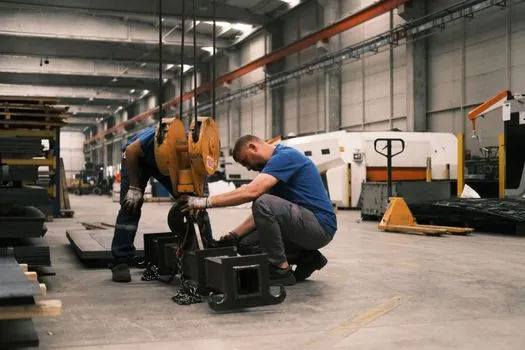
Three broad families cover most work-at-height access points. Hinge or shaft-mounted switches sit on the pivot of a swinging guard; they are compact and cheap, but vulnerable to misalignment on tall, flexible gates. Tongue (key-operated) switches mount on a fixed frame; the tongue slides into the switch body and is held by a spring-loaded cam. Solenoid-locking switches add a magnetic or spring lock so the guard cannot be opened even when the machine is de-energised; these are the right choice for MEWP platform gates where the operator must reach out before unlocking. [S3]
In a simple material-pass-through door, a non-locking tongue switch at IP65 with 1 NC + 1 NO contacts is the baseline. On an MEWP platform, a solenoid-locking switch (holding force 2,000 N to 3,500 N) wired into the safety stop is the minimum, because the operator's centre of mass can be at 6 m to 14 m above ground and a guard opening under a live control system is a fatality event. RFID-coded, high-level coded switches are specified where the access point is at ground level of a public-facing enclosure but the consequence of defeat is a fall from a height further inside the machine envelope [S2][S3].
Mounting and Mechanical Realities at Height
Switches mounted on guard doors at height are exposed to the same wind, vibration and weather as the operator. Wind gusts at 40 km/h or more on a rooftop door will apply a cyclic load that straightens misaligned tongues, so a hinged or sliding guard at height wants a switch with positive-mode actuation and a tolerance band of at least 2 mm to 3 mm in the actuation direction. Vibration from an adjacent aerial work truck or rooftop AHU will shake a poorly clamped switch into chatter, so look for switches with a vibration rating in the 10 g to 30 g range and a captive cable gland or M12 connector rather than a flying lead [S3].
For outdoor installations, a 316L stainless steel head, UV-resistant cable (e.g. TPE or PUR jacket rather than PVC), and a drain hole or Gore vent on the housing are worth specifying. On rooftop access hatches, the interlock is often paired with a height gauge-style mechanical stop so the platform cannot be raised beyond a safe envelope without operator confirmation; the interlock then proves the stop is in place.
Integration with the Safety Control System
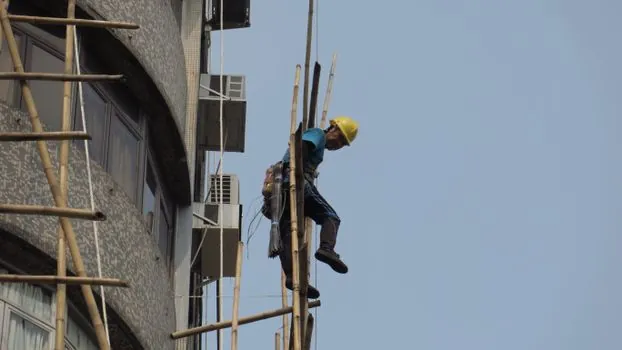
An interlock on its own is just a switch. The contact must reach a safety-rated input: a safety relay, a safety PLC (PILZ PNOZ, Allen-Bradley GuardLogix, Siemens F-CPU), or the machine's existing E-stop circuit, and the category of the resulting stop depends on the wiring, not the switch. A single-channel NC contact on a non-monitored relay is the cheapest way to build a system and the easiest way to defeat; a dual-channel pair with cross-fault monitoring and a coded actuator is the standard approach for any guard that sits in a fall path [S1].
On a typical MEWP, the interlock chain is: platform gate interlock, tilt sensor, load sensor, drive enable. Any one of these opening cuts the safety output and latches the machine into a stop until a manual reset on the ground controls. The reset is the key point: forcing it back to ground level is what makes the interlock a fire safety and machine safety instrument rather than a convenience switch.
Inspection, Maintenance and the Defeat Problem
Work at Height Regulations 2005 require equipment to be properly inspected and maintained; in practice that means a documented pre-use check plus a planned inspection at intervals set by the manufacturer and the risk assessment, typically every 6 to 12 months for active interlocks on access guards [S1][S2]. A common audit finding is the defeated interlock: a propped-open gate, a wedged tongue, a magnet strapped over an RFID switch. This is the reason high-coded, tamper-resistant actuators are increasingly specified even on lower-risk guards, because the cost of fitting them is trivial against the cost of a fall.
For a closer look at how safety-rated control hardware is wired into plant networks, the industrial Ethernet switch sizing guide is a useful companion on the cabling and segmentation side. Bearings and rotating machinery on the same access platforms are covered in the slewing ring bearing selection for material handling piece.
Sourcing and Standards Checklist for the Next Spec
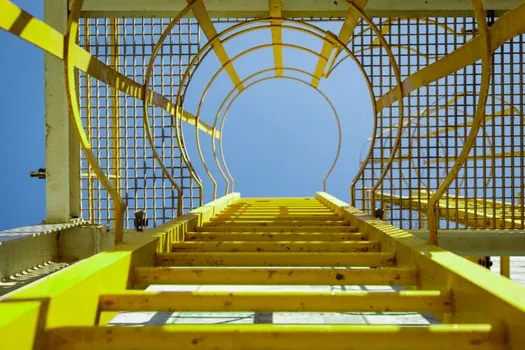
When the next work-at-height access guard is specified, the minimum reference list to put on the drawing is: ISO 14119 for the interlock device itself, IEC 60947-5-1 for positive-break contactors and limit switches, the Work at Height Regulations 2005 hierarchy (avoid, prevent, minimise) for the control philosophy, and the manufacturer's installation drawing for mounting distance, approach speed and minimum force [S1][S2]. For US projects, ANSI/OSHA 1910.28 and ANSI A14.3 for fixed ladders sit alongside. The next trackable signals are the publication of ISO 14119 updates on RFID coding levels and the growing use of IO-Link Safety on new MEWP builds, both of which will tighten what "specified correctly" means in 2027.