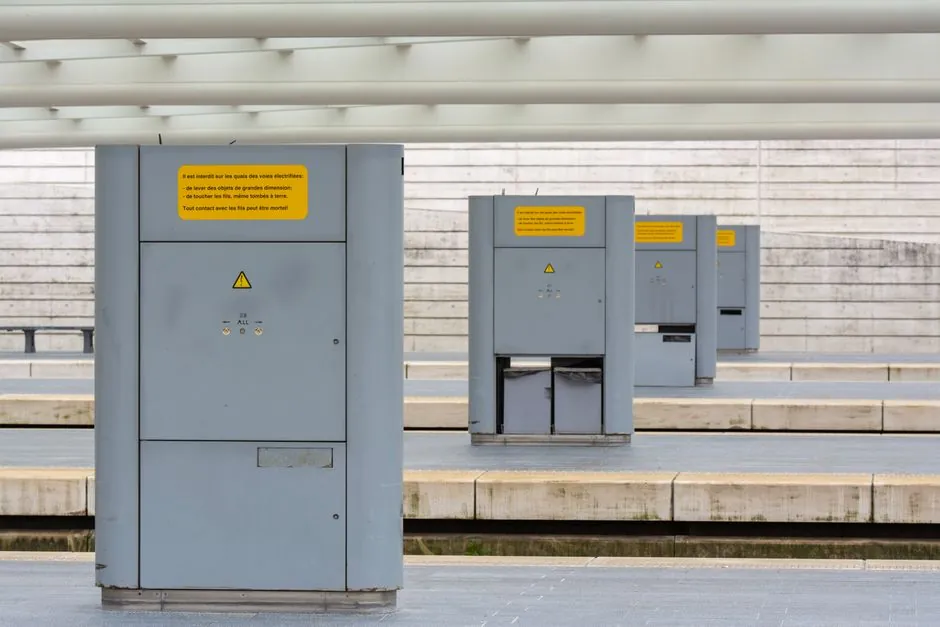
Confined space entry still drives roughly one third of OSHA's serious industrial fatalities per published program guidance, and a properly specified safety interlock switch sits at the boundary between a permit space and the energized equipment around it [S2].
The 2026 specification problem is no longer "do I need a switch on the hatch" but "which combination of ISO 14119 actuator type, PL/SIL category, holding force, and IP rating survives the actual entry protocol". OSHA's three-criteria test (large enough to bodily enter, limited entry/exit, not designed for continuous occupancy) still anchors the space definition; the interlock is the hardware layer that enforces the isolation [S2].
OSHA 1910.146, WAC 296-307, and DAFMAN 91-203: the regulatory floor
29 CFR 1910.146 defines the permit-required confined space, and the Washington State field-operations code WAC 296-307 lists qualified persons who may defeat an electrical safety interlock during alternate entry procedures, confirming that interlocks are treated as a control element that can only be bypassed under documented competence [S1]. DAFMAN 91-203 (24 February 2026, supersedes the 25 March 2022 edition, 413 pages) implements OSHA's confined space requirements and adds Air Force-specific minimum safety, fire protection, and occupational health standards for all civilian employees, uniformed members, AFR, ANG, USSF, and Civil Air Patrol auxiliaries [S3].
Two practical consequences: any defeat of an interlock must be authorized in writing, and the authorized employee must be qualified per the host rule (OSHA 1910.146, WAC 296-307, or DAFMAN 91-203) [S1][S3]. The switch is therefore a documented control, not a field-installed afterthought, and the spec sheet has to record model, PL, SIL, holding force, and defeat procedure before purchase.
ISO 14119 actuator types and the four force/contact options
ISO 14119 (referenced in current food-processing and lab safety interlock selection guidance) sets out four actuator principles, and the entry-application fit is sharper than most spec maps admit [S1].
Comparison of the four options against confined space entry criteria:
1) Tongue (mechanical) actuator: 10-60 N holding force, PLe / SIL 3 achievable with dual-channel wiring, IP67 typical. Lowest cost, suitable for hinged tank hatches and valve pits, vulnerable to dirt and ice on the tongue.
2) Coded-magnetic actuator: 12-30 N holding, PLe / SIL 3, IP67/IP69K, fully sealed. Specified where the entry is into a washdown or sanitary environment, e.g. brewery bright tanks or food-process vessels; defeats defeat attempts by a second magnet [S2].
3) RFID-coded actuator: 8-20 N, PLe, IP67/IP69K, unique code pairing. Fits pharmaceutical and aerospace-grade entry where each hatch needs an audit trail of which actuator paired to which switch; the only type that resists defeat with a tool.
4) Trapped-key / guard-locking actuator: 500-2500 N holding force, PLe when interlocked, IP65 typical. Used where the entry point must stay locked until ventilation cycles complete or the gas monitor reads safe; this is the machine safety device you pair with a ventilation interlock timer for permit spaces.
A 2026 spec band for entry hatches under 1.5 m wide: tongue or coded-magnetic at PL d minimum; trapped-key at PL e if the space has any credible mechanical hazard inside (agitator, auger, scraper).
PL d vs PL e, SIL 2 vs SIL 3, and the contact-set mistake

Performance Level under ISO 13849-1 and Safety Integrity Level under IEC 61508 are not the same axis; specifiers frequently pick a PL rating and assume SIL coverage, then discover the E/E/PES architecture does not match the safety function [S1].
For permit-required confined space entry the practical floor in 2026 is PL d / SIL 2 on the hatch position signal and PL e / SIL 3 on the guard-locking coil when the space contains a stored-energy hazard. Dual-channel force-guided contacts (2 NO + 1 NC, or 2 NC + 1 NO) are the common implementation; a single-channel NO contact will not reach PL d regardless of the switch body's marketing claims.
The most common contact error: ordering a switch with 1 NO + 1 NC thinking it covers a safety circuit, when the safety logic actually needs two normally-closed force-guided contacts to detect contact welding. Cross-check the manufacturer's datasheet for "mirror contacts" or "force-guided" language and the EN 50244 test cycle rating before the PO is cut.
IP rating, materials, and the entry-hatch environment
Entry hatches sit in some of the worst enclosure environments: condensate, caustic washdown, hydrocarbon mist, and on tank roofs, direct UV. A spec map compiled from 2026 conveyor and food-processing interlock guidance puts the realistic minimum at IP67 for indoor tank hatches and IP69K for sanitary or outdoor entry points [S1].
Three material pairings cover 90% of the 2026 spec list: stainless steel 316L actuator head with PPS body for chemical entries, anodized die-cast zinc body with stainless tongue for general industrial, and fully encapsulated coded-magnetic pairs for submerged or ATEX zone 1 interiors. Avoid polycarbonate-bodied interlocks on entry hatches; UV and chemical attack turn them brittle inside 24 months.
For cold environments (entries below -20 deg C, common in LNG and cold-storage work) the elastomer seal becomes the failure point; specify fluoroelastomer (FKM) over standard NBR and ask the manufacturer for a low-temperature certification report, not just a generic -25 deg C marketing line.
Series diagnostics, OSSD outputs, and the wiring topology question
Wiring topology drives diagnostic coverage (DC) and therefore the achievable PL. Standalone (single switch, dual-channel to safety relay) tops out at PL d / DCavg 60-90%. Series (daisy-chain up to 30 switches on a single safety relay, typically with OSSD pulses) reaches PL e / DCavg 99% but introduces a fault-masking risk that the spec map must address with periodic function tests. [S5]
OSSD (Output Signal Switching Device) pulse-monitored switches dominate new 2026 installations because the same wire pair carries both power and the diagnostic pulse, cutting conduit count on long tank-farm loops. For permit-required confined spaces the practical recommendation is: series up to 10 switches per safety relay, branch to a new relay beyond that, and require a documented manual fault-injection test on each switch every 12 months minimum.
For hazardous-area entries the signal leaves the safe area via an intrinsic-safety barrier, see safety barrier for the galvanic isolator topology; ATEX category 2G rated switches are now standard on European-spec tank farms.
Integration with gas monitoring and the entry sequence
Confined space entry is a sequence, not a single event: ventilation starts, gas monitor reads safe, the entry supervisor verifies, the hatch opens. The interlock chain must reflect that sequence, or the permit is fiction [S2].
The clean 2026 pattern: a trapped-key switch on the hatch held locked until (a) the ventilation fan VFD proves run, (b) the four-gas monitor (LEL, O2, CO, H2S typical) reads within the OSHA-defined acceptable entry range, and (c) the entry supervisor's key authorizes release. The hatch actuator then signals position back to the machine safety controller and disables any nearby mechanical hazard (agitator, pump, conveyor).
Companion hardware for the entry: fixed gas detection on the wall above the hatch, a personal four-gas monitor worn by the entrant, and a retrieval winch with a mechanical advantage matched to the hatch diameter. The interlock does not replace any of these; it gates them.
Inspection cadence, defeating policy, and what to record in the safety file
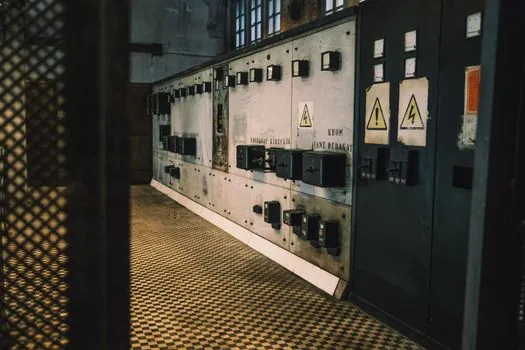
OSHA and the parallel WAC rule allow a qualified person to defeat an electrical safety interlock, but only under a written alternate-entry procedure; the documentation has to exist before the defeat happens, not after [S1].
Spec the interlock for the inspection regime you actually run, not the ideal one. Tongue actuators: monthly visual plus annual function test of the actuator and switch. Coded-magnetic: quarterly pairing verification. Trapped-key: monthly key-cycle test, annual solenoid force test, plus a 5-year solenoid replacement in harsh service. Record model, serial, PL/SIL claim, last test date, and the defeat authorizations in the same file the permit uses.
Two signals worth tracking through the rest of 2026: (1) whether major OEMs converge on a common OSSD pulse width for series diagnostics, which would simplify multi-vendor tanks, and (2) whether IEC 62061 or ISO 13849-1 updates shift the PL d / PL e threshold for dual-channel force-guided contacts. Both will move the spec bands inside 12 months. For a safety certification perspective on the audit trail, see how the food-processing spec map handles ISO 14119 evidence packs in Food-Processing Interlock Switch Spec Map: IP69K, ISO 14119, Guard Locking, and for laboratory-grade PL / SIL / holding-force selection logic, the parallel guide at Lab Safety Interlock Switch Selection: Type, PL, SIL and Holding Force lays out a matching framework.