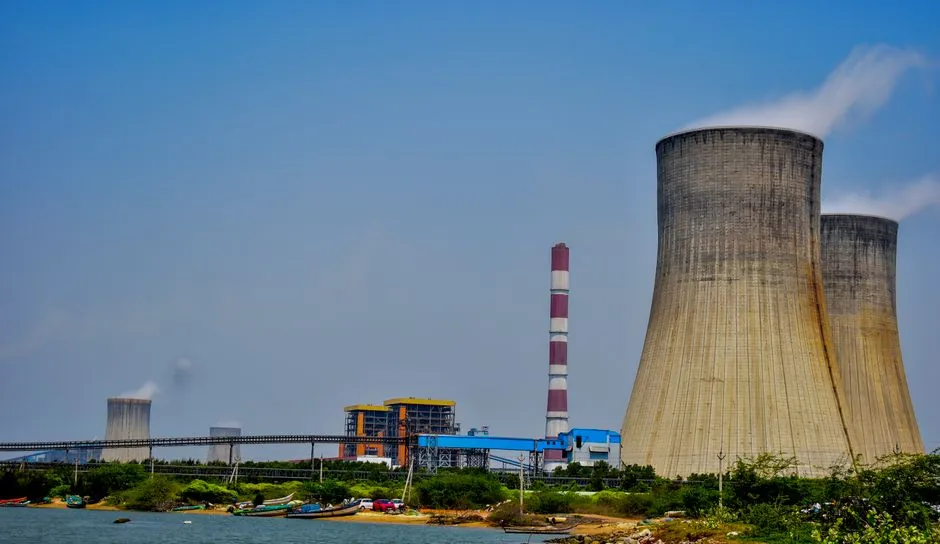
Four privately developed advanced reactors hit criticality between June 4 and July 4, 2026, fulfilling a Trump administration Reactor Pilot Program goal set in the May 2025 executive order on reactor testing [S1].
U.S. nuclear output stood at 816 TWh in 2024, roughly 18% of national generation, with the 94 operable reactors running at a 92% average capacity factor, the largest such fleet worldwide [S2][S3]. The policy target is to quadruple installed capacity to 400 GWe by 2050, which makes Industry 4.0 instrumentation, predictive maintenance, and AI-assisted control rooms a near-term procurement priority rather than a future option [S2][S4].
Four Criticalities in 30 Days: What the Pilot Program Actually Delivered
Antares Nuclear's Mark-0 was the first non-light-water privately developed reactor to reach criticality in the U.S. in over 40 years, achieving a zero-power fueled milestone at Idaho National Laboratory (INL) on June 4, 2026 [S1]. Valar Atomics' Ward 250 followed at the Utah San Rafael Energy Lab on June 18, 2026; Deployable Energy's Unity completed its demonstration at INL on June 30, 2026; and Aalo Atomics' Aalo-X closed the cycle on July 4, 2026, one day ahead of the 250th-anniversary deadline [S1]. Four of the ten selected projects are hosted at INL: Radiant (KDU), Antares (Mark-0), Aalo (Aalo-X), and Oklo (Aurora) [S1]. Together with the eight additional Reactor Pilot selections, Aalo Atomics, Antares, Atomic Alchemy, Deep Fission, Last Energy, Oklo, Natura Resources, Radiant Industries, Terrestrial Energy, and Valar Atomics, this forms the front edge of a fleet intended to feed electricity production demonstrations from 2027 onward [S1].
Industry 4.0 Stack Now Specified for Nuclear Sites
Industry 4.0 is being mapped onto nuclear plant operations through a defined stack: smart sensors feeding edge gateways, time-series historians, AI-assisted anomaly detection, and digital twins tied to the safety case [S5]. TÜV SÜD's Industry 4.0 service line for nuclear energy explicitly couples digitalization with the ISO 19443 nuclear-quality management standard, the sector-specific derivative of ISO 9001 used to qualify suppliers into the nuclear supply chain [S5]. Asset integrity management, risk-based inspection, and fitness-for-service assessments sit on top of the data layer and feed scheduled-outage optimization, which is the largest controllable Opex line at any U.S. plant [S5]. Procurement teams building SMR and advanced-reactor control systems are converging on this stack because it ties IIoT hardware decisions to a certifiable quality regime, rather than asking regulators to evaluate each digital tool from scratch. For buyers sourcing the underlying instrumentation, the power meter and power supply categories now include nuclear-qualified variants with seismic and EMC qualifications aligned to the same digitalization roadmap.
Sensor, I&C, and Power-Distribution Implications
Digital instrumentation and control (I&C) replacement is the single largest digital spend inside operating LWRs and the prerequisite for advanced-reactor commissioning in 2027. Sensor density per reactor is rising because digital twins need redundant, high-rate measurements of temperature, neutron flux, vibration, and coolant chemistry at points that were previously unmonitored. As detailed in our recent coverage of nuclear I&C going digital and AI-assisted in the 2026 SMR build-out, the demand profile is shifting from analog 4–20 mA loops toward Ethernet-APL and time-sensitive networking backbones, with HART retained as the legacy asset-management overlay. Distribution-side hardware follows the same logic: medium-voltage switchgear and power distribution assemblies are being specified with IEC 61850 GOOSE messaging, embedded metering, and arc-flash detection rather than passive copper buswork, which lets the same hardware participate in plant-level digital twins. [S1]
Standards, Certification, and the Procurement Gating Function
ISO 19443 is the gating quality standard for any supplier touching nuclear-grade equipment, and it is paired with IEC 61513 for overall I&C architecture and IEC 61226 for safety-classification of digital systems [S5]. Cybersecurity overlays come from IEC 62443 and, for U.S. sites, NEI 08-09 cyber-security plan templates that have been incorporated into the NRC licensing basis. Qualification testing still defaults to IEEE 323 and IEEE 344 for radiation and seismic survivability, which means the smart sensor, the power cable feeding it, and the analytics platform behind it all have to be qualified as a system before they are allowed inside the safety envelope. The practical effect: vendors who cannot produce an ISO 19443 certificate plus documented environmental qualification are de facto excluded from the Reactor Pilot Program supply chain, regardless of how good their digital tool is.
Decision Matrix: What Buyers Can and Cannot Skip
For utilities and SMR developers, the procurement decision splits cleanly into three tiers. Tier 1 (must have, blocking): ISO 19443 quality certification, IEEE 323 / IEEE 344 environmental qualification, IEC 61513 compliant I&C architecture, NRC-approved cyber-security plan. Tier 2 (high value, competitive edge): IEC 61850 process bus, Ethernet-APL sensor backbone, AI-assisted anomaly detection validated against plant historical data, digital-twin integration with the plant historian. Tier 3 (optional, defer until operations stabilise): full autonomous control loops, blockchain-based supply-chain provenance, AR-assisted remote maintenance. Skipping Tier 1 stops the project; deferring Tier 3 simply pushes capex out 12–24 months. A typical rule of thumb is that Tier 1 compliance adds 8–15% to the unit price of comparable non-nuclear digital hardware, a premium that is dwarfed by re-qualification cost if it has to be done after procurement. [S5]
Use Cases, Limits, and Where the Stack Breaks
Documented use cases concentrate in three areas: predictive maintenance on rotating equipment (pumps, motors, large fans), where vibration and current signatures feed ML models that flag bearing wear weeks before failure; online monitoring of cable insulation partial discharge on medium-voltage feeders; and radiation-hardened process sensors that feed the safety-grade I&C. The stack breaks where data rates overwhelm legacy historians, where AI model behaviour cannot be explained to a regulator, and where long lead-time items, notably radiation-qualified power cable runs and qualified power tool sets for in-containment maintenance, gate the schedule regardless of how modern the control software is. Critics also flag the assumption that every U.S. plant can absorb a $1B-class digital retrofit while the fleet's average age approaches 40 years, a tension visible in the broader debate over the cost-versus-speed of expansion [S4].
Trackable signals: completion of the first electricity-producing test by any Reactor Pilot project in 2027; NRC finalisation of Part 53 licensing for advanced reactors; and the first commercial award of an ISO 19443 certificate to a non-Western I&C vendor. Each will indicate whether Industry 4.0 in nuclear stays a U.S.-domestic stack or opens to global supply.