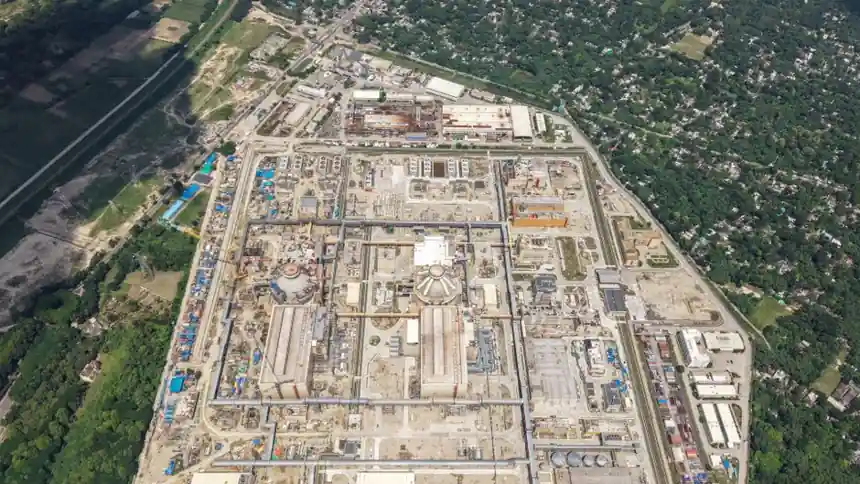
The single most important qualifier for any nuclear power manufacturing equipment purchase is ASME N-stamp accreditation, which certifies that the vendor has produced commercial nuclear-grade components to the ASME III code set [S2]. Without N-stamp, the part cannot enter the nuclear supply chain regardless of mechanical performance.
For Generation III+ reactor pressure vessels, the practical floor is a forging press of 140-150 MN (14,000-15,000 tonne) capacity handling hot ingots of 500-600 tonnes; Westinghouse's stated AP1000 minimum is a 15,000-tonne press taking 350-tonne ingots [S2]. Only Japan Steel Works, China First Heavy Industries, China Erzhong, Shanghai Electric, Doosan, Taewoong, Le Creusot, OMZ Izhora, Atommash, Petrozavodskmash, and ZiO-Podolsk currently run presses in that class, with about four reactor pressure vessels per year per press as typical throughput [S2].
Forging Capacity: The Real Bottleneck in 2026
Generation III+ reactors require roughly twice the forging tonnage of a 1970s-vintage Generation II unit, with the largest designs pulling close to 4,000 tonnes of forgings across the pressure vessel, steam generators, and turbine shaft [S2]. A reactor vendor that prefers single-piece large forgings will refuse split-forging weldments because the welds require in-service inspection for the entire 60-year plant life [S2].
New press capacity is under construction in Japan, China, South Korea, Czech Republic, and Russia, while India has announced expansion through Larsen & Toubro, Bharat Heavy Electricals, and Bharat Forge [S2]. Nothing in North America currently approaches the 14,000-tonne class; the US last ran 8,000-tonne presses in the 1970s and has not significantly upgraded since, partly because the integrated steel-mill-to-press hot-charge logistics were broken up when ArcelorMittal acquired the legacy forge owner [S2]. For US-based nuclear projects, this means reactor pressure vessel forgings are sourced overseas as a rule, not an exception.
What to Put on the RFQ: Equipment, Not Just Components
The nuclear equipment scope is wider than the reactor island. Per the IAEA Nuclear Energy Series NG-T-3.4 (Rev. 1, 2026), national industrial involvement covers design of nuclear equipment, special manufacturing techniques, quality assurance methods, and construction techniques as a single integrated package, not four separate bids [S3]. Buyers writing an RFQ should mirror that structure: list forming equipment, welding equipment, NDT equipment, and QA documentation as a package tied to one ASME III Section NB/NW scope.
Heavy plate forming equipment is the first station after forging. The practical starting point for buyers is not nominal tonnage but machine structure, control repeatability, and delivery scope, because forming accuracy on nuclear-grade plate cascades into weld prep quality [S1]. Review the production target against crane capacity, power supply, and downstream process before signing the technical scope; under-spec the crane and the forming cell becomes the bottleneck for the next 30 years [S1].
Construction machinery and equipment for the nuclear site footprint (heavy lift, modular assembly, transport) is covered under the same NG-T-3.4 industrial involvement framework, and procurement teams should pre-align any construction machinery and equipment spec with the IAEA publication's localisation requirements, which most new-build nations interpret as a minimum 40-70% local content target depending on the technology tier.
QA, NDT, and the Documentation Stack
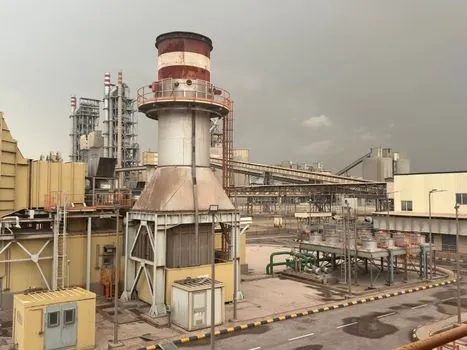
ASME III welding is mandatory for nuclear-grade pressure-retaining components, and buyers must see the qualified WPS/PQR list before ordering, not after [S2].
For NDT equipment, the practical spec floor is a phased-array UT system qualified to ASME V Article 4 with a documented procedure on reference blocks representative of the actual nuclear-grade weld geometry. Buyers should ask for the NDT equipment calibration interval, the operator qualification matrix (ASNT SNT-TC-1A or ISO 9712), and the record format that will feed the plant's in-service inspection database.
Documentation follows the nuclear operating-procedure discipline: write for the least-experienced qualified user, separate the "why" from the "what", classify each document by use (administrative, operating, alarm response, abnormal, maintenance), and run verification and validation as two separate steps per the IAEA technical report on V&V [S5]. Eight principles lifted from nuclear documentation apply to any manufacturer facing CE, ISO 9001, or sector compliance [S5], and they are the cheapest QA improvement a Tier-2 nuclear supplier can deploy before the next NRC or customer audit.
CMMS, Maintenance Rule, and the Software-Compliance Link
Maintenance equipment is regulated software in a nuclear plant. Under 10 CFR 50.65 (the NRC Maintenance Rule), every licensee must monitor SSC performance against established goals, and a CMMS that cannot produce a timestamped, technician-attributed, completion-documented work order for every safety-related maintenance event is a compliance liability, not just an operational weakness [S4].
The selection checklist has nine distinct criteria: 10 CFR 50.65 SSC monitoring, 10 CFR Part 50 Appendix B 18-criterion QA (especially Criterion 1 for records and Criterion 17 for QA audits), NUMARC 93-01 industry implementation guidance, NRC Regulatory Guide 1.160 endorsement, safety classification at the asset level, mandatory completion documentation with no-bypass enforcement, tamper-evident audit trail, corrective action program integration, and refuel-outage planning linkage [S4]. Generic enterprise CMMS platforms fail the first three by design because they have no safety classification field, no mandatory completion gate, and no tamper-evident record [S4].
Decision Matrix: Heavy Forge vs Plate Forming vs Modular Assembly
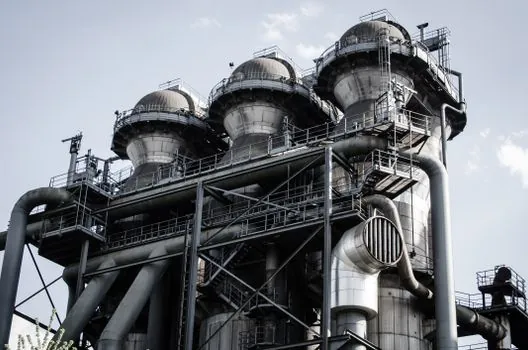
Buyers choosing among equipment categories for a nuclear new-build should score against four criteria: ASME scope coverage, lead time, localisation eligibility, and unit cost per tonne of finished component. [S1]
Heavy forging (RPV, steam generator shell, turbine rotor) wins on ASME scope (Section I + III) but loses on lead time (36-60 months per press) and localisation (only 5-7 countries can deliver), with unit cost running USD 80,000-150,000 per forged tonne at 2026 prices [S2]. Plate forming (reactor coolant pump casings, pressuriser shells, accumulator tanks) scores high on localisation because the linear guide-driven forming cells can be shipped globally and qualified locally, lead time 12-18 months, unit cost USD 15,000-40,000 per finished tonne [S1]. Modular assembly (containment liner rings, CA20 modules) wins on site schedule compression but requires crossed roller guide-class positioning accuracy to hold ±2 mm on 200-tonne lifts, with module factory cost 20-40% higher than stick-build equivalent.
Who This Is For, and Who It Is Not For
This equipment class is for EPC firms holding an ASME III Section NB or NW scope, for nuclear-qualified forgers seeking second-source qualification, and for IMR/ISI service companies building outage response capacity. It is not for general machine shops chasing nuclear-adjacent work without the 18-24 month ASME III qualification runway, and it is not for buyers expecting a Chinese press delivery in under 24 months given the four-vessels-per-year global throughput ceiling [S2].
For process engineers in adjacent sectors evaluating whether to bid nuclear-adjacent work, the planetary reducer selection for wind power spec map shares the same forging-supply lessons, and offshore wind manufacturing quality tracks the same N-stamp-to-DIN-EN-1090 documentation discipline that nuclear QA officers expect on a vendor audit.
Trackable next signals: the IAEA NG-T-3.4 Rev. 1 implementation workshops scheduled through Q4 2026 across member states, any new 15,000-tonne press announcement in India or the US through 2027, and the NRC's next 10 CFR 50.65 inspection enforcement summary, which historically drives CMMS upgrade cycles within 6-9 months of publication.