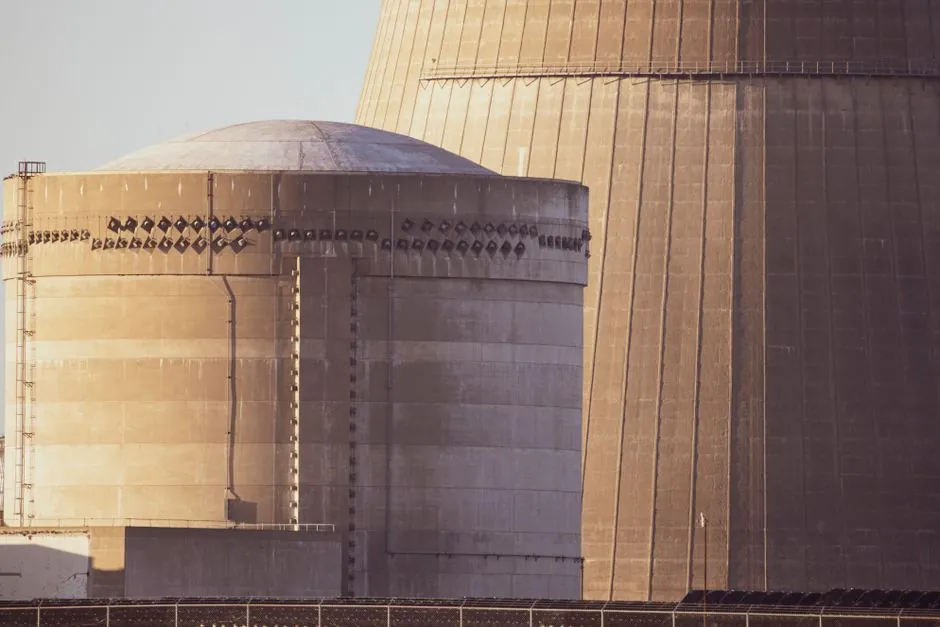
U.S. utilities and EPC firms are accelerating digital instrumentation and controls retrofits plus new small modular reactor (SMR) designs, with Sargent & Lundy advertising multiple I&C engineering seats in August 2026 to handle PLC, DCS, and touchscreen workstreams for nuclear clients [S4].
Burns & McDonnell is recruiting a Lead Instrument & Controls Engineer across multiple U.S. sites, requiring unescorted nuclear facility access and standard engineering procedure expertise for reactor protection and plant control system design [S8]. Black & Veatch simultaneously opened an Instrumentation & Controls Engineer role tied to process automation system selection and specification [S2].
What "Nuclear I&C" Actually Covers in 2026
Nuclear Instrumentation and Control (I&C) systems monitor and regulate reactor and balance-of-plant processes in real time, encompassing neutron flux, pressure, level, flow, temperature, and radiation channels, plus the actuation logic that drives control rods, pumps, valves, and safety systems [S5]. The DOE Office of Nuclear Energy treats advanced sensors and instrumentation as a crosscutting R&D line, signalling that instrumentation is now a first-tier program element rather than a back-office discipline [S1].
Digital I&C architectures now displace legacy analog racks on most new builds. Sargent & Lundy's senior nuclear I&C job listing names PLC, DCS, touchscreen HMI displays, network switches, and control systems as the daily work envelope, along with functional requirement specifications and procurement specs for cable block diagrams and schematics [S4]. For reference on what process control encompasses across plants, see the process control overview. ECIL, supplying C&I systems for Indian nuclear plants, frames its scope as automated operation of reactor and auxiliary systems with safety-grade reliability [S7].
Selection Criteria: From Sensors Up to the Safety Platform
Sourcing a channel starts with the physical variable: neutron flux detectors, resistance temperature detectors (RTDs), thermocouples, pressure transmitters, and flow elements must each meet seismic, environmental, and radiation-qualified criteria. The DOE NEET crosscut highlights that advanced sensor R&D targets harsh-environment tolerance, drift reduction, and self-diagnostic capability for both existing fleet and advanced reactor deployments [S1].
Selection at the platform layer demands documented qualification for the safety classification. The IAEA's National Industrial Involvement framework notes that an emerging nuclear regulatory body must establish a regulatory control system covering codes and instrumentation and control, a useful reference for newcomer-state programs [S9]. Procurement specifications for nuclear plants typically require traceability, environmental qualification, and cybersecurity conformance; Sargent & Lundy's role explicitly calls out functional requirement specs and vendor interface for equipment purchase specs [S4]. Calibration workflows and traceability for nuclear-grade channels share DNA with general process calibration practice, but with added seismic and radiation documentation. Buyers evaluating channel density and accuracy may also reference multifunction process calibrator capability for bench and in-situ verification.
Who Digital Nuclear I&C Is For, and Where It Is Not

Digital I&C is a fit for new reactor builds (Gen III+ and SMRs), life-extension plants executing a controls modernization, and any site where obsolescence of analog cards is forcing unplanned maintenance. Sargent & Lundy frames the work as digitizing existing plants plus building new nuclear and SMR capacity, which is pulling senior I&C engineers into multi-year programs [S4].
It is not a fit for plants that cannot fund a multi-year qualification campaign, or for sites that still operate analog Reactor Protection Systems (RPS) with no planned life-extension window. The IEEE 603 / IEC 61513 qualification cost, software common-cause failure analysis, and cybersecurity plan all add 18 to 36 months to a typical digital upgrade on a safety system, a hidden cost that the August 2026 job postings are explicitly addressing through dedicated controls engineers [S3][S4].
Comparing the Main Architectural Options
Four architectural choices dominate 2026 nuclear I&C bids. The table below lines them up against the criteria that show up in functional requirement specs: [S4]
1) Analog I&C (legacy): 4-20 mA / discrete wiring, RPS via hardwired relays. Lowest qualification burden, but spares vanishing and no modern HMI. Suits life-extended plants with no controls budget.
2) Hybrid analog + digital (most common retrofit): retains analog RPS, overlays DCS for monitoring and non-safety control. Common in 1990s-vintage fleet upgrades. Limits modernization gain but cuts qualification scope.
3) Fully digital safety-qualified platform (PLC or DCS-based RPS, HMI, network switches): used on every new SMR and most new large reactor builds. Requires software V&V, diversity & defense-in-depth, and cyber conformance per IAEA SSG-39 / IEC 62645 expectations (named here because the research flags digital I&C as the dominant 2026 architecture [S4]).
4) AI-augmented digital: digital platform plus on-line anomaly detection, autonomous alarm management, and predictive maintenance. A 2026 ACM-indexed study reports that domestic nuclear power plant designs have achieved digitalization of I&C systems, significantly boosting the system's data volume and creating the substrate for AI autonomous monitoring [S6]. This is the architecture Sargent & Lundy is hiring into with "automation and AI-enabled engineering workflows" and Python or MATLAB scripting called out as nice-to-haves [S4].
Real Use Cases, Sourcing Signals, and the AI Overlay
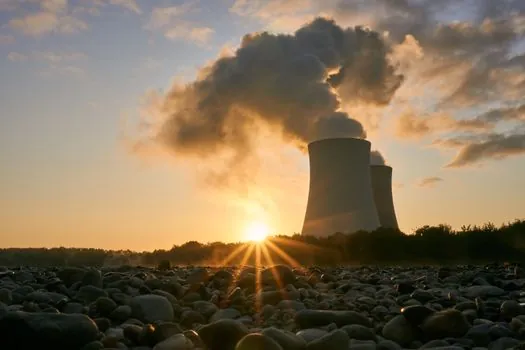
ECIL's C&I scope for nuclear power plants covers reactor regulation, reactor protection logic, and engineered safety features actuation, with redundancy and diversity baked into the architecture [S7]. nVent SCHROFF positions its nuclear cabinetry and backplanes as part of the I&C physical layer, hosting the control electronics that sit between sensors and the DCS or PLC [S5]. On the demand side, the simultaneous August 2026 hiring push from three top U.S. EPCs is a hard signal that nuclear I&C order books are firming, not contracting [S2][S3][S4][S8].
The AI overlay is the second concrete 2026 shift. The ACM study observes that digital I&C has produced an order-of-magnitude jump in plant data availability, which is the precondition for machine-learning models that flag sensor drift, predict pump cavitation, and cluster alarms into root-cause groups [S6]. Sargent & Lundy's listing, again dated August 2026, treats AI not as a research project but as a deliverable: "set expectations for using data and modern tools such as automation and AI to improve workflows, reduce rework, and deliver cost-effective designs" [S4]. For industrial buyers mapping where this lands, similar sensor-density growth shows up in adjacent discrete manufacturing, where proximity sensor suppliers and proximity sensor sizing decisions follow the same digital-channel logic, though without the safety-classification overlay.
Limitations, Failure Modes, and Open Constraints
Digital nuclear I&C has three constraints that do not exist in general process plants: software common-cause failure vulnerability, cybersecurity attack surface, and lengthy qualification cycles. The 2026 ACM paper frames AI autonomous monitoring as still in research-to-deployment transition, with model explainability and regulator acceptance listed as the gating issues, not the data volume [S6]. Hiring listings echo the same constraint: an ABET-accredited BS plus five years of process control design is the floor, and unescorted nuclear access is a hard prerequisite at operating sites [S2][S4][S8].
Standards and sourcing body for new builds is the IAEA, whose National Industrial Involvement reference text calls out that the regulatory body must define a "regulatory control system" covering codes and I&C, with the supply chain, training pipeline, and inspection regime built around it [S9]. Buyers should plan qualification evidence packs (seismic, EMI/RFI, radiation aging, software V&V) at specification time, not after bid, because that is what determines whether a channel can ship in 12 months or 30. The DOE's continued program funding under the NEET crosscut is the one public signal that U.S. qualification test infrastructure will keep pace with SMR demand through 2026-2027 [S1].
Trackable next signals to watch: (1) Sargent & Lundy, Black & Veatch, and Burns & McDonnell converting their August 2026 I&C requisitions into filled headcount, which would confirm sustained multi-year backlog rather than a one-quarter hiring spike; (2) any IAEA or DOE publication in late 2026 clarifying AI-assisted monitoring guidance for safety-related channels, since the current ACM literature flags regulator acceptance as the open issue [S6]; (3) additional ECIL or equivalent C&I contract awards outside India, which would mark the first cross-border technology transfer of a fully digital nuclear I&C stack in this cycle [S7].