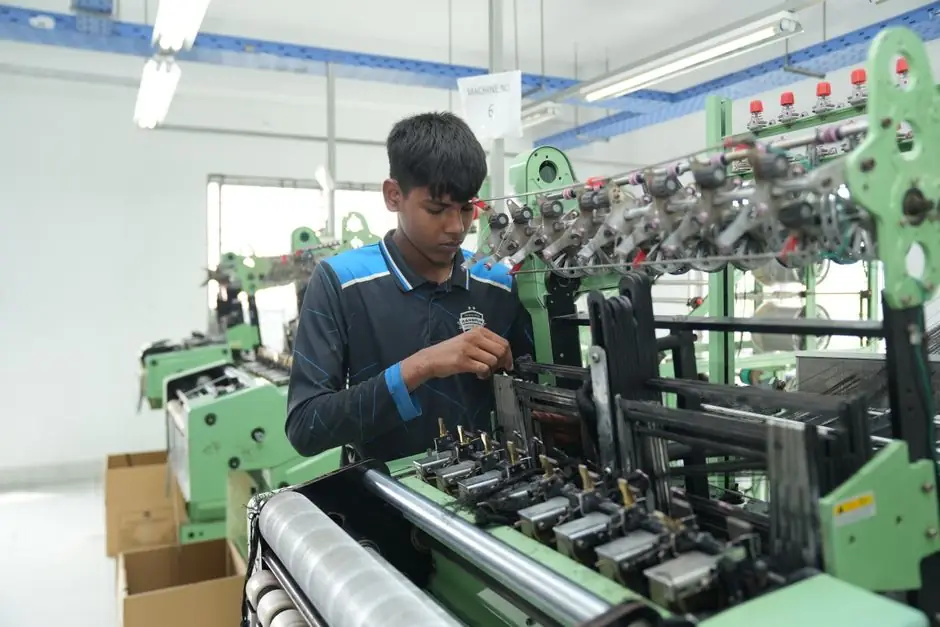
Custom rubber molded parts in the United States are produced through three primary forming processes: compression molding, transfer molding, and injection molding, with rubber-to-metal bonding and in-house compound development offered by full-service molders such as Qualiform [S1] and The Rubber Group [S4].
The 2025 industry roundup from Lake Erie Rubber identifies ten prominent U.S.-based molders led by Lake Erie Rubber (Erie, PA) and Custom Rubber Corp. (Cleveland, OH), with capacity extending through mid-tier specialists in Ohio, California, Minnesota, Oklahoma, Florida, and Michigan [S5]. Universal Polymer & Rubber operates a 150,000 sq. ft. facility in Middlefield, OH for natural and synthetic rubber parts [S3], while Ro-Lab (a Dynatect brand) lists more than 75 presses up to 80 inches wide for both small high-volume runs and large-scale parts [S7].
Process Selection: Injection vs. Compression vs. Transfer
Injection molding is the preferred process for high-volume production runs, tight dimensional tolerances, and complex geometries, with compatible materials including EPDM, Nitrile (NBR), silicone, and TPE [S1]. Compression molding fits large, thick, durable parts with simpler geometries such as bumpers, pads, and vibration mounts, typically run in natural rubber, neoprene, and EPDM [S1]. Transfer molding is the correct choice when parts require metal inserts or rubber-to-metal bonding, with improved material flow over compression, and is commonly used with Nitrile, EPDM, and Viton/FKM compounds [S1].
Selection hinges on part geometry, annual volume, tolerance class, and whether inserts or multi-material assemblies are required. For OEM buyers weighing molding process trade-offs against total landed cost, the industrial rubber TCO math for 2026 lays out service-life and tooling-amortization variables that drive process choice.
Material Range and Compound Capabilities
Standard stocked elastomers across U.S. molders include EPDM, Nitrile (NBR), neoprene, natural rubber, silicone, and Viton/FKM, with thermoplastic elastomer (TPE) and thermoplastic vulcanizate (TPV) offerings from suppliers such as Aero Rubber, which runs an ISO 9001:2015-certified facility in Tinley Park, IL [S2]. Specialty grades such as fiber-reinforced compounds (Veramix) and cryogenically deflashed parts are listed as differentiators by Custom Rubber Corp. and Qualiform [S1][S5].
Material selection is governed by fluid compatibility, temperature range, and mechanical duty. EPDM suits outdoor and water-exposure service; NBR is the default for petroleum-oil resistance; FKM/Viton handles high-temperature hydrocarbon and chemical exposure; silicone covers medical, food-contact, and extreme temperature service. Buyers specifying elastomers for harsh-environment service should cross-reference the broader industrial rubber and EPDM rubber material references to confirm compound-versus-service alignment.
Industry-Specific Certifications and Markets Served
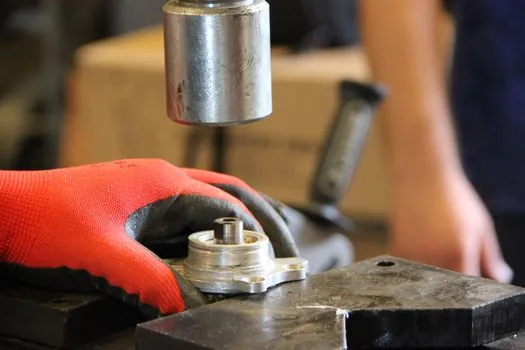
ISO 9001:2015 is the baseline quality system at Aero Rubber, Qualiform, and most tier-one U.S. molders [S1][S2][S5]. Aerospace and defense work at The Rubber Group runs under AS9100D with ITAR registration, producing insulator components, bushing seals, transformer gaskets, and switchgear sealing systems for electrical T&D [S4]. Medical device components (fluid delivery, surgical instruments, diagnostic equipment, respiratory devices, wearables) require biocompatible compounds and ISO 13485 conformance, a certification cited as the medical-application benchmark by Lake Erie Rubber's 2025 industry guide [S5].
Oil and gas sealing elements at The Rubber Group cover downhole tools, wellheads, fracking equipment, pipelines, and valves, with material resistance to H2S, CO2, hydrocarbons, and abrasive service conditions [S4]. For buyers mapping electrical metering and gas-detection enclosures that integrate elastomer seals, the electricity meter supplier map and gas detector supplier 2026 spec-first map cover the instrument-side selection criteria that those molded rubber components must seal against.
Tooling Capacity and Press Footprint
Press capacity varies sharply across the U.S. molder base. Ro-Lab lists 75+ presses up to 80 inches wide, supporting both small high-volume production and large-scale parts [S7]. Universal Polymer & Rubber runs a 150,000 sq. ft. facility footprint in Middlefield, OH, with molded natural and synthetic rubber part output [S3]. Qualiform, Minor Rubber, and Rubber Mill all maintain in-house tooling, transfer-tool fabrication, and custom preform capabilities alongside value-added services such as cryogenic deflashing and inspection [S1][S6][S8].
A buyer-side checklist for press-capacity vetting: confirm platen size against largest part dimension, confirm shot volume or preform weight for compression/transfer molds, confirm tonnage envelope for injection presses, and confirm in-house tool maintenance for ongoing dimensional control. For projects where molded elastomers are over-molded onto engineered thermoplastics, the engineering plastics grades and selection map helps frame the substrate side of the over-mold interface.
Supplier Selection Criteria: A Comparison Frame
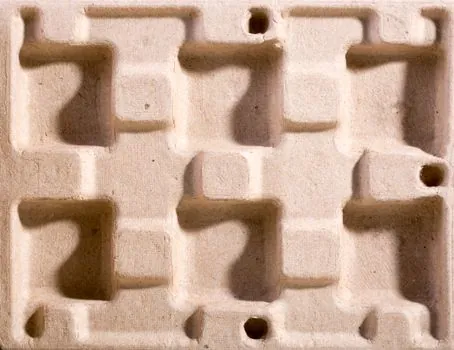
Four decision criteria dominate U.S. molder selection: (1) process fit (injection, compression, transfer, or rubber-to-metal bonding), (2) material compound depth (standard EPDM/NBR/silicone vs. specialty FKM, FFKM, or fiber-reinforced), (3) certification stack (ISO 9001 baseline, AS9100 for aerospace, ISO 13485 for medical, FDA-compliant compounds for food and water), and (4) tooling and press capacity relative to part envelope and annual volume [S1][S4][S5].
On a cost-versus-capability axis, VIP Rubber & Plastic and GBSA position as affordable-tier molders for standard o-rings, seals, gaskets, and bushings, while Lake Erie Rubber, Custom Rubber Corp., and Minnesota Rubber & Plastics compete on engineering support, tight tolerances, and specialty materials at moderate-to-competitive cost [S5]. Aerospace and defense buyers requiring AS9100D and ITAR should default to AS9100-registered shops such as The Rubber Group [S4]; medical-device OEMs should require ISO 13485 plus biocompatibility documentation per ISO 10993 where the part contacts tissue or fluid pathways.
Limitations and Buyer-Side Failure Modes
Common molded-rubber failure modes buyers should pre-empt: extrusion and compression-set loss in dynamic seals, chemical swell in NBR exposed to aggressive fluids outside its rating, ozone cracking in natural rubber if antiozonants are not specified, and bond-line failure at rubber-to-metal interfaces when surface preparation and primer selection are not controlled [S4]. Lake Erie Rubber's 2025 guide flags turnaround time, budget, location, and material depth as the four practical filters that drive molder selection, and notes that reshoring momentum tied to tariff exposure has lifted demand for domestic custom molding capacity [S5].
Engineering buyers running molded elastomers inside larger electromechanical assemblies should treat the rubber part as a sub-system, not a commodity: the lamps and light fittings and lighting equipment and electric lamps categories often rely on grommets, gaskets, and vibration isolators that determine enclosure IP rating and thermal performance, while construction machinery and equipment platforms depend on molded mounts and bushings for operator and component life. Molders that pair compound development with in-house bonding and testing generally outperform pure job shops on first-article yield.
Two signals to track over the next two quarters: (1) whether more U.S. molders add liquid silicone rubber (LSR) injection capacity to capture medical and food-contact growth, with Minnesota Rubber & Plastics already advertising LSR capability [S5]; (2) whether tariff-driven reshoring extends waitlists at AS9100D and ISO 13485-registered shops, a constraint worth raising with procurement now rather than at part-release time [S5].