In cement plant power transmission, universal joints are commonly specified as either single or double cardan configurations, with the double-joint geometry capable of operating at angles up to 90 degrees while accommodating parallel shaft offset [S1]. Heavy-duty industrial U-joints built from high-carbon chrome-molybdenum or heat-treated alloy steel, paired with needle-bearing crosses and protected sealing, are the dominant specification for raw mill, cooler, kiln feed, and clinker conveyor drivelines exposed to abrasive dust and high torque reversals [S2][S4][S3].
Selection is not a shaft-size match: it requires a structured pass through operating angle, rotational speed, peak torque, environment, and duty cycle, because wear or failure of the cross, needle bearings, seals, or yokes produces vibration, backlash, noise, overheating, and unplanned downtime in cement, steel, and mining service [S2]. This article walks a process engineer through that pass and lines up the three workhorse joint types against the criteria that actually drive field life.
Operating Envelope: Torque, Angle, Speed, and Misalignment
A single universal joint contains one yoke pair connected by a central cross and is designed for purely angular misalignment between two shafts, but it produces non-uniform angular velocity at the driven shaft, which can cause mechanical resonance in precision conveyor and mill drive trains [S3]. A double universal joint uses two bending joints in series, and this counter-phase geometry cancels the angular-velocity distortion of the single joint, delivering uniform output velocity even at higher operating angles and also tolerating parallel shaft offset, which is exactly the geometry found in cooler fan drives, cooler discharge conveyors, and raw mill auxiliaries [S1][S3].
Selection must start with four hard numbers: motor or engine power, approximate torque, operating speed in rpm, and the working angle between input and output shafts, with the cross length, bearing cap diameter, overall width, retaining or snap-ring arrangement, yoke dimensions, flange dimensions, shaft diameter, and spline details captured for the replacement or upgrade enquiry [S2][S6].
Materials, Crosses, and Bearing Construction
Standard U-joints in this class are manufactured from high-grade alloy steel for high strength and from stainless steel where corrosion resistance is required, with the components precision-machined, selectively heat-treated, and ground to tighter tolerances than low-cost alternatives, and the heat-treated alloy steel cross gives better tensile strength and fatigue life under both continuous rotation and sudden torque reversals typical of heavily loaded conveyors in mining, steel, and cement service [S3]. GMB-style heavy-duty crosses use high-carbon chrome-molybdenum steel for exceptional strength and durability, which is a baseline material spec the cement industry has converged on for high-impact reversing roughers, Steckel-mill-style drives, and similar reversing mill duty cycles [S4][S7].
For high-speed mill and fan drives, needle-bearing universal joints are the standard configuration because the needle rollers spread load over a larger contact area than plain bushings, while the bearing kit can be replaced as a unit when the yokes themselves remain serviceable, an approach that materially reduces spare-parts inventory versus scrapping complete assemblies [S2][S3].
Cement Plant Duty Cycles and Where Each Joint Type Fits
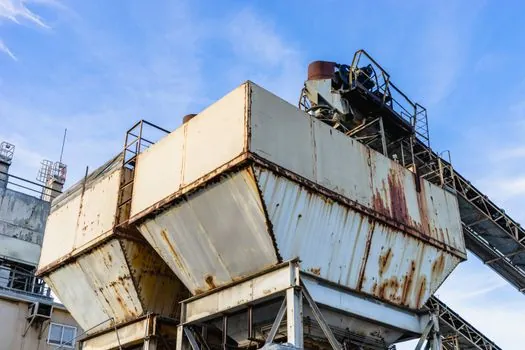
Cement plants are a textbook harsh environment: abrasive cement and clinker dust, elevated ambient temperatures around kilns and clinker coolers, vibration from crushers and roller presses, and torque reversals on starting loaded conveyors. Heavy-duty U-joint solutions are designed for these harsh environments, and proper material selection, sealing, and lubrication are the difference between a cross that lasts one shutdown and one that lasts three [S2].
Single universal joints fit compact installations where shaft offset is purely angular and where the non-uniform velocity output does not matter, such as low-to-moderate-speed apron feeders and lightly loaded auxiliary drives [S3]. Double universal joints fit higher-angle installations, applications with parallel misalignment, and any driveline where uniform output velocity is required, including kiln drive auxiliaries, cooler exhaust fan drives, and reversing conveyor heads where resonance is a known failure initiator [S1][S3]. For high-torque reversing roughers and large mill roll drives, the double-joint cardan remains the most efficient and cost-effective method of transmitting torque to the roll, provided the joint is properly phased and the working angle is kept within the manufacturer's published envelope [S7].
Sealing, Lubrication, and Dust Ingress
The most common cement-plant failure mode is not torque overload but contamination: dust ingress past a worn seal grinds the needle bearings, backlash grows, vibration rises, and the cross welds itself to the bearing cap. Boot covers prolong U-joint life in dusty environments, while sealing and relubrication intervals should be matched to the dust loading and ambient temperature around the specific drive [S3]. When evaluating a replacement, the retaining or snap-ring arrangement and the seal type are first-class data, not optional, because a like-for-like swap with a different seal profile will fail in a fraction of the original service life [S2].
Where maintenance access is poor, for example on top of a preheater tower or inside a cooler discharge hood, dry-break grease fittings and remote-lube lines pay back fast, and the cross-and-bearing-kit replacement strategy keeps the yokes in service rather than scrapping complete assemblies [S2][S3].
Comparison: Single Joint vs Double Joint vs Needle-Bearing Heavy-Duty
On a 2-3 criteria basis useful to a specifying engineer: a single universal joint is the lowest-cost, most compact option, suits purely angular misalignment, and runs at low to moderate speeds, but it produces non-uniform output velocity and is the worst choice for high-speed reversing mill duty [S3]. A double universal joint cancels angular-velocity distortion, accepts both angular and parallel misalignment, and operates at angles up to 90 degrees, making it the default for high-angle, parallel-offset drivelines in cement auxiliaries [S1][S3]. A heavy-duty needle-bearing U-joint in high-carbon chrome-molybdenum or heat-treated alloy steel adds the material and bearing capacity needed for abrasive, high-torque, reversing service, at higher cost and larger envelope, and is the right call for raw mill, cooler, and kiln auxiliaries where uptime matters more than first cost [S2][S3][S4].
Identification, Spares, and Engineering Outreach
A practical step many cement maintenance teams miss: a failed U-joint can usually be identified from photographs plus a small set of measurements, including cross length, bearing cap diameter, overall width, retaining or snap-ring arrangement, yoke dimensions, flange dimensions, shaft diameter, and spline details, even when the original part number is missing or the OEM is obsolete, and supplying equipment manufacturer, model, application, operating speed, motor power, approximate torque, and operating angle to the supplier converts a "we need a part" call into a matched replacement [S2].
Joint selection should start with assessing the operating conditions, with all relevant factors communicated to the sales representative or engineering contact, because the difference between a generic cross and a properly specified one is measured in unplanned shutdowns per year [S6]. For a structured decision pass on adjacent cement-plant drivetrain components, see this locking assembly selection for material handling drums and pulleys map and this rebar straightener inspection checklist, both of which follow the same spec-anchored methodology for cement and heavy-industry maintenance.
Failure Modes, Standards, and Verification
Universal joints are also referred to as cardan, Hooke's, and U-joints, and are a cost-effective power transmission shaft coupling, but "cost-effective" assumes correct specification, since a mis-sized cross or wrong seal profile is the most common root cause of the vibration, backlash, noise, and overheating that precedes a cement-plant driveline failure [S2][S5]. The cross, needle bearings, seals, and yokes are the four components to inspect at every planned outage, and the cross-and-bearing-kit replacement path is the lowest-total-cost repair when the yokes are still within dimensional spec [S2].
Useful verification steps before a procurement order goes out: confirm the joint is rated for the operating speed and the peak torque including the start-up transient, confirm the working angle envelope versus the installed geometry, confirm seal and lube compatibility with the dust loading and ambient temperature at the installation point, and confirm that the cross material, needle-bearing grade, and retaining method match the OEM or the documented aftermarket specification for that equipment [S3][S4][S6].
Trackable signals to watch over the next procurement cycle: a documented drop in mean-time-between-failure on cooler and kiln auxiliary drives after a seal-profile change, the appearance of higher-angle double-joint offerings rated for 90-degree operation in raw-mill service, and any cement-specific duty-cycle data published by needle-bearing cross manufacturers for reversing mill duty, all of which are concrete inputs to the next universal joint specification review [S1][S3][S4][S7].
Detailed specification references: universal joint, expansion joint, and cement concrete.