
A typical city-fleet forklift is rated at 5,000 lb capacity with 48-inch forks, 24-inch load center, and pneumatic tires for mixed asphalt and gravel surfaces, per municipal fleet guidance [S2]. Electric units already exceed 60 percent of the U.S. forklift market, while internal-combustion LPG and diesel remain the rule for outdoor infrastructure work where exhaust venting is not required [S2].
For indoor warehouse or depot operations, counterbalanced electric riders in the 3,000 to 5,000 lb range with a width of 36 to 45 inches handle the standard 48-inch pallet and fit aisles 5 to 10 feet wide, the width bands most city facilities actually run [S2][S8].
Load Capacity and the 24-inch Load Center Rule
Rated capacity is meaningless without the matching load center, and industry convention rates most forklifts at a 24-inch horizontal load center, measured from the fork face to the load's center of gravity [S1]. Push that center out to 36 inches on long bundled stock, and a 10,000 lb rating drops to roughly 7,000 lb, a derate that has tipped plenty of trucks on lumber yards [S4].
Rule of thumb from manufacturer guidance: pick a truck rated 1.5 to 2.0 times your heaviest single load, so a 3-ton pallet calls for a 5-ton forklift, and an 8-ton load needs a rated unit in the 12 to 15 ton class with a de-rated 36-inch center accounted for [S3][S4]. Urban water-pipe and palletized bagged-cement moves sit at the light end, while bundled rebar and timber climb into the 8,000 to 15,000 lb band [S4].
Dimensions, Aisles, and Mast Geometry for Tight Urban Sites
Standard counterbalanced forklifts span 3 to 7 feet wide and 8 to 10 feet long, with the largest IC and rough-terrain units reaching 10 feet wide; city depots with 5 to 6 foot narrow aisles or 7 to 8 foot standard aisles must spec the truck to the aisle, not the other way around [S2][S7]. For outdoor or rough-surface yards, a rough terrain forklift with higher ground clearance and pneumatic tires is the more honest match than a warehouse cushion-tire unit [S4].
Mast choice is governed by two questions: stack height and overhead clearance. Most urban yard racks run 12 to 20 feet, putting two-stage and three-stage masts in scope, and free lift, the distance the forks rise before the mast stages extend, is the number that decides whether you can load the bottom rack under a covered shed without the carriage hitting the ceiling [S4].
Power Source: Electric Indoors, Diesel or LPG Outdoors

Electric counterbalanced units lead the U.S. market at over 60 percent share because they cut maintenance cost, run quietly, and emit no fumes, a hard requirement around food storage and indoor air-quality sites [S2]. The trade-off is battery run time: heavy lifting on electric saps the pack and reduces shift coverage, which is exactly why heavier outdoor infrastructure work still spec's LPG or diesel [S2][S3].
For mixed-fleet city operations such as a public-works depot handling both indoor parts and outdoor pipe stock, the common pattern is a 5,000 lb cushion-tire electric for the warehouse aisle and a 6,500 lb or larger pneumatic-tire LPG or diesel unit for the yard, with the forklift class chosen by the heaviest single lift, not the average [S2].
Forklift vs Rough-Terrain Forklift: Decision Criteria
Standard counterbalanced forklifts (Class I to V) win on smooth concrete, narrow aisles, and indoor air quality; rough-terrain forklifts (typically telehandler-style or dedicated RT units) win on uneven ground, gradients, and outdoor construction sites. Four decision criteria line them up: [S5]
Surface: smooth concrete or asphalt favors standard cushion/pneumatic counterbalanced; gravel, dirt, or graded fill demands rough-terrain with higher ground clearance and 4-wheel drive. Capacity: standard units cover 3,000 to 15,000 lb cleanly; rough-terrain units typically cluster 5,000 to 12,000 lb and trade lift height for stability. Reach: standard masts stop around 20 to 25 feet; telehandler-style rough-terrain units reach 30 to 55 feet for rooftop or framing work. Cost and infrastructure: standard units are cheaper per pound of capacity and accept any battery charger; rough-terrain units need outdoor fuel storage and a maintenance bay sized for their larger envelope [S4][S6][S7].
Concrete Floor Specs That Match the Truck
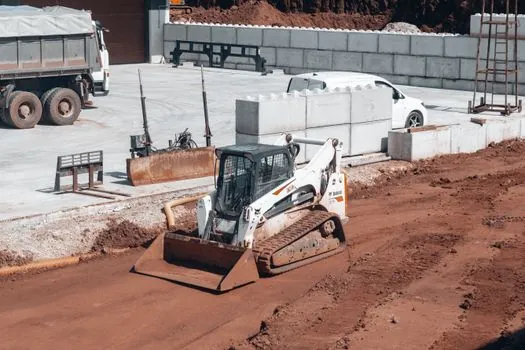
Industrial floors carrying forklifts need 6 to 12 inches of slab thickness and 4,000 to 6,000 PSI compressive strength, with joint spacing held to 10 to 18 feet and floor flatness in the FF 25 to 50 band, per current slab design guidance [S5]. For warehouses running sit-down forklifts under 15,000 lb, the dominant spec is a 6 to 8 inch slab at 4,500 to 5,000 PSI; residential-grade 2,500 to 4,000 PSI slabs are not adequate and will spall under a 750 PSI front-tire contact patch, the typical load for a fully loaded 5,000 lb truck [S5].
Curbs cure before the truck runs: the same guidance calls for a minimum 7-day cure before forklift traffic, since under-cured slabs are the leading cause of joint spalling and increased equipment maintenance, with poor floor quality alone adding 15 to 30 percent to annual maintenance cost and trimming travel speed by 20 to 40 percent [S5].
Operator and Site Limits That Decide the Real Spec
Even a correctly rated truck can tip if the load is unbalanced, so the 24-inch load center rule is paired with a 20 cm (roughly 6 to 8 inch) vertical clearance margin and operator training that enforces the data plate over gut feel [S1]. Under-speccing a yard truck, the most common error, is also the fastest path to a stability event when bundled loads shift and the operator turns tight against a fence or trailer [S4].
For a related spec map on equipment durability and replacement triggers across heavy iron, see this wheel loader lifespan and component triggers reference, which lines up well with the maintenance-cost logic that drives forklift right-sizing. Telematics-based tire and hydraulic wear data is the next trackable signal, since concrete PSI and mast free lift together set the upper bound on what the truck can do without damaging the floor or itself [S5].
Spec-level background on the components involved: pressure transmitter.