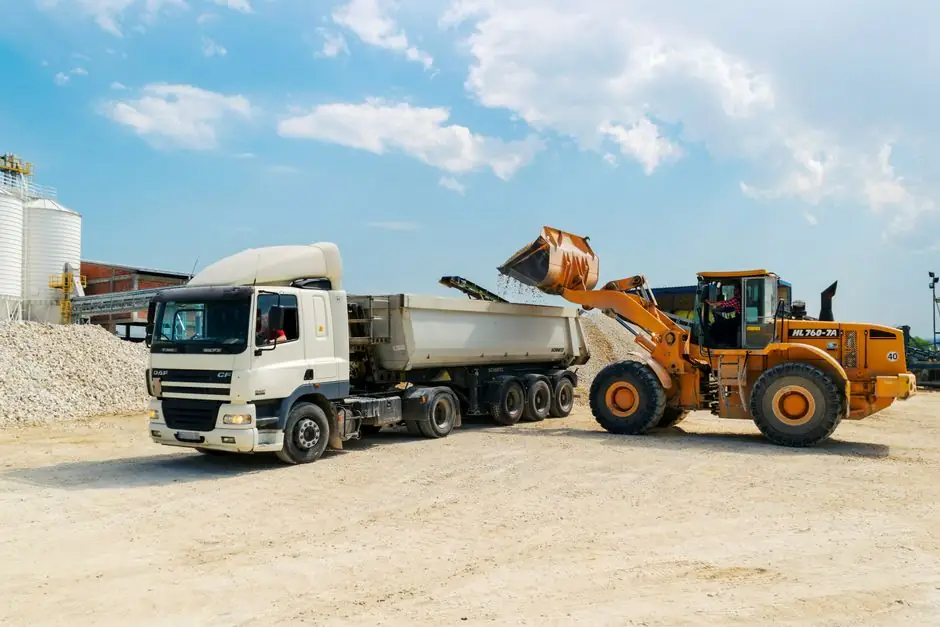
A typical wheel loader logs 1,200 to 1,500 operating hours per year, giving it a 7,000 to 12,000 hour service envelope before a major rebuild or replacement decision is triggered [S5]. Frame, powertrain, and component life track independently, so a 10 year old unit on a clean quarry site can outlive a 6 year old abused unit on a demolition yard [S1].
Contractors, rental fleet managers, and used-equipment buyers all need the same three numbers to plan: total machine hours, component hour intervals, and the owning-and-operating cost crossover point. Reference data from multiple OEM-adjacent sources published 2023 through 2025-07 converge on a 10 year / 10,000 hour central figure, with low end around 7,000 hours and high end around 12,000 hours for well-maintained units [S2][S3][S5]. For a broader mechanical background on the machine, see the wheel loader working principle breakdown.
Total Machine Life: Hours, Years, and Variability
Industry data places the average wheel loader service life at 7,000 to 12,000 operating hours, with 10,000 hours cited as a commonly used central benchmark for resale and fleet planning [S1][S2][S3][S5]. At the 1,200 to 1,500 hours per year typical contractor rate, that translates to roughly 7 to 10 years of calendar life [S5].
Variability is wide because environment, operator skill, and PM discipline move the number by 50 percent or more. A wheel loader in a hard-rock aggregate yard with poor filtration will eat through 7,000 hours quickly, while a unit in a light-duty mulch yard on a strict PM schedule regularly reaches 12,000 hours before structural or powertrain rebuilds [S1][S5]. The 10,000 hour figure is therefore a planning midpoint, not a guarantee, and used-equipment valuations bracket it accordingly [S9].
Component Lifespan Comparison
Component hour ranges drawn from a 2025-07 industry reference show that major subassemblies do not fail together. Tires are the shortest-life consumable, while the engine, brakes, and articulation joint can run beyond the average machine life with rebuilds. [S1]
The table below lines the five most-replaced components against their typical hour range and the dominant wear driver:
Tires are the only component with a published rebuild cost band in the reference set: low 2,000 USD, average 3,000 USD, high 4,000 USD per set, in 2007 dollars, which makes them a recurring but predictable line item rather than a machine-life event [S8]. For detailed commissioning checks that catch early wear on these components, the pre-use inspection and load test procedure is a useful field reference.
Who Should Run a Loader to 12,000 Hours vs Replace at 7,000
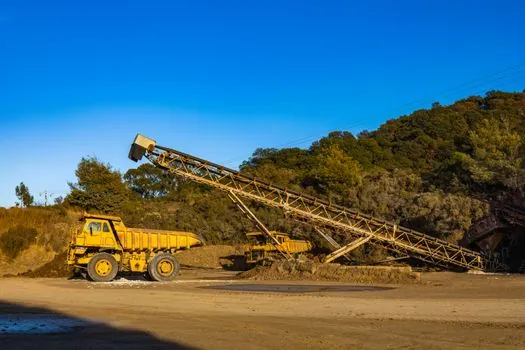
Fleet owners with in-house heavy-duty mechanics, telematics-driven PM, and a stable light-duty application (recycling, agriculture, municipal snow) are the operators who should target the high end of the range, since component rebuilds and tire replacement pay back under those conditions [S1][S5].
Contractors running severe abrasive applications (granite quarry, demolition, steel-mill slag), or operators without trained service staff, should plan replacement closer to the 7,000 hour low end. Once hourly repair cost crosses the equivalent of a new-machine payment plus residual, the O&O crossover has been hit, and that is the true replacement trigger, not the calendar [S1]. Rental fleets that turn over inventory on a 5 to 7 year depreciation cycle frequently retire otherwise serviceable units at 6,000 to 8,000 hours for accounting reasons rather than mechanical ones.
Key Factors That Move Lifespan Up or Down
Five factors dominate the hour range, and each one is controllable: operator skill, PM frequency, working environment, material handled, and machine technology. Operator error is one of the largest single drivers of shortened equipment life cited in the reference material, with rough handling, excessive braking, and poor loading technique flagged as direct causes of accelerated wear [S1][S5].
Environment matters because extreme heat, cold, and abrasive materials each attack a different subassembly: cold loads hydraulic seals and batteries, heat shortens engine and tire life, and rock or sand accelerates articulation joint and bucket wear [S1][S4][S5]. A disciplined PM program (fluid and filter intervals, greasing, daily walk-around, telematics alerts) is the single most reliable lever to push a unit toward the 12,000 hour end of the range [S4][S5][S6]. For background on the broader equipment category these loaders sit in, the construction machinery and equipment overview page covers the wider fleet context.
Practical PM Actions That Add Hours
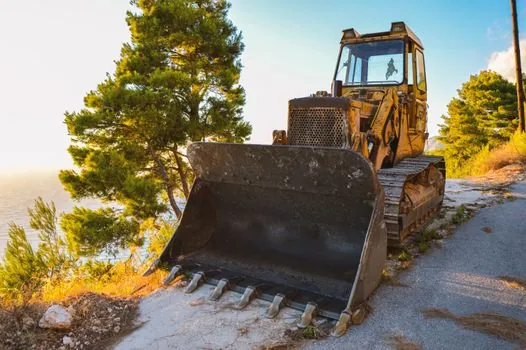
Five PM actions are repeatedly cited across the 2023 to 2025-07 sources: train operators on smooth acceleration, bucket control, and idle management; follow OEM service intervals with genuine parts; check and rotate tires on schedule; regrade or streamline the job site to reduce slope and impact loading; and use telematics for real-time condition monitoring instead of reactive repair [S4][S5][S6]. Each of these addresses a specific failure mode rather than offering general advice.
Used-equipment buyers evaluating a candidate machine should pull engine hour totals, ask for the PM log, and check component serial plates on tires, articulation pins, and the engine to verify the major wear items against the published hour ranges above. A 10,000 hour unit with fresh tires, a recent engine rebuild, and a complete PM record is mechanically superior to a 5,000 hour unit with deferred filters and an unknown service history.
Standards, Sourcing, and Verification
No single ISO or SAE standard governs wheel loader replacement timing, so published hour ranges from OEM-aligned references (Caterpillar dealer networks, regional dealer blogs, and 2025 industry maintenance guides) form the practical benchmark. Key sources used here include the Thompson Tractor lifespan reference [S1], the 2025-07 Luy Machinery maintenance guide with component hour data [S5], the 2023-10 Hopen industry overview [S3], and the 2007 Equipment World component cost data still cited in current tire-budget planning [S8].
Track these signals going forward: OEM telematics subscriptions (Product Link, VisionLink, Komatsu Komtrax) that publish hour-based PM alerts, dealer-published rebuild-vs-replace calculators, and the secondary-market resale curve for 7,000, 10,000, and 12,000 hour units, since that curve is the cleanest empirical read on where the O&O crossover actually lands. The backhoe loader and related earthmoving equipment page covers a closely related class with overlapping component-hour logic.
The underlying component specifications are covered under wheel loader.