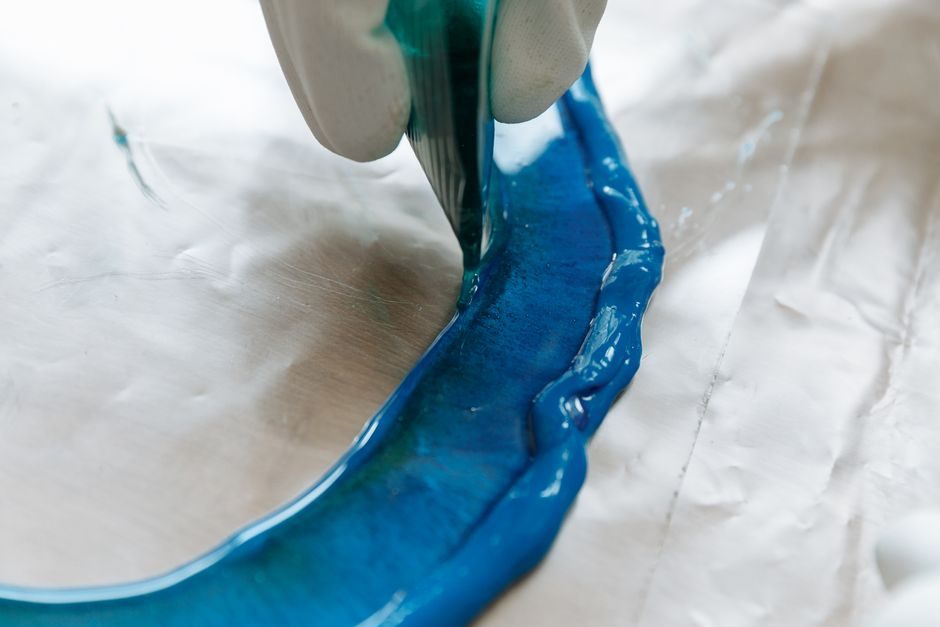
The V-process molding line is a binder-free, dry-sand casting system that holds moulds together purely by atmospheric pressure on heated EVA plastic film, achieving a 95% sand reclamation rate and eliminating bentonite, water, and chemical binders from the loop [S1].
Commercial V-process plants trace back to a 1971 patent by Japan's Sinto Group; the technology has since been licensed to more than 150 companies in Japan, Europe, and the USA, with current reference installations built around HEINRICH WAGNER SINTO (Germany) VDT-6 class equipment to Sintokogio specifications, operating at flask sizes 1600x1250x250/250 or 400/400 mm and 6-10 molds/hour throughput [S3].
Operating Principle: How a V-Process Line Differs from Green-Sand or Resin-Sand Lines
A V-process molding line seals dry silica sand inside a flask using a heated ethylene-vinyl acetate (EVA) film stretched over the pattern; a vacuum pump then evacuates the air, and the resulting pressure differential (typically near 1 atm across the film) compacts the sand into a rigid mould without any chemical bond [S1]. The sequence is a fixed eight-step cycle: heat the EVA film, drape it over the pattern (wood or aluminium), spray a release coating at a controlled Baume degree, fit the empty box, sand-fill and vibrate to compact, cover the filled box with film, evacuate the box, lift the mould, then assemble, evacuate the whole mould, pour, and finally strip [S1]. Because no water, binder, or hardener is used, the process releases very little dust and the working envelope stays cleaner than a green-sand or resin sand molding line of comparable capacity [S1].
Main Equipment Sub-Systems Inside a V-Process Line
The line is conventionally split into three functional sub-systems with clearly defined equipment lists. The vacuum stabilised system bundles the vacuum pump, vacuum meter, surge tank, dust-removal tank, and steam separator — together they hold the negative pressure steady while venting moisture [S1]. The moulding system includes the die shoe, automatic roll laminator, sand moulding box, vibrating table, manipulator, and die lifter, with the laminator applying the heated EVA film at controlled tension [S1]. The sand reclamation system contains the sand screen, elevator, conveyor, and sand bin, and is the reason the line can recycle approximately 95% of the silica sand back to the hopper without chemical reconditioning [S1]. Readers comparing this to higher-throughput fully-automatic cells can cross-reference the automatic molding line architecture, which adds flask handling and shot-slate logic on top of the same three blocks.
Classification of V-Process Lines by Layout and Throughput
V-process lines are typically classified along two axes: flask size and cycle time, which together determine the hourly mould output. Compact cells run on flasks around 800x600 mm at 8-10 molds/hour and suit small jobbing foundries, while mid-size lines such as the HWS VDT-6 sit at 1600x1250x250/250 or 400/400 mm flasks and deliver 6-10 molds/hour with full film-laminator and manipulator integration [S3]. Large-format automotive and ductile-iron lines extend flask length beyond 2000 mm and pair the V-process moulding station with separate pouring and cooling tracks, dropping the cycle to 3-5 molds/hour per station but raising casting weight per cycle. The HWS/Sintokogio reference figures also show that the v-process line envelope is no longer confined to thin-wall castings; the 400/400 mm cope-and-drag configuration handles heavy section castings where green-sand cores would fail on density.
Performance and Quality Specs vs Traditional Automatic Molding Lines
Headline gains of a V-process cell over a traditional automatic molding line include surface roughness rated at RZ-70, 100% gas extraction, 5% higher casting density, +30% mould filling rate, and -30% cost per casting, with environmental friendliness rated at 100% relative to the green-sand baseline [S3]. These figures match the physical story: vacuum-held sand is dimensionally stable, so casting tolerances tighten, the EVA-film parting eliminates draft-angle machining, and the absence of bentonite means no moisture-driven gas defects [S3][S1]. For buyers evaluating the molding line category more broadly, the V-process is the right pick when the part list is dominated by mid-to-heavy steel or iron castings with stringent surface and density requirements, and it is the wrong pick when lead time depends on running extremely small batches or when in-house pattern changes more often than once a week, since EVA film and pattern re-covering still cost set-up time.
Standards, Sourcing, and the Patent Status Buyers Must Track
Core process know-how is covered by the 1971 Sinto Group patent family, with licensed build partners such as HEINRICH WAGNER SINTO delivering turnkey VDT-class plants, while equipment specifications should be reviewed against the supplier's quality plan and the buyer's own ISO 9001 / IATF 16949 foundry audit regime [S3]. Because the line carries no chemical binder, foundries exporting to automotive tier-1s gain a documentation advantage — no SDS for resin, no wash-water treatment, and reduced stack-emission reporting. For those weighing alternatives, the shell molding machine class serves very small high-precision castings better, and a v-belt -driven sand conveyor is the most common sub-assembly inside both V-process and resin-sand reclamation skids.
Selection Criteria and Trade-Offs When Specifying a V-Process Line
Four criteria drive the V-process vs green-sand vs resin-sand vs automatic-molding decision: (1) casting weight and section thickness, (2) tolerance and surface-finish target, (3) environmental and binder-handling cost, and (4) hourly throughput per square metre of flask area. On (1) and (2), V-process wins for steel and ductile iron in the 5-500 kg range with RZ-70 surfaces; on (3) it wins anywhere bentonite or phenolic binder disposal is restricted; on (4) it loses to high-pressure green-sand when the bottleneck is tonnage rather than quality [S1][S3]. Buyers should also size the vacuum pump to the total flask surface under simultaneous vacuum, since a 1600x1250x400 mm flask set at -0.08 MPa holds roughly 80 kN of atmospheric load per flask face and a drop in pump capacity directly extends cycle time.
Two signals worth tracking before placing a new V-process order: confirm with the OEM whether the laminator has been upgraded to servo-tension EVA film handling, since film waste is the hidden operating cost driver, and request documented sand-reclamation yield data on the vendor's installed base, because the 95% reclamation figure is achievable but is contingent on the screen and dust-removal tank being correctly specified [S1]. Foundries already running an automatic molding line can usually retrofit a V-process station on a shared pouring track without disturbing upstream sand handling.