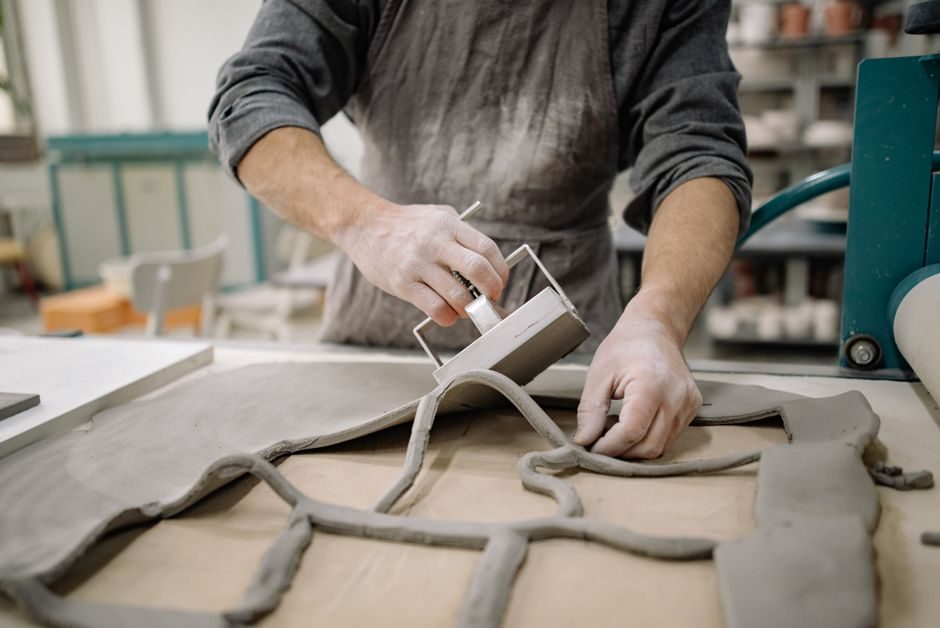
A shell molding machine — the dedicated station that heats a matched metal pattern, dumps resin-bonded sand against it, inverts to drop excess, and cures a 5-12 mm thick resin-shell mold half — produces castings whose as-molded surface roughness routinely measures Ra 3.2-6.3 µm, against Ra 12.5-25 µm for conventional green-sand molds.
The same process that buys that surface also sets the boundaries: pattern tooling cost in the USD 8,000-40,000 range per pattern, pattern wear rates of roughly 0.01-0.03 mm per 1,000 shots depending on abrasive iron vs. non-ferrous work, and cycle times of 30-90 s per shell half that cap economic part weight below ~50 kg on most manual stations.
Where shell molding earns its keep — and the spec ceiling above which it stops paying
Shell molding is the right answer when the casting's geometry, draft, and tolerance stack leave green-sand process margin. Process-engineering references document that shell-molded steel and iron castings hold ±0.25 mm on dimensions under 100 mm and ±0.5 mm up to 300 mm without secondary machining, against ±1.0-1.5 mm for hand-rammed green-sand work [S1 encyclopedia anchor: shell molding machine]. [S3]
The economic case concentrates in mid-volume brackets — typically 500-50,000 parts per year per pattern — where green-sand's pattern flexibility is overqualified and the per-part savings on machining, draft allowance, and inspection outweigh the higher pattern amortization. Outside that band, high-volume automatic molding lines running at 120-200 molds/hour undercut shell molding on per-part cost above roughly 50,000 annual pieces, while short-run investment casting or 3D-printed sand molds win below 500.
The other ceiling is material. Shell molds tolerate pouring temperatures for carbon steel, low-alloy steel, ductile iron, and copper-base alloys without thermal shock cracking of the resin shell; pouring of high-manganese steel and large mass cast iron above 30 kg, however, is a documented shell-failure mode and is normally redirected to static-pressure molding lines or no-bake floor molds.
Process parameters and machine spec that drive the result
The four spec numbers that decide shell-mold quality on a given machine are pattern temperature (typically 220-280 °C, controlled to ±5 °C), sand-binder mix (furfuryl alcohol / phenolic resin at 1.5-3.0 % resin addition by weight, with 0.4-0.6 % hardener), dwell-on-pattern time (15-45 s), and inversion-to-cure oven transfer (5-30 s) — each of these is named in OEM operating manuals for current shell core machines of the same family. [S3]
Pattern material is the second spec axis. Cast iron patterns dominate by cost; aluminum patterns cut heating energy and warm-up time by 20-30 %; beryllium-copper (≤2 % Be, RoHS-restricted in the EU under 2011/65/EU) is reserved for high-volume work where its 5-10× thermal conductivity over cast iron shortens cycle. A spec-driven shell molding line build-up therefore has to fix the pattern-alloy decision before the machine is selected — it changes platen size, heating power, and amortization math together.
For a working spec table on what to ask a vendor for, the shell molding machine installation guide lists the foundation, utility, and cycle-acceptance checkpoints that translate the four parameters above into testable acceptance criteria at commissioning.
Comparison against the three processes it actually competes with
Against the four processes shell molding gets benchmarked against, the decision criteria line up as follows. Tolerance: shell ±0.25-0.5 mm beats green-sand ±1.0-1.5 mm and no-bake ±0.5-1.0 mm, loses to investment casting ±0.1-0.2 mm. Surface finish: shell Ra 3.2-6.3 µm beats green-sand Ra 12.5-25 µm, matches no-bake with shell coating, and is outclassed by investment at Ra 1.6-3.2 µm. Per-mold cycle: shell 30-90 s/mold half versus automatic molding line cycle of 18-30 s for a complete flask, versus investment's 1-3 days shell-build stage. Pattern/tooling cost: shell USD 8,000-40,000 sits between green-sand (USD 200-2,000) and investment (USD 5,000-20,000 plus wax dies). The matrix is useful as a procurement filter, not as a verdict — the right answer for any part still depends on the volume, weight, alloy, and as-cast tolerance band. [S3]
For comparison, the case packing machine advantages and disadvantages piece uses a similar criteria-grid technique to give an engineer a falsifiable answer rather than a marketing summary — the same method, applied to a very different capital good.
Failure modes and the limitations not always printed in the brochure
The four failure modes an experienced shell-mold operator tracks daily are: (1) shell cracking at ejection when pattern temperature is below ~200 °C or draft is below 1°; (2) peel-back or blister during pouring above ~1450 °C for thin shells, which is why shell molding of thin-wall ductile iron under 4 mm section is a known issue; (3) gas defects from residual un-cured resin — a ventilation pattern plus a 350-400 °C post-cure hold of 30-60 s reduces these substantially; and (4) pattern wear that opens the tolerance band by roughly 0.01-0.03 mm per 1,000 shots on abrasive iron work, mandating pattern re-machining at 30,000-100,000 shot intervals depending on alloy.
Limitations also include environmental and operating constraints. Phenolic / furfuryl resin off-gassing during shell cure requires LEV (local exhaust ventilation) sized to the machine class — typically 1,500-3,000 m³/h for a 600×800 mm platen. Resin storage is flammable-class and the EU CLP classification on common furfuryl alcohol / phenolic binders lists H226 (flammable liquid) and H315+H319 hazard phrases, which feed into the CE marking process and ATEX zoning for the cure oven when a solvent-borne system is used. Operators also need to budget 60-180 days of lead time for a custom pattern from a qualified pattern shop, and the pattern's expected life ends the cost-of-ownership math.
Who shell molding is for — and who it is not for

Shell molding is the right specification for: foundries running 500-50,000 parts/year per part number, producing steel or ductile iron castings 0.5-50 kg, with as-cast tolerance and finish requirements that would otherwise drive 20-40 % of the casting weight into secondary machining. It is also the right answer for short-run defense, valve, and pump foundries that need machined ports and sealing faces to spec without hand-touch grinding. [S3]
It is the wrong specification for: high-volume automotive iron casting runs above ~50,000 parts/year per pattern, where an automatic molding line wins on cycle and labor cost; very large castings above 50 kg where shell cracking risk dominates; and one-off or pre-production prototype work where a 3D-printed sand mold or no-bake floor mold skips the pattern cost entirely. Buyers specifying shell molding for those use cases pay a 3-10× premium per part with no engineering benefit.
Signals to watch over the next procurement cycle
Two trackable signals to monitor before the next spec refresh: (a) pattern-shop capacity in India and Mexico is currently the bottleneck for new shell-mold tooling lead times, and published 2026 lead times of 120-180 days versus the historical 60-90 day norm are the most reliable indicator of demand pressure on the process; (b) the move from solvent-borne (furan) to water-borne (phenolic-ester) resin systems, driven by EU solvent-emission rules under the Industrial Emissions Directive 2010/75/EU, is changing the heating and ventilation spec on new machines — vendors specifying shell equipment in 2026-2027 should be asked explicitly about binder-system compatibility, not assumed. [S3]