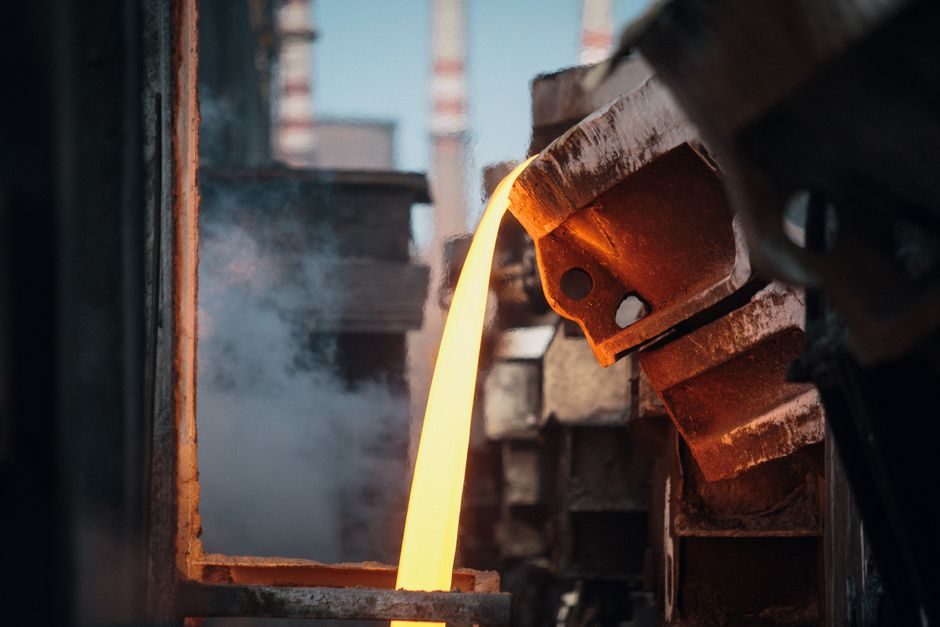
A vacuum die casting machine is a standard cold-chamber or hot-chamber die casting cell with a sealed die cavity, an evacuation valve train, and a vacuum pump that pulls the chamber to a controlled low pressure before the metal injection stroke — typically 50–300 mbar for "assist" cells and under 50 mbar for hard-vacuum structural parts [S1][S2].
The selection problem is not the pump; it is the interaction of clamping force (kN), projected area, shot weight, alloy, and the leak-tightness class of the part. Chinese suppliers Ningbo Dongfang and Qingdao Shengmei both list vacuum cells in the 900 kN (80 t) class alongside conventional machines, confirming that vacuum is treated as a configured option on a standard die casting machine platform rather than a separate product family [S2][S3].
Gate 1 — Vacuum Level Class: Hard Vacuum vs Assist Vacuum vs Atmospheric
Hard-vacuum cells routinely reach <50 mbar cavity pressure, with research-grade systems specified in the 1–10 mbar range for MMC and aerospace structural castings where porosity drives fatigue life and pressure-tightness rejection [S1]. Assist-vacuum cells (50–300 mbar) are the workhorse configuration for automotive structural parts and high-end aluminum die casting machine cells, and they pair naturally with cold-chamber injection because the shot sleeve, shot tip, and plunger geometry are unchanged from a standard cold-chamber machine [S1][S2].
For decorative zinc hardware and short-run jewelry-style parts, vacuum-assisted pressure casting is supplied as a separate small-tonnage class by Chinese manufacturers (e.g. Guangdong-origin units in the <1 ton clamp range) and is engineered around investment-cast-style flask geometry, not die-cast platen geometry [S4][S5]. The practical decision is: if the part must pass a leak test or X-ray porosity scan, specify <50 mbar; if the part is cosmetic and pressure-tightness is irrelevant, skip vacuum and save the pump, valve stack, and seal-maintenance budget [S1].
Gate 2 — Clamp Force, Projected Area and Shot Weight Envelope
Clamp force (kN or tons) is sized to projected area × alloy-specific intensification pressure. Aluminum under high-vacuum injection commonly uses 40–80 MPa intensification, so a part with 500 cm² projected area needs roughly 2,000–4,000 kN (200–400 t) of clamp force. A typical buy: 900 kN (80 t) cells with a 25-ton mini-tonnage rating show up in the catalog as entry points for small aluminum trim and electronic housings, and they double as the floor for any vacuum retrofit [S2].
Shot weight is the second envelope. Cold-chamber vacuum cells are normally rated 1–8 kg aluminum shot; hot-chamber vacuum cells (used in zinc and magnesium hardware) typically run 0.5–3 kg zinc or 0.3–2 kg magnesium. Magnesium is the aggressive case: hot-chamber Mg cells need vacuum because Mg melt readily oxidises and entrained gas becomes MgO inclusions — a magnesium die casting machine running without vacuum will fail radiographic inspection on structural parts almost every time [S1].
The comparison buyers should write on the whiteboard before any RFQ:
Gate 3 — Alloy Family and Melt Handling
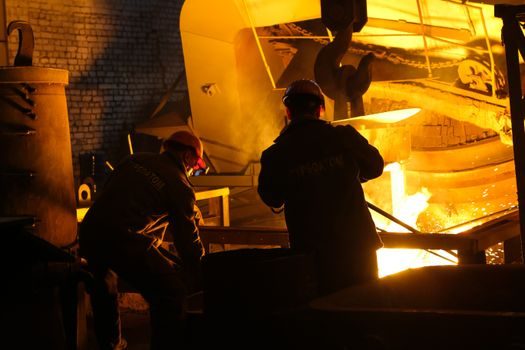
Aluminum dominates the vacuum die casting market because Al's higher melting point (~660 °C) and lower solubility for hydrogen vs magnesium means the vacuum removes entrained air and water-vapour-driven porosity rather than fighting active oxidation [S1]. Magnesium cells need vacuum plus a cover-gas melt-handling loop (SF₆ alternative or N₂/0.5 % SF₆ legacy mix) — this is not optional, and the same logic applies to a vacuum die casting machine cell sold for Mg work as for an Al cell, but with a different melt furnace upstream.
Zinc and Zamak pressure casting under vacuum exists but is rare, because zinc's hot-chamber process already operates at low pressure (~20–35 bar injection) and the alloy is forgiving on porosity; vacuum on a zinc die casting machine is a niche for premium hardware and miniature electronic shielding [S1][S4]. For buyers weighing alloy, the rule is: aluminum first if structural and leak-tight; magnesium first if weight-driven; zinc first if dimensional precision and surface finish drive cost.
Gate 4 — Sealing, Valve Train and Pump Configuration
The vacuum system architecture is the same across most vacuum die casting cells: a vacuum valve on the die (usually one per die half, or a single manifolded valve on the parting line), a vacuum valve on the shot sleeve (cold-chamber only, optional), a filter, a receiver tank, and a pump (rotary vane or dry claw is most common in the 50–500 m³/h class; oil-sealed rotary vane is cheaper but demands vapour handling because water and oil from the die lube will migrate back) [S1].
Leak-rate specification matters more than ultimate vacuum: a system that reaches 30 mbar in 0.5 s but loses 20 mbar in the 1 s before injection is worse than a system that holds 80 mbar for the full cycle. Buyers should specify leak rate in mbar/s at a defined test pressure, and require a vacuum-integrity check cycle in the PLC between every Nth shot (typical N = 10–50) [S1]. For cells sold as gravity die casting machine retrofits with vacuum added, the sealing surface and clamping parallelism must be checked first; a gravity cell's die clamp does not have the same dynamic sealing surface as a horizontal cold-chamber machine.
Gate 5 — Throughput, Cycle Time and Total Cost of Ownership
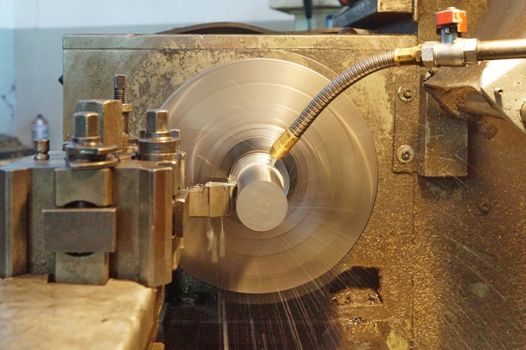
Vacuum adds 2–5 s per cycle in assist-vacuum cells and 4–10 s in hard-vacuum cells, depending on pump sizing, valve response, and leak rate. On a 60 s baseline cycle that is 3–17 % throughput penalty; for high-volume automotive structural parts the penalty is recovered because lower porosity cuts downstream leak-test rejection and machining allowance [S1][S2].
For lower-volume or short-run work, a process-aware buyer will evaluate the cold chamber die casting machine buying guide 2026 for clamp/shot/alloy decisions first, then layer vacuum as a configuration option on the chosen platform.
Buyer Logic: Who Vacuum Is For, and Who Should Skip It
Vacuum die casting is for: aerospace structural Al parts, automotive crash-relevant Al castings, leak-tightness-critical housings (transmission, inverter), and any Mg structural part that will see X-ray or CT inspection [S1]. Vacuum is not for: zinc decorative hardware where porosity is invisible and cost dominates, large thin-wall non-leak-tight Al trim where atmospheric cold-chamber runs at acceptable scrap rates, and short-run prototyping where the vacuum cell's pump-down overhead dominates cycle time.
For buyers who already operate a conventional cold-chamber cell and are evaluating vacuum as a retrofit, the same five-gate framework applies, and the practical starting point is the shot sleeve and magnesium die casting machine article which explains how shot-sleeve geometry interacts with vacuum-valve placement and why the sleeve seal is the highest-wear item on a vacuum cell.
Standards, Inspection and Trackable Signals
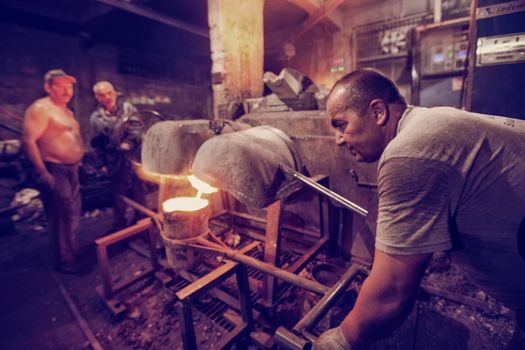
No single ISO or ASTM standard governs "vacuum die casting" as a process designation; instead, buyers rely on the part-level performance standards that vacuum is being used to meet — pressure-tightness tests, radiographic acceptance criteria (ASTM E192 reference radiographs for Al and Mg castings), and customer-specific porosity limits on cross-sections [S1]. Vacuum cell commissioning is normally qualified by a leak-rate test (mbar/s) and a reference casting's density (Archimedes or gas-pycnometer) compared with atmospheric baseline.
Trackable signals before purchase: ask the supplier for a measured mbar/s leak rate on a representative die at operating temperature, a measured pump-down time from atmospheric to the specified vacuum setpoint, and a porosity sample (cross-section + density) on the same part run atmospheric vs vacuum. A supplier that will not commit to all three before RFQ is signalling that their vacuum integration is bolted-on rather than engineered. Verify that the valve block, seals, and PLC interlock are documented as a single subsystem with a single part-list and a single warranty line, not three separate vendor packages assembled at the buyer's site [S2][S3].
Closing — for buyers evaluating vacuum die casting in 2026, the deterministic first step is to write the part's leak-tightness and porosity requirement, derive the required cavity pressure from it, and then size clamp force, shot weight, and alloy around that requirement. The next trackable signal is the supplier's willingness to quote a measured leak rate in mbar/s on a hot-die test rather than a nameplate mbar figure; that single number separates a vacuum-integrated cell from a vacuum-marketed cell.