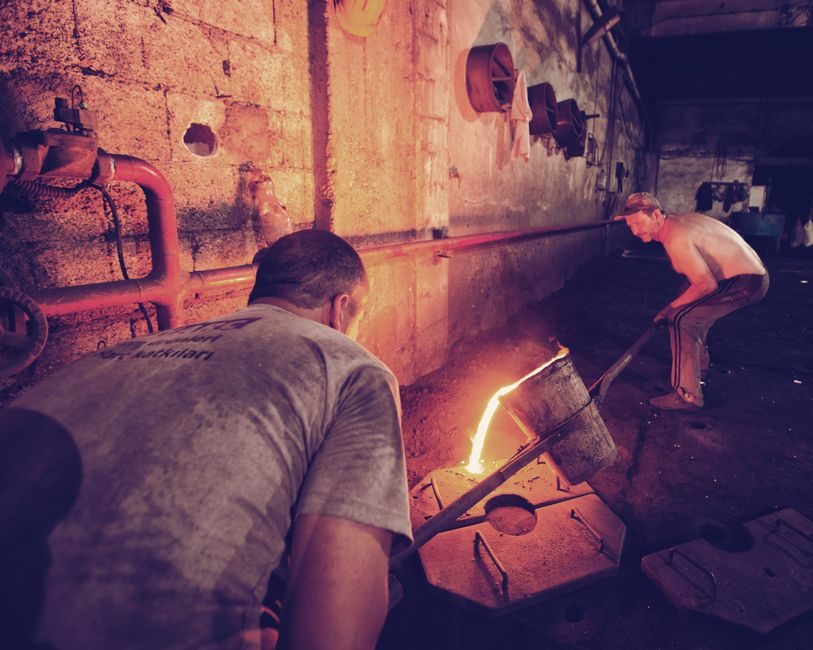
For a 400-1600 ton cold chamber die casting machine, the capital purchase price accounts for roughly 35-50% of the 10-year total cost of ownership, with the balance split between energy, hydraulic consumables, die-set wear, scheduled maintenance, and unplanned downtime [S1][S6].
The framing matters because cold chamber die casting machines — used for aluminum, magnesium and copper alloys that attack molten-pot steel — cycle much more slowly than hot-chamber zinc units, so every cost line compounds across the die life [S1][S2]. A buyer focused only on the invoice misses the fact that injection pressure classes, accumulator sizing, and clamp tonnage each move the lifecycle ledger in a different direction [S1][S3].
Where the 10-Year Cost Actually Lands
Acquisition, energy, and die consumables are the three cost lines that move the TCO needle on a cold-chamber cell, with hydraulic oil, platen tie-bar wear, and shot-sleeve replacement driving the maintenance line [S6]. On a typical 800-ton aluminum die casting machine running two shifts, energy alone can equal 40-60% of the annual operating budget, since injection intensifiers and die-heater circuits stay energised through the cycle [S1]. Die cost — including heat-treated H13 tool steel sets, cooling lines and ejector pins — is a separate capital line that must be amortised over the cast parts shipped, not over the machine [S3].
Buyers should also price the real-time control hardware, accumulator nitrogen pre-charge management, and hydraulic proportional-valve service kits, because a Siemens-class PLC and servo-proportional valve stack is now standard on Tier-1 Chinese-built units and a common retrofit target on older Frech, Buhler, Idra, Weingarten, Toshiba, LK Machinery and Italpresse presses [S3][S5].
Clamp Tonnage vs Clamp Class: What the Numbers Move
Clamping force bands — 400 t, 800 t, 1250 t, 1600 t — set the hydraulic pump motor size, accumulator volume, and the tie-bar cross-section, and each step roughly doubles installed hydraulic power demand, which in turn scales the energy line of the TCO ledger [S1][S3]. A 400-ton cold-chamber cell is typical for thin-wall consumer castings; 800-1250 t covers most automotive structural and transmission housings; 1600 t and above serves large vacuum die casting machine applications for chassis and body-in-white components [S1].
Tonnage does not, by itself, set shot weight — injection plunger diameter and stroke do — so two presses with identical clamp rating can carry very different shot-end specifications and very different plunger/shot-sleeve wear rates, which is why the cold chamber die casting machine spec page must always be read against the actual shot volume, not the headline tonnage number [S1][S2]. Buyers comparing quotes should request the specific injection force (kN), plunger diameter (mm), stroke (mm), accumulator volume (L) and max intensification pressure, since these four numbers drive the per-shot energy draw and the per-cycle wear profile more directly than tonnage does [S3].
Energy, Hydraulic Oil and the Hidden 30%
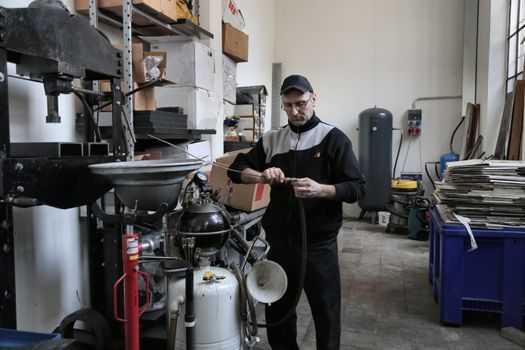
Hydraulic systems on cold-chamber presses are continuous-duty: the main pump, die-height adjustment pump, and intensification pump together draw steady-state power between cycles, which is why variable-frequency pump drives and accumulator-based injection show measurable payback on machines rated above 800 t [S3]. The combination of a large accumulator, high-precision electric proportional valve, and non-contact injection stroke detection on Tier-1 presses is specifically engineered to keep ramp-pressure and ramp-flow stable, reduce pressure drop, and lift injection repetition rate — all of which directly cut the kWh-per-shot figure that drives the energy line [S3].
Hydraulic oil is the second sleeper cost: a cold-chamber press can hold 200-800 L of hydraulic fluid depending on clamping class, with ISO VG 46 or VG 68 hydraulic oil changed at 4000-6000 hour intervals and filtered continuously, so the annual oil and filter budget is non-trivial across a 10-year ownership window [S1][S3]. A side-by-side comparison of the main cost levers reads: energy (kWh per shot × annual shots × tariff) — the single largest variable line; hydraulic oil and filters — predictable but rising with tonnage; die consumables — proportional to part mix and surface-area-to-volume ratio; maintenance labour — driven by PLC age and servo-proportional valve service intervals; downtime — the only line where the buyer has least visibility but the most upside [S1][S3][S6].
Second-Hand vs New: How the TCO Math Changes
Used and refurbished presses from Buhler, Idra, Frech, HPM, Toshiba, KDK, LK Machinery, Italpresse, Weingarten, Triulzi, NTP and Prince Machinery (Buhler Prince) are stocked by specialist dealers in North America and Europe, with cold-chamber units dominating the inventory because they handle the higher-melting aluminum and magnesium alloys [S1][S5]. A used 1990s-vintage 800-ton press can land at 25-40% of a new equivalent, but the buyer must add: control-system retrofit (PLC + HMI replacement), hydraulic valve reseat or replacement, tie-bar inspection, and accumulator N2 pre-charge verification — these four items routinely cost 15-30% of the press price on a thorough refurb [S1][S5].
The used-route TCO works when the buyer can absorb the first-year refurb spend, lock spare-parts supply for the specific hydraulic brand fitted, and accept a 6-12 month commissioning ramp — the same calculus that drives a bulldozer TCO model where the depreciation curve hides deferred maintenance [S1][S5]. The decision rule: if annual production volume justifies a 10-year amortisation of a new press with a modern PLC and servo-valve stack, the new route wins; if the part mix is mature, the volumes are stable, and an in-house maintenance team exists, a used press with documented refurb history can undercut new-route TCO by 20-30% over the same window [S1][S3][S5].
Die Wear, Shot Sleeves and the Parts-Per-Dollar Line
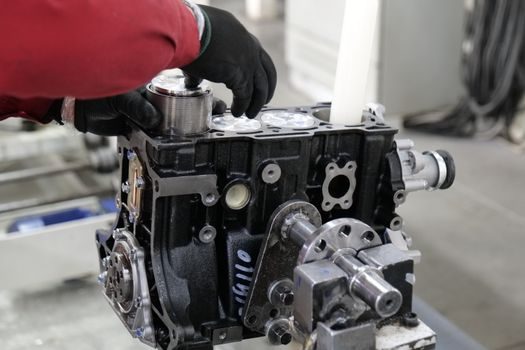
Shot-sleeve and plunger life is the single largest variable maintenance cost on a cold-chamber cell, since molten aluminum is metered into a steel sleeve held outside the furnace and each cycle erodes both surfaces at a rate set by alloy, sleeve material, and lubrication [S1]. Cast iron shot sleeves typically run 30,000-80,000 shots before re-machining; nitrided or tool-steel sleeves can exceed 150,000 shots when die-release lubricant and sleeve pre-heat are well controlled, and the shot-sleeve reference page lays out the trade-off in more detail [S1].
Die-set life is the second long-tail cost: H13 tool-steel dies rated for 100,000-300,000 shots depending on casting geometry, alloy, and cooling-channel design, with vacuum-assist and squeeze-pin dies consuming more of the maintenance budget than gravity-fed simple dies [S1]. On a magnesium program, the magnesium die casting machine line carries additional steel-erosion risk from molten Mg attack on the shot sleeve, and the cost of SF6/SO2 cover-gas consumption must be folded into operating cost, not capital [S1].
Standards, Sourcing Signals and What to Verify
International-standard build (referenced by major Chinese OEMs building to international standards) plus a Siemens-class PLC, large accumulator, and electric proportional injection valve is now the de-facto Tier-1 specification for cold-chamber presses between 400 t and 1600 t, and buyers should treat the absence of any of those three as a yellow flag during sourcing [S3][S4].
Trackable signals for 2026 sourcing: monitor the made-in-China listing density from Anhui and Guangdong cold-chamber OEMs (Bengbu Long Hua Die Casting Machine Co. and similar), the secondary market for Frech / Buhler / Idra / Toshiba / LK Machinery press refurbishment capacity, and the spot price of H13 tool-steel die blocks, since die-block steel is the single largest exposure between the press line and the cost-per-part line [S4][S5]. A useful next-node read is the cold chamber die casting machine sourcing-signal page for current inventory and lead-time data, and the broader die casting machine encyclopedia entry for the cross-vendor landscape [S3][S4][S5].