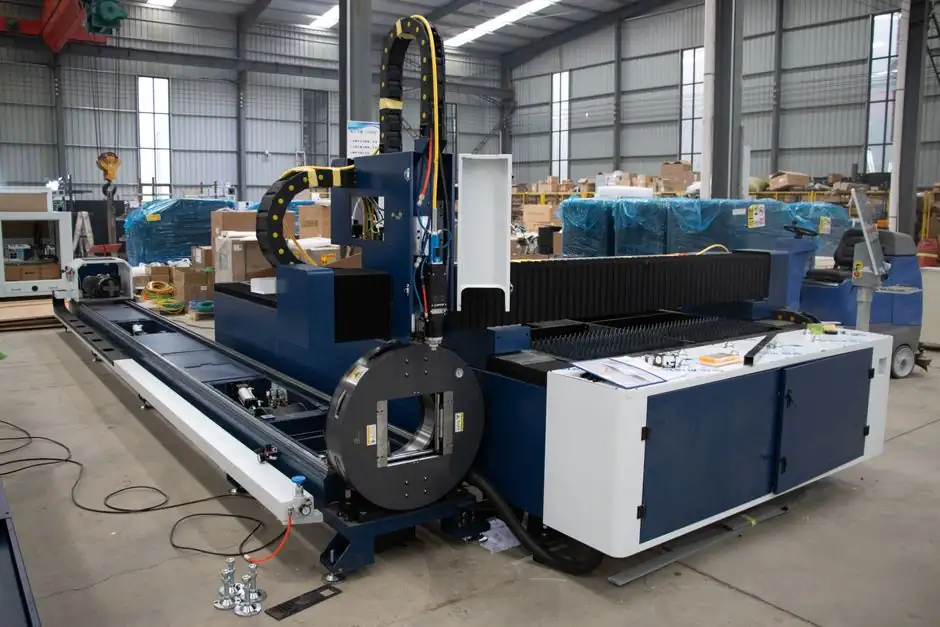
A satellite manufacturing line in 2026 typically integrates 6-9 capital equipment categories: ISO Class 7-8 cleanrooms, autoclaves or out-of-autoclave (OOA) composite curing ovens, 5-axis CNC machining centers, thermal-vacuum (TVAC) chambers, vibration/shock test rigs, RF anechoic chambers, AOI/X-ray for PCB inspection, and a configurable MES backbone. Equipment floor-load, chamber volume, and temperature uniformity are the three spec gates that drive capital cost more than throughput [S1][S2].
The article covers the equipment shortlist, criteria that separate smallsat production from legacy GEO-class lines, and the failure modes buyers should price in upfront. For broader context on adjacent industrial line design, see the drone production line design spec map for 2026 and the silicon wafer demand 2026-2030 engine map for upstream substrate pressure.
Cleanroom envelope and ISO 14644-1 classification
Cleanroom class is the first gate: smallsat payload integration and AIT (assembly, integration, test) commonly run at ISO Class 7-8 (FED Class 10K-100K), with class-100K dominant for 3U-12U CubeSat final integration. Particle counts per ISO 14644-1 are 352,000 particles/m³ at ≥0.5 µm for Class 7, and 3,520,000/m³ for Class 8, which sets the air-handler sizing and HEPA fan-filter unit count (typically 24-40 FFUs per 200 m²) [S1].
Humidity must sit at 40-55% RH ±5% to control ESD on flight electronics, and the air-change rate is 30-60 ACH for ISO 7, dropping to 15-25 ACH for ISO 8. Floor load ratings are 490-980 kg/m² for raised-access floors, and vibration isolation uses 100-200 mm concrete slabs with 50-100 mm neoprene pads, which the structural engineer should verify against the linear guide stiffness of the CNC cells in the same hall. Operators use cleanroom-grade ESD garments (≤10⁹ Ω surface resistance), which aligns with broader anti-static equipment requirements on the line.
Composite layup, autoclave, and OOA curing
Aluminum-honeycomb sandwich panels and carbon-fiber skins are the workhorse structures for satellite bus panels and antenna reflectors.
For OOA paths, a walk-in oven at 2-6 m³ chamber volume, 80-180°C, and ±2°C uniformity cures carbon prepregs at 1 atm using vacuum-bag-only layup. Common OEM names in the segment include ASC Process Systems, Scholz, and Wisconsin Oven, but for a spec sheet the buyer should write the pressure/temperature/uniformity envelope first, then the brand. The trade is throughput vs. floor area: a 3.0 m autoclave cycles a 1.5×1.5 m panel stack in 6-10 hours including ramp and cooldown.
5-axis CNC and precision machining for bus structures
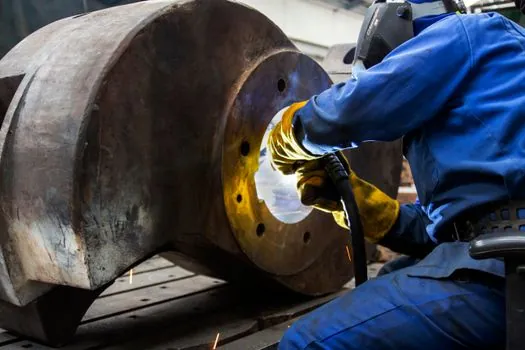
Aluminum 7075-T7351 and 6061-T6 are the dominant bus-alloy stocks, with Ti-6Al-4V for brackets and Invar 36 for optical benches. A 5-axis trunnion or gantry CNC with 0.001-0.005 mm linear encoder resolution and ±0.01 mm positioning accuracy meets the panel-flatness and hole-pattern requirements of typical smallsat primary structures, and the same machine also machines crossed-roller guide-style motion stages for test fixtures.
Spindle speeds sit at 12,000-24,000 rpm with HSK-A63 or BT40 tapers, and chip-to-chip tool changes under 4 s. For a 1.0-2.5 m³ envelope smallsat line, a single 5-axis cell typically handles 60-80% of bus machining; the remaining 20-40% is handwork or 3-axis finishing on legacy cells. A short comparison of CNC options for an AIT line reads: a 5-axis trunnion (lower envelope, lower capex) suits bus-class work under 1.2 m, a 5-axis gantry (larger envelope, 30-50% higher capex) is needed for full-length antenna reflectors, and a 5-axis mill-turn is justified only when 60%+ of parts are shaft-like brackets.
Thermal-vacuum, vibration, and acoustic test stacks
Qualification test stacks follow MIL-STD-810 / ECSS-E-ST-10-03C-style profiles. A TVAC chamber for smallsat class is typically 600-1500 mm diameter, 800-2000 mm depth, with LN2-cooled shroud reaching -180°C and radiant heaters to +150°C, vacuum 1×10⁻⁵ to 1×10⁻⁶ mbar, and thermal soak uniformity ±2°C across the test article [S1].
Mechanical test gear: a 20-50 kN electrodynamic shaker (rated to 3,000 Hz with a 50-100 mm stroke slip table) covers sine, random, and shock runs, and an acoustic-reverberant chamber to 145-160 dB SPL handles launch acoustic. For buyers, the gate is chamber-to-fixture thermal mass: a 100 kg test article with a 50 kg fixture may need 3-5 thermal cycles to reach temperature soak, and that loop is the schedule killer. Where NDT is in-line, see the NDT equipment family for UT, X-ray, and dye-penetrant sets sized for aluminum/CRFP stacks.
PCB assembly, RF testing, and ESD/lighting environment
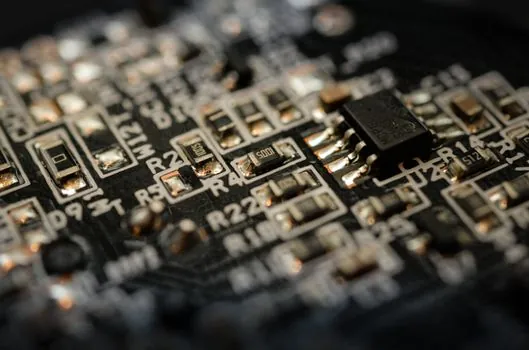
Flight electronics are surface-mount on 4-12 layer FR-4 or polyimide boards, often with RF front-ends in the 1-30 GHz band. Spec gates: 3D SPI (solder paste inspection) and 3D AOI at 5-10 µm XY resolution, BGA X-ray at 5-15 µm, and a temperature/humidity-controlled stencil-print area at 22-26°C / 40-60% RH. SMT pick-and-place line throughput is 30,000-80,000 CPH; for a 1,000-satellite/year smallsat line, 1-2 high-speed mounters and 1 fine-pitch placer are typical [S2].
RF test requires an anechoic chamber or a portable far-field scanner, with quiet-zone sizes 1.0-3.0 m and a Vector Network Analyzer covering at least 0.1-40 GHz, plus LNA calibration to 0.5 dB amplitude and 5° phase. Lighting in the AIT area must be 1,000-1,500 lux, color-rendering index Ra≥80, with ESD-safe diffusers, which overlaps with the lighting equipment and electric lamps category on white-room ceilings.
Process backbone, MES, and operator workbench
Traceability is non-negotiable on flight hardware, so the MES layer must capture every torque, every bakeout, every operator action, and every calibration record. An MES for process manufacturing, such as Oracle MES for Process Manufacturing, adds standard-operating-procedure (SOP) management, operator workbench task assignment, and dispensing/weigh-scale integration to the ERP backbone, with paperless batch records that close the gap between ERP scheduling and shop-floor execution [S2].
Practical integration points: weigh-scale devices stream mass into the MES at 1-2 Hz, barcode/RFID readers log traveler movement, and a configurable SQL/OPC-UA bridge pushes torque-controller logs (1-2 Hz, ±0.1 N·m) into the same record. On the floor, a 15-21" operator terminal at each cell, glove-friendly UI, and a 4K ESD-safe monitor handle the visual SOP, while a backup local historian keeps 30+ days of raw process data when the WAN is down.
Line layout, throughput, and capex envelope
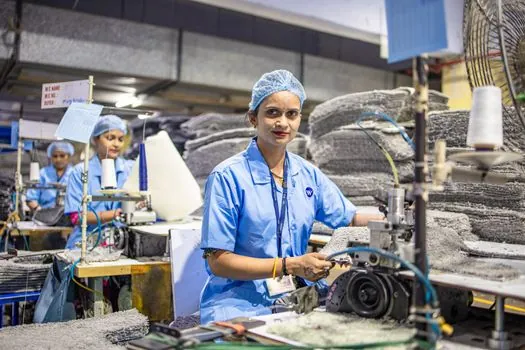
A typical smallsat integration hall of 1,500-2,500 m² lays out as: 250-400 m² ISO 7 cleanroom, 600-1,000 m² ISO 8 surrounding gowning and prep, 300-500 m² CNC and machine shop, 200-400 m² composite layup, 300-600 m² test bay (TVAC/vibe/acoustic), and 150-300 m² for stores, MES, and clean utilities. Cleanroom construction cost runs USD 2,500-4,500/m² for ISO 7 and USD 1,200-2,000/m² for ISO 8, while TVAC chambers sized 800-1500 mm diameter list USD 400K-1.2M, and 5-axis CNC cells run USD 350K-900K depending on envelope and spindle option [S1].
A useful layout rule is to keep particle-generating operations (CNC, composite layup, paint) physically separated from the AIT cleanroom by at least 15-30 m, with a 1.0-1.2 m/s air-curtain at the material pass-through. For a 12U/ESPA-class throughput target of 200-500 satellites/year, expect 2-3 AIT shifts and 1-2 CNC shifts, and capex of USD 18-40M excluding real estate. Closely related floor-design choices (raised-floor coatings, racking for raw stock) overlap with the pallet rack coating and material choices for corrosion-prone warehouses spec map for the stores side, and the steel plate selection for cleanrooms spec gates article for raised-floor substrate.
Failure modes and acceptance gates to price in
The four failure modes that buyers routinely underestimate: (1) autoclave temperature uniformity drift after 1,000+ hours, requiring 3-6 monthly re-mapping with a 9-point thermocouple tree; (2) TVAC LN2 consumption at -180°C, where a typical 1,000 mm chamber burns 40-80 L LN2 per thermal cycle, so bulk-tank capacity and supply contracts must be sized for the test backlog; (3) ESD failures on flight harnesses, driven by humidity drift above 55% RH or ungrounded tooling, both caught only by continuous anti-static equipment monitoring; and (4) cross-contamination from a shared CNC cell, where aluminum chips in a Ti-6Al-4V batch are a galvanic-corrosion risk unless cell change-over uses dedicated tooling and 30-minute purge routines [S1].
The cost of these gates is small versus the cost of a Class-A failure on a payload at 1,000 km altitude, where rework and re-qualification can run USD 200K-2M per affected satellite.
Trackable next signals through 2026 Q4: vendor lead times for 5-axis CNC cells (currently 6-10 months), autoclave deliveries (10-14 months), and LN2 supply pricing into the autumn test backlog. The third is the ECSS vs. MIL-STD-810 harmonization note expected by Q1 2027, which will re-write some qualification test acceptance values for smallsat programs and reshuffle the TVAC, vibe, and acoustic test plans above.