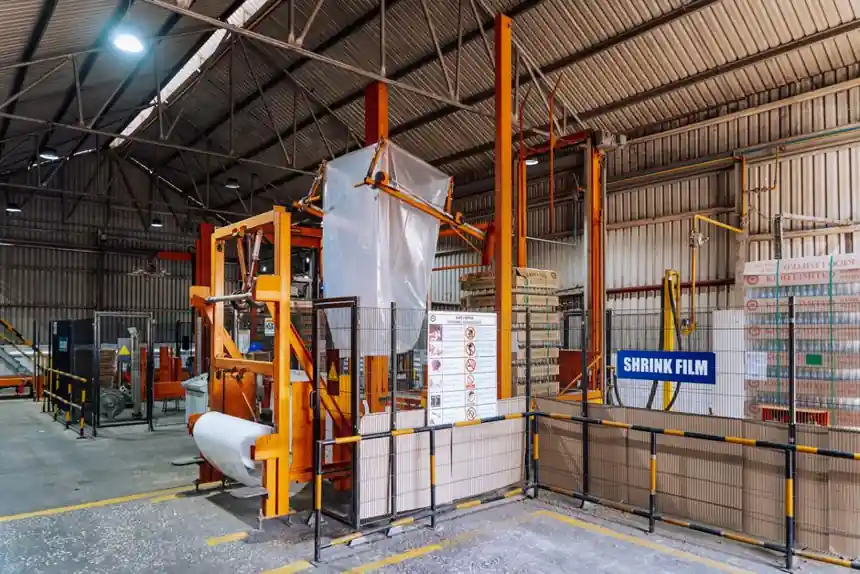
Automotive parts logistics benefits from vacuum packaging when the failure modes are transit breakage, surface oxidation on machined components, and humidity-driven corrosion on electronics: hermetic skin-pack-style seals halve transit breakage versus corrugated alone, and oxygen exclusion keeps residual O₂ below 0.5% to preserve induction time on plated and oil-coated parts [S1].
The right machine is a floor double-chamber or continuous-belt unit with a 500-850 mm seal bar, 40-100 m³/h dry rotary-vane or claw pump, 304/316 stainless contact surfaces, and a 1.5-2× displacement safety margin; these gates match a Tier-1 supplier running 2,000-8,000 packs per shift without surrendering floor space to an oversized thermoform line [S1][S5].
Chamber geometry and seal-bar length for parts
Effective chamber volume (internal L × W × H minus seal-bar and ridge displacement) is the binding constraint for any bag above 200 mm, so a 500 mm seal bar on a 600 × 635 × 900 mm floor chamber (Youngsun YS-DQ-500 class) clears most ECU housings, sensor assemblies, and brake calipers in one side [S1][S5].
Longer bars do not change pump speed: a 500 mm bar at 20 m³/h typically pulls 40-60 s, but the same pump on an 850 mm chamber stretches to 60-90 s because chamber volume scales with the cube of bar length, not linearly; double-chamber tables double throughput by letting the operator load one side while the other evacuates, at the cost of a linearly larger footprint [S1][S5].
For sub-assemblies, ECU pallets, and harness bundles, swinglid industrial models such as the Henkelman Falcon 2-80 and Polar 2-85 reach 800-850 mm bars; for fasteners, small brackets, and bulk-pack nozzles, the Airzero AZ-600ES-D and AZ-800E-D give 600-800 mm sealing formats with spare-part support that matters for lifecycle cost [S3][S1].
Pump displacement, ultimate vacuum, and oil carry-over
Ultimate vacuum is set by pump displacement and chamber leak rate, not the chamber itself, and most 2026 floor units are sized around a 20 m³/h rotary-vane pump that pulls to roughly 100 Pa absolute in 10-25 s on a 30 L load, with 40-100 m³/h dry claw or rotary vane serving the continuous-belt and MAP builds [S5].
Wet, oily, or coolant-contaminated parts need a gas-ballast pump path or a dedicated liquid-ring circuit so vapour does not contaminate the oil, which is a common failure mode when machining residue migrates into the bag; for Tier-1 cleanroom-adjacent cells, a dry claw pump at 40 m³/h is the workhorse because oil carry-back is unacceptable [S5].
Process engineers should match pump displacement to chamber volume × desired ultimate pressure × leak rate, with a 1.5-2× safety factor on displacement, and verify that the 1 kW chamber machine with a 20 m³/h pump running 6 cycles/min draws roughly 6 kWh per operating hour before signing the PO [S1][S5].
Bag format, barrier film, and MAP gas flush
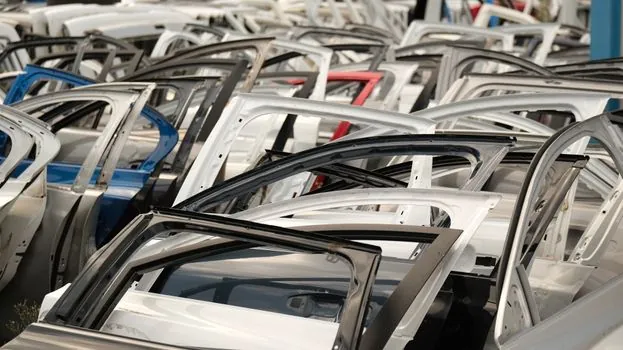
Seal-bar length sets maximum bag width, so a 500 mm bar covers common 400-500 mm stock while a 400 mm bar suits pouches up to 380 mm; for 60-80 µm PA/PE multi-layer barrier film, seal temperature is typically 150-180 °C with a 1.5-3.0 s dwell, and bar heating element is rated in watts per centimetre, with a 400 mm bar drawing ~600 W and high-speed bi-active bars drawing ~900 W [S5].
MAP variants (gas-flush, typically 70% N₂ / 30% CO₂ for red meat) are an option on most 2025-2026 floor chamber builds including YS-DQ-500 and Henkelman Polar 2-85; for automotive electronics and silver-plated contacts, a high-N₂ / low-O₂ flush below 0.5% residual oxygen is the equivalent protection against oxidation [S1].
Buyers should confirm bag size and volume (determines filling nozzle and clamping range), bag material (PA/PE, aluminium laminate, or ESD-safe film for PCBAs), and inner-bag structure (anti-static liner, desiccant, VCI paper) before machine selection, because selecting around weight only is a documented reason bulk-pack projects fail [S10].
Build material, hygiene, and corrosion resistance
Food-contact surfaces should be 304 or 316 stainless, with 316 specified for saline, acidic, or chloride-bearing exposure; lid frames and external panels can stay 304 to control cost, and transparent lids with locking straps (a feature on the YS-ZS-300) must be polycarbonate rated for the same thermal cycle as the chamber or they craze over time [S5].
Flat-bed chambers with no internal ridges are easier to wipe down and tolerate liquid product better, which is why food-grade SS-construction tables such as the YS-ZS-300 advertise a flat chamber bed and full stainless contact surfaces; for coolant, oil, and cleaning-solvent exposure, 316 SS contact parts and IP-rated control enclosures are non-negotiable [S5][S3].
Painted steel rusts within months under daily washdown, so any machine destined for a Tier-1 cell that runs aqueous cutting fluid or parts-washer residue should be specified in full stainless contact, not painted mild steel [S2].
Throughput gates: cycle speed vs line integration
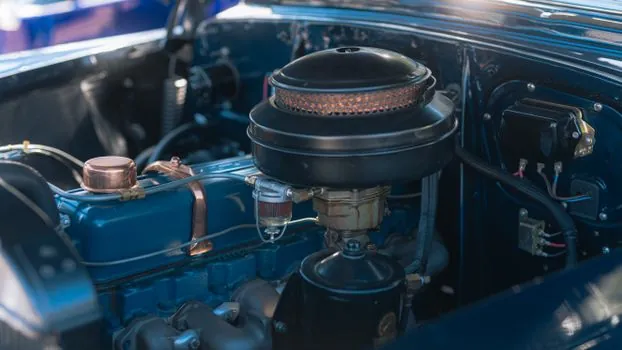
Single-chamber units deliver 1-3 cycles/min and top out near 200 packs/h, which fits a Tier-2 service-parts operation running 200-500 packs/day; double-chamber units deliver 3-6 cycles/min and double the throughput by parallel loading, which fits 2,000-4,000 packs per shift [S2][S1].
Continuous-belt vacuum sealers run 8-20 packs/min, and thermoforming systems like Scandivac SC190 and FLOW-VAC® FV 35 lines reach up to 50,000 p/min for continuous high-volume packing, but only by abandoning the pre-made pouch and forming web in-line; the FV 35 reaches that 50,000 p/min mark only by forming its own barrier film, which is overkill for most automotive part flows [S1][S2].
A double-chamber 60-100 m³/h pump configuration is the most common pragmatic choice for Tier-1 automotive suppliers, because it covers 80% of parts-pack SKUs without paying for thermoform tooling that only pays back above 15,000 packs/shift. For cold-chain parts logistics, the same architecture is documented in a 2026 spec map focused on temperature-controlled shipping flows Cold-Chain Vacuum Packaging Spec Map.
Where chamber sealers break on automotive parts
Chamber sealers are bound by a hard 1 bar (atmospheric) pressure differential, so they cannot evacuate porous or sharp-edged products fully: foam air-filter elements, unfrozen rubber seals, and ribbed castings trap air that collapses the bag and defeats the seal; for these, an external-suction nozzle-sealer is the right tool, with the trade-off that nozzle sealers typically reach only below 85% vacuum versus 99%+ on a chamber machine [S7][S1].
Sharp edges on stampings, brackets, and machined flanges can pierce 60-80 µm PA/PE film, so a 100-150 µm heavy-gauge bag or an inner foam/corner-guard liner is needed; cold-seal (leakage in cold chain) and burn-through (film tearing at corners) both cost more in scrap than the price gap between a cheap and a properly sized bar [S5].
Conductive and ESD-sensitive components (PCBAs, sensors, connector housings) require anti-static or dissipative film plus a grounded bag, and buyers should confirm the film is rated for the chamber's heat-seal temperature before running the first batch, because ESD bags do not all heat-seal the same way [S9].
Decision matrix: chamber vs belt vs thermoform for parts
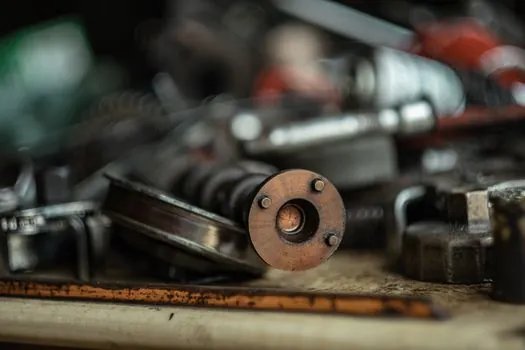
Chamber vs belt vs thermoform for automotive parts: chamber units (single, 1-3 cycles/min, 330-850 mm bar, 20-40 m³/h pump) fit Tier-2/3 service-parts flows under 4,000 packs/shift at the lowest capex; double-chamber (3-6 cycles/min, 500-850 mm bar, 40-100 m³/h pump) is the workhorse for Tier-1 OEM and Tier-1 supplier cells running 4,000-8,000 packs/shift; continuous-belt (8-20 packs/min, larger footprint) and thermoform (up to 50,000 p/min, in-line forming) only pay back above 15,000 packs/shift because of tooling and film-system cost [S1][S2][S5].
Nozzle-type sealers (e.g. Metronelec MSV 450 / MSV 600 / MSV 800) reach below 85% vacuum and handle only dry solid products, but they package faster per part and accept irregular shapes, making them complementary to a chamber line for high-mix service-parts kits rather than a primary cell [S3][S7].
Buyer checklist before signing the PO
Ten questions to lock down before purchase: confirm maximum film roll width and diameter the machine accepts (some chamber units cannot handle high-barrier laminated film), confirm pump oil vs dry-claw with the parts' residue profile, confirm seal-bar watt density for the chosen film, confirm control system integration with line PLC, confirm 304 vs 316 SS on contact parts, confirm lid thermal cycle rating on any transparent lid, confirm chamber ultimate pressure at full load, confirm MAP gas-mix accuracy if specified, confirm spare-part lead time (heating wires, control boxes like the AZ-450-E control box for Airzero), and confirm cycle-time validation on a representative sample rather than empty pouches [S3][S9].
Do not evaluate the machine using empty pouches only: product movement, liquid migration, trapped air, folds, and contamination near the seal produce failures that are not visible during an empty-pouch test, so a representative sample trial is the more reliable basis for confirming seal appearance, residual air, cycle time, and product handling [S6].
For e-commerce flows shipping mixed SKU service parts to dealers, the same spec gates apply but with different cycle targets, documented in a 2026 spec map on vacuum packaging for e-commerce fulfillment Vacuum Packaging Spec Gates for E-commerce. For sub-tier component flows that share a plant with linear-motion equipment, the spec gates for Linear Guide Selection for Automotive Production Lines cover an adjacent capital-equipment decision on the same shop floor.
For component-level specifications, see logistics packaging, vacuum packaging machine, and packaging machine.