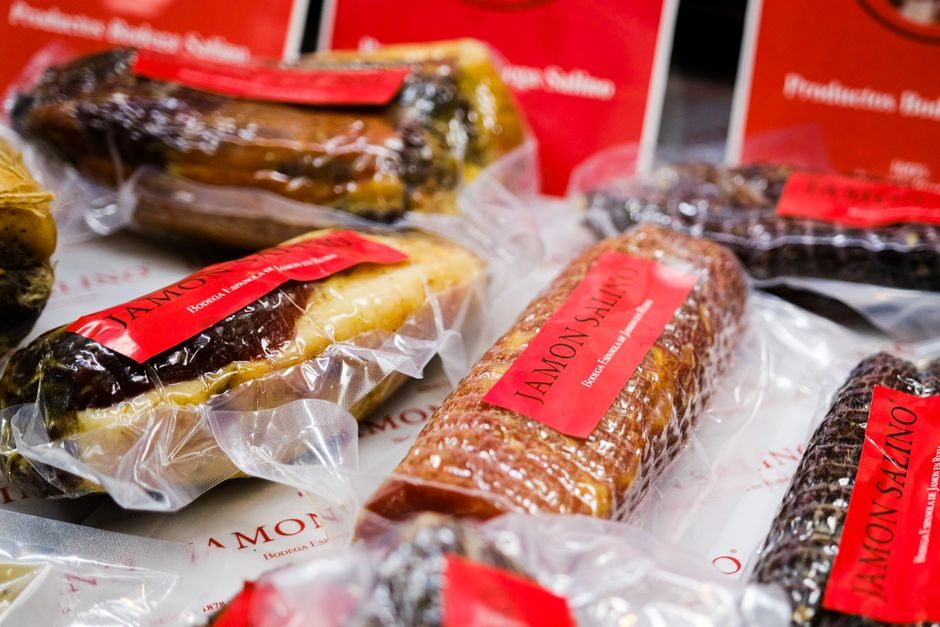
A right-sized vacuum packaging machine is selected by four hard gates — usable chamber volume, ultimate pressure, seal-bar length, and pump displacement — not by sticker price or brand familiarity [S1][S3].
Buyers evaluating a 2026 build typically walk the same decision tree: single-chamber tabletop for low-volume kitchens, double-chamber for batch throughput, continuous-belt or tray-sealer for line integration, and thermoform-rollstock for MAP-style retail packs [S2][S4]. Skipping a gate is the single most common reason a unit underperforms on the line.
Chamber Geometry and Working Volume
Effective chamber volume — internal L × W × H minus seal-bar and ridge displacement — is the binding constraint for every bag size above 200 mm, and a Dz-series single chamber at roughly 400 × 380 × 75 mm working space will only clear pouches up to about 380 mm in one side [S2]. Double-chamber tables double the throughput by letting the operator load one side while the other evacuates, but the overall footprint and lid height also grow linearly.
Flat-bed chambers with no internal ridges are easier to wipe down and tolerate liquid product better, which is why food-grade SS-construction tables such as the YS-ZS-300 advertise a flat chamber bed and full stainless contact surfaces [S3]. Tall-product chambers (≥150 mm lid) cost 20–35% more than shallow equivalents because the lid hinge, gasket and counterweight must be heavier to hold a uniform seal under evacuation.
Ultimate Vacuum and Pump Displacement
Ultimate vacuum is set by the vacuum pump displacement and chamber leak rate, not by the chamber itself. Most dry-food and general-purpose units are sized around a 20 m³/h rotary-vane pump that pulls to roughly 100 Pa absolute in 10–25 seconds for a 30-litre load [S4]. Wet, high-vapour or marinated products need a gas-ballast pump path or a dedicated liquid-ring circuit so vapour does not contaminate the oil.
For comparison: a 20 m³/h oil-sealed rotary vane handles 90% of tabletop food work, a 40 m³/h dry claw pump is the workhorse for cheese, marinated meat and sous-vide lines where oil carry-over matters, and 60–100 m³/h dry pumps serve MAP and continuous-belt machines where cycle time, not ultimate vacuum, is the bottleneck [S4]. A 1 kW chamber machine with a 20 m³/h pump running 6 cycles/min draws roughly 6 kWh per operating hour — a number that has to be multiplied by shift count for total cost of ownership.
Seal Bar Length, Heat Profile and Bag Format
Seal-bar length sets the maximum bag width; a 400 mm bar suits pouches up to 380 mm, while a 500–600 mm bar covers the common 400–500 mm retail stock [S2][S3]. Bar count matters: single-bar chambers seal one bag per cycle, double-bar chambers seal two smaller bags at once, but each bar adds a transformer, a heating element and a control circuit.
Seal temperature for 60–80 µm PA/PE multi-layer film is typically 150–180 °C, with a 1.5–3.0 second dwell, and the heating element is rated in watts per centimetre of bar — a 400 mm bar drawing ~600 W is typical, jumping to ~900 W for high-speed bi-active bars [S3]. Wrong heat profile shows up as either cold-seal (leakage in cold chain) or burn-through (film tearing at corners) — both cost more in scrap than the difference between a cheap and a properly sized bar.
Build Material, Hygiene and Cleaning
Food-contact surfaces should be 304 or 316 stainless, with 316 specified for saline, acidic or chloride-bearing products; lid frames and external panels can stay 304 to control cost [S3]. Transparent lids with locking straps (a feature called out on the YS-ZS-300) are useful for visual cycle monitoring but must be polycarbonate rated for the same thermal cycle as the chamber, or they craze over time.
Touch-key controls and digital display of set points are now baseline on machines above the US$1,000 tier; the absence of a digital panel is a strong tell of a refurbished or economy unit [S2][S3]. NSF-style hygienic design — sloped surfaces, no internal threads, removable seal gaskets — is what separates a machine that can be CIP-wiped in two minutes from one that needs 20 minutes of disassembly.
Throughput Math, Power and Footprint
Throughput is governed by cycle time: evacuate (10–25 s) + seal (2–3 s) + vent (2–4 s) + load/unload (3–6 s) = 18–38 s per cycle, which sets a hard ceiling of 95–200 cycles per hour per chamber [S4]. A double-chamber unit therefore pushes 190–400 bags/h under ideal conditions, and that is the number to put into the line-balancing spreadsheet, not the marketing-stated "max cycles".
Power is dominated by the pump motor (0.75–1.5 kW for 20–40 m³/h pumps) plus seal-bar draw (0.6–0.9 kW per bar), so a single-chamber 20 m³/h unit sits at roughly 1.4–2.0 kW connected load and needs a 16 A single-phase or three-phase outlet depending on the build [S4]. A 2400 W rated single-chamber table will not run on a standard 10 A household circuit — this is one of the most common installation surprises.
Selection Gates and Common Failure Modes
The decision gates stack in this order: bag size → chamber L × W × H → seal-bar length → cycle-time target → pump displacement → material grade → controls/cert. Skipping a step in the chain — for example, picking a 20 m³/h pump for a 60-litre chamber — produces a machine that never reaches its advertised ultimate vacuum, and the failure shows up as a soft bag with residual oxygen and shortened shelf life [S4].
For deeper selection methodology on adjacent equipment, the Pressure Reducing Valve 2026 Price & Cost Guide: Body, Set-Pressure and Cert Levers and the Servo Motor Selection 2026: Torque, Inertia, Feedback and Cable Gates That Decide the follow the same gate-driven spec framework for line-side ancillaries. Common failure modes — seal-bar burn-through, lid gasket flatness loss, pump oil foaming — are almost always traceable to an under-specified seal-bar watt density, a worn silicone gasket, or a pump undersized for vapour load, respectively [S3][S4].
Track the chamber volume per bag (litres of chamber per litre of product), seal-bar watt density (W/cm), and pump displacement per cycle (m³/h ÷ cycles/h) — these three numbers decide whether a tabletop, double-chamber, or continuous-belt spec is correct. A 2026 spec sheet that omits any of them is a red flag; ask for the leak-up rate (Pa/min after pump-off) as a fourth check, confirmed by a vacuum gauge reading, since it tells you how tight the chamber actually is independent of the pump's stated ultimate vacuum.