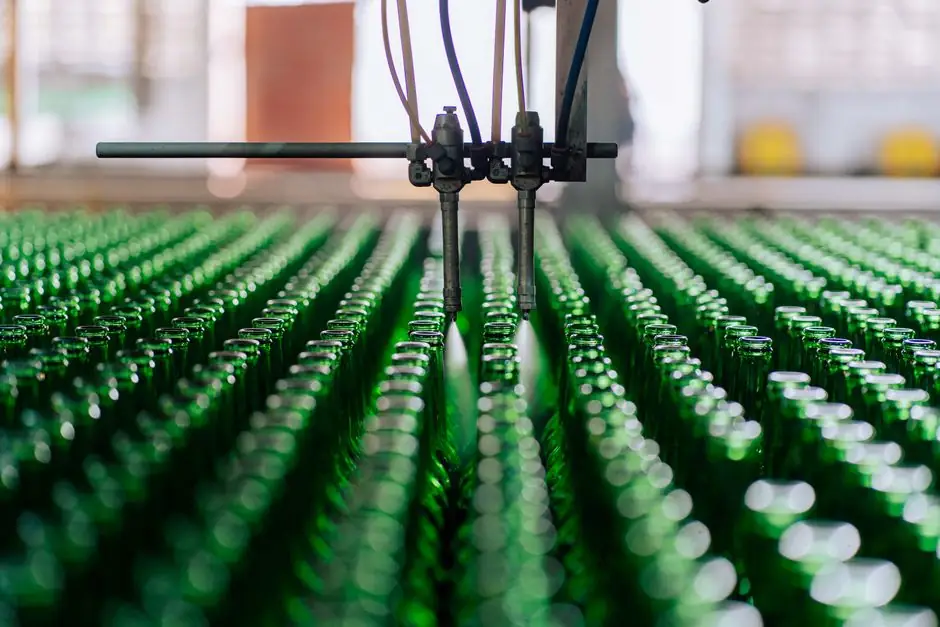
Chamber-style vacuum packaging machines are the dominant architecture on 2026 food-and-beverage spec sheets, with tabletop bell units, double-chamber floor models, and continuous belt sealers covering roughly 90% of fresh and processed-food duty, while external nozzle sealers retain a niche in retail back-of-house and hardware packs [S2].
Selection pivots on four filters rather than headline packs-per-hour: chamber geometry, optional modified-atmosphere packaging (MAP) gas injection, vacuum pump brand and capacity, and the product-contact material/hygiene rating. Buyers who lock those four down first consistently report a 12-18 month payback on mid-volume chamber lines, per 2026 B2B procurement reviews [S8][S3].
Machine architectures and what each one is built for
Tier-1 SME users should default to a tabletop bell unit (single chamber, manual lid) when packs-per-shift stay under roughly 200 and the largest bag fits a 400 mm seal length, with cited examples including the ISG Pack Eco Vac 300S TB and the Komet TOPVAC with a Plexiglas lid for liquid visibility [S2][S3]. Double-chamber floor machines raise effective shift throughput by 30-50% over a single-chamber at comparable footprint because one cavity evacuates while the operator loads the other, making them standard in meat, fish and cheese plants [S2]. Belt chamber sealers run continuous film through a long vacuum tunnel for whole muscle cuts and large pouches, while vertical form-fill vacuum packers (e.g. the ILAY VACUUM vertical line) are the right pick only for powders, granules and small hardware where a formed bag replaces a pre-made pouch [S2].
External nozzle sealers are cheaper and faster for low-viscosity retail packs but cannot reach the same residual pressure as a chamber unit, so they are the wrong tool when residual O² below roughly 0.5% is the target [S2].
Spec sheet decoded: vacuum level, pump, seal bar, and cycle timing
Vacuum level is expressed in millibars (mbar) absolute; the lower the value, the higher the vacuum degree, and most food products need 0.1-1 mbar to inhibit aerobic spoilage organisms, while delicate strawberries, pastries and soft cheeses are usually vacuumed to a softer setpoint to avoid crush [S1]. Chamber machines in the 2026 catalogue typically quote 1-10 mbar absolute residual pressure; nozzle sealers sit higher and are unsuitable for MAP-grade packs [S2].
Pump capacity in m³/h and pump brand (Busch, Agilent, Value, Jiangsu or OEM re-brands) set cycle time more than chamber size does, which is why ISG Pack keeps a flat 65 packs/hour throughput stated across the Eco Vac 300S TB, 400D TB and 420V TB, and shifts the spec sheet instead toward bags-per-lift and bar count [S3]. The seal-bar width on that family is 8 mm, and SEALING TIME typically lands at 1-2 s, scaling with bag thickness, while COOLING TIME (lid held closed under bar pressure to set the weld) is the parameter most first-time buyers under-spec, and missing it shows up as seals that look closed but pull apart in handling [S3].
The full ISG control-panel set is the same on every chamber unit: VACUUM TIME (read on a dial vacuum gauge), TECHNICAL GAS INJECTION TIME, SEALING TIME, COOLING TIME, and a two-digit cycle counter, which matters for traceability in regulated food lines [S3].
MAP, gas flush, and the residual-O² targets you must verify
MAP is the single biggest spec delta on otherwise-identical bell-type machines: the Eco Vac 300S TB carries "with modified atmosphere packaging" as a listed characteristic, while the 400D TB does not list MAP, even though ISG's own description shows both expose a "gas injection time" parameter for models "with the predisposition" [S3]. Sirman's Easysoft drops MAP entirely and pairs the chamber with a low-temperature cooking block for small servings where vacuum-plus-pasteurise replaces gas flush [S3].
Residual-O² targets that the machine must hit and that should be checked with a headspace analyzer: red meat under high-O² MAP uses ~70% O² + ~30% CO² with a high-barrier film; processed or cured meat typically targets < 0.5% O²; cheese and bakery use high CO² with N² balance and aim for < 1% O²; snacks sit in a similar low-O² window with high-barrier film [S5]. Headspace verification, not the recipe name on the HMI, is what proves the pack is actually safe for the stated shelf life.
Build material, hygiene rating, and food-contact compliance
AISI-304 stainless is the baseline across both Italian and Turkish chamber lines surveyed: ISG lists "stainless steel" with explicit acid, mold and rust resistance on its Eco Vac series, while Talleres Ramon names AISI-304 on the VP-280 lid and frame [S3]. Komet's TOPVAC is built entirely in stainless with a Plexiglas (not glass) lid, a deliberate choice for liquids where shatter risk and lid weight both penalise tempered glass [S3].
For acidic or salty foods, 316 stainless is the upgrade and should be requested in the RFQ; the 304 baseline will pit under sustained salt or acid contact. For clean-in-place (CIP) buyers, the practical filter is whether the sealing bar is removable, and Sirman's Easysoft explicitly lists an "easily removable sealing bar" so the operator can lift the bar out for wipe-down and seal-replacement without tools [S3]. Hygiene class for food duty also calls for 304 or 316 stainless, a drainable chamber, Ra 0.8 µm surface finish, and EN 1672-2 / EHEDG conformance per the reference spec encyclopedia [S6].
Throughput tiers and matching machine class to production volume
Tabletop units suit 50-200 packs/hour and price at roughly $1,000-$3,000, fitting 0.5-1 m² of floor space, which is the right answer for small-batch, high-value products like artisanal sausages, jam, specialty cheese, and small-batch dried fruit [S1]. Semi-automatic chamber packers cover 200-500 packs/hour at $3,000-$10,000 and handle both dry and wet products, the workhorse configuration for processed meats, seafood, dairy, and processed fruit and vegetable lines [S1]. Continuous band vacuum packers cover 500+ packs/hour, take 2-5 m² of space, and run $10,000-$30,000, suited to sliced meats, frozen vegetable sticks, snack foods, and ready-to-eat meal kits [S1].
Skip fully automatic industrial units (above $30,000) unless daily output exceeds 10,000 packs: they need dedicated factory space, professional operators, and a maintenance budget that most SME lines cannot justify [S1]. For broader line context beyond the packer itself, the shrink-wrapping machine selection for apparel distribution centers piece covers the upstream heat-seal choice that often pairs with these units on multi-stage pack lines, and the retail distribution shrink wrapping spec guide maps the matching tunnel and film selection for outbound packs.
Comparison: chamber bell vs. double-chamber vs. belt vs. nozzle
Chamber bell (single): best for 50-200 packs/hour, lowest capex ($1,000-$3,000), 1-10 mbar residual pressure, AISI-304 default, MAP optional on predisposed models; wrong for high shift throughput [S1][S2]. Double-chamber floor: 30-50% throughput lift over single-chamber at comparable footprint, mid-to-high capex, AISI-304 baseline with 316 upgrade available, MAP available on predisposed models; standard for meat, fish, and cheese plants [S2][S3]. Belt chamber sealer: 500+ packs/hour on uniform products, highest capex in this group, AISI-304/316, continuous film path, suits whole muscle cuts and large pouches; wrong for short runs and frequent changeovers [S2]. External nozzle sealer: lowest residual pressure capability in the group, cheapest per pack on low-viscosity retail bags, no chamber volume limit on bag size; wrong for MAP-grade residual O² below 0.5% [S2].
Failure modes and product-specific watch-outs
Sharp-edged hardware can puncture standard film, demanding textured or reinforced pouches rather than a different machine class [S2]. Liquids with high water content foam under sudden evacuation, so liquid duty needs a sloped seal bar, gas-flush assist, or a dedicated liquid chamber such as the Komet TOPVAC with its Plexiglas lid geometry [S2]. Live or respiring produce continues to respire and degrades anaerobically, so true MAP (not just vacuum) is the right answer for fresh-cut fruit and vegetables, with the gas mix and O² target tuned to the respiration rate of the specific product [S2].
Wet and moist foods like fresh meats, fish, and marinated vegetables call for a liquid-trap function or "pulse" sealing feature to keep pump oil and product separated, while powdery products like spices and flour need adjustable vacuum strength so fines are not pulled into the seal area [S4]. Soft Air venting, as fitted on the Talleres Ramon VP-280, uses a controlled, time-based progressive vent that lets the bag settle onto sharp-edged meat before full atmosphere returns, reducing in-bag punctures on bone-in cuts [S3].
Standards, documentation, and what to demand in the RFQ
Food-contact compliance for machines sold into the EU runs through EC 1935/2004 and EU 10/2011, and the hygienic-design baseline is EN 1672-2:2020, the EN 415 packaging-machinery series, EHEDG hygienic-design guidelines, plus 3-A and NSF/ANSI 2 sanitary standards for U.S. dairy and meat duty [S5]. Always require the OEM data sheet to list the harmonised standard(s) it builds to, and ask for the EN 1672-2 risk-assessment file at FAT, not just a generic CE marking [S5][S6].
For a 2026 RFQ, pin down chamber volume in mm (effective seal length 300-700 mm), seal-bar count and width, residual pressure capability in mbar absolute, pump capacity in m³/h with brand name, body material grade (304 vs. 316), lid/door material (stainless dome vs. acrylic viewing lid for liquids), MAP gas-injection parameter exposure on the HMI, removable seal bar, and EN 1672-2 / EHEDG documentation [S2][S3][S6]. If a vendor cannot answer those ten points in writing, walk to the next line on the shortlist.
Trackable signals to watch over the next buying cycle: (1) how many chamber OEMs publish a 1 mbar absolute end-pressure test report on the production unit rather than on a lab demo, and (2) how many expose a real recipe-store controller with fieldbus or Ethernet logging instead of a two-digit cycle counter, since the latter is the current 2026 baseline on the ISG family and the former is the upgrade path for traceable food lines [S3][S6].
For component-level specifications, see vacuum packaging machine, packaging machine, and vacuum die casting machine.