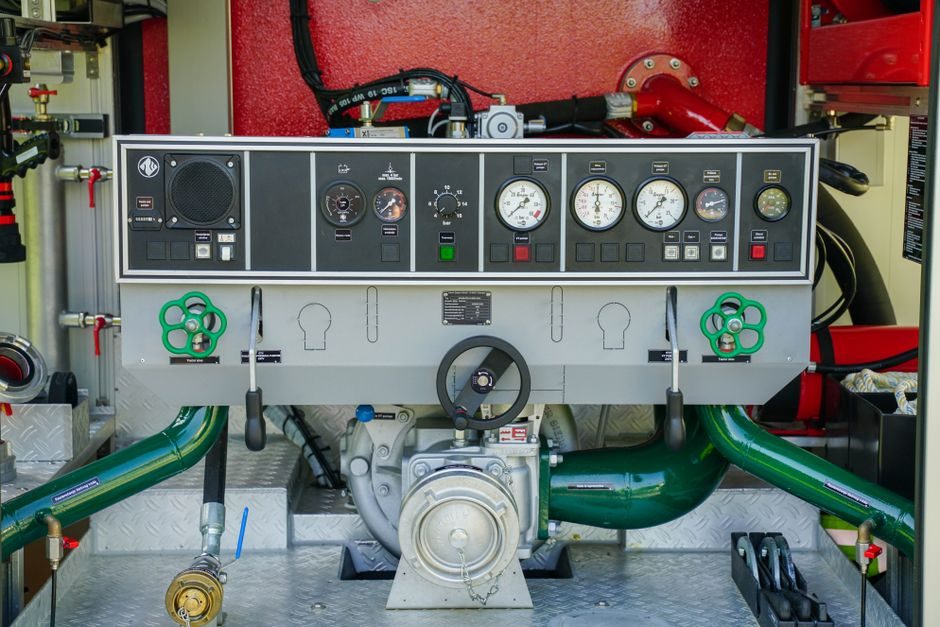
An ALS-series valve limit switch box from Yongjia Hengxin ships at roughly 1.6 kg with a 120×120×103 mm die-cast aluminum housing, two G1/2" cable entries, and an adjustable 0–90° or 0–180° placement angle — the exact envelope most procurement specs treat as a baseline reference unit [S3].
Across published OEM data, switch boxes converge on polyester powder-coated aluminum housings rated to IP67 (weatherproof) or Ex d IIB T6 / Ex d IIC T6 (flameproof), with NAMUR / ISO 5211 mounting and dual 2×G1/2 or M20×1.5 entries as the dominant configuration [S1]. Selection therefore reduces to passing seven engineering gates before a price comparison is even meaningful.
Hazardous-Area Class: Ex d vs Ex i vs General Purpose
Ex d IIB T6 and Ex d IIC T6 are the two flameproof enclosure classes most commonly offered for Zone 1 chemical and refinery service, with IIC extending coverage to hydrogen and acetylene atmospheres beyond IIB's envelope [S1]. IP67 weatherproof-only units are acceptable for unclassified outdoor service but fail the moment a hydrocarbon vapour cloud can reach the box.
Intrinsically safe Ex i variants (limited to IP65 in the Hengxin datasheet) are the correct pick for Zone 0 or where loop-power budgets must stay below ignition thresholds [S3]. Mis-paired certification is the single most expensive selection error — it invalidates the whole skids's hazardous-area dossier and forces a full re-issue.
Quick rule: match the box's marking to the highest gas group and temperature class that can credibly reach the box, never the average one.
Ingress Protection: IP65 vs IP67 vs IP68
IP65 ingress protection is the minimum acceptable for sheltered indoor enclosures and is the only rating stamped on Hengxin's intrinsically safe variant [S3]. IP67 — submersible to 1 m for 30 minutes — is the workhorse spec for outdoor chemical-plant decks and is paired with the Ex d enclosures in the ALS500 range [S1].
IP68 (continuous submersion, depth agreed with the vendor) is a specialist ask for buried service-chamber duty and is rarely stocked as a catalogue item. Selection between IP65 and IP67 should track the plant's wash-down philosophy, not the marketing sheet.
Switch Element: Mechanical, Proximity, or Magnetic

Mechanical microswitches carry the highest inrush rating — Hengxin's ALS spec lists 6 A at 24 VDC and 10 A at 220 VAC — making them the only honest choice for direct solenoid coil drive without an interposing relay [S3]. Proximity sensors (inductive, typically 3-wire PNP/NPN) and magnetic (non-contact) switches are the right answer when the duty cycle exceeds 1 million operations or the process fluid rules out mechanical wear debris.
The published ALS500 range explicitly offers mechanical, proximity, and magnetic options in the same housing footprint, so a buyer is choosing the switch element, not the enclosure [S1]. For more on how these compare against adjacent feedback devices, see the related guide on limit switch box family variants.
Terminal Count and Wiring Architecture
Standard 8-point terminal strips cover a single-solenoid + dual-limit-switch wiring; 14-point strips are the optional upgrade for units carrying a position transmitter, a solenoid, and dual microswitches with spare poles [S1]. Under-specifying terminals is one of the most common field rework triggers — a transmitter upgrade on day 18 of commissioning forces a box swap.
Spring-clamp terminals are now standard on most premium lines; screw terminals persist on budget units and demand a 0.6–0.8 N·m torque discipline to avoid cold-flow loosening on the vibration-heavy actuator side.
Mounting Standard: NAMUR vs ISO 5211

Both NAMUR and ISO 5211 mounting patterns are accommodated on the same adjustable bracket in the ALS500 family, with stainless steel offered as an option to the default steel plate [S1]. Mismatched mounting is a hard mechanical fail — the shaft will not centre, the cam timing will drift, and the indicator dome will read 90° off actual.
Standard 30×80 and 130 H20–30 actuator stem patterns are the dominant pin-outs; confirm the actuator's female drive before ordering, not after the box lands. For a related discussion of how feedback hardware interlocks with actuator selection, see pneumatic valve actuator pricing 2026: cost drivers, torque tiers, and selection logic.
Cable Entries and Field Conduit Compatibility
2×G1/2" cable entries are the factory default; M20×1.5 and NPT 1/2" are the documented options on the ALS500 series [S1]. Selecting a box with NPT entries for a plant that runs metric conduit (or vice versa) costs roughly 30 minutes per box of adapter gymnastics at site.
For hazardous areas, entries must carry Ex d-certified cable glands with the same gas group as the enclosure — a box stamped Ex d IIC requires IIC glands, not the cheaper IIB gland that fits the thread.
Visual Position Indicator Logic
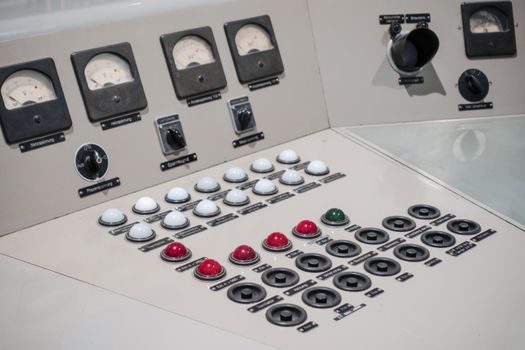
The Hengxin ALS uses a yellow "on" (open) and red "off" (closed) indicator dome on a 0–90° rotation, with shaft connections or feedback levers driving the internal cam stack [S3]. "Quick-Set" spring-loaded splined cams on premium units eliminate the tool-dependent re-adjustment that plagues budget boxes after a vibration event [S1].
A multi-angle top-and-side view indicator is the small detail that saves hours during a plant walk-down — operators can read the valve state from a man-lift without leaning over the actuator. For a wider look at how visual indicators compare across feedback-device families, see the entry on the limit switch sensing element.
Selection Matrix: Four Realistic Options Against Decision Criteria
Four common variants line up as follows on the decision criteria that actually drive a buy: (1) General-purpose IP67 mechanical-microswitch box, aluminum housing, 8-point terminals, 2×G1/2 — best cost for unclassified indoor service; (2) Ex d IIB T6 IP67 mechanical + proximity box, 14-point terminals, dual entries — the workhorse for refinery and most chemical Zone 1 service; (3) Ex d IIC T6 IP67 magnetic-switch box, stainless option, 14-point terminals — required for hydrogen-rich or acetylene-bearing atmospheres and high-cycle duty; (4) Ex i IP65 mechanical box with 6 A/24 VDC rating — the only honest answer for Zone 0 or loop-powered low-energy systems [S1][S3].
If your plant has any credible IIC gas group, skip variant (1) and (2) outright — paying the IIC premium is cheaper than re-tagging. If the duty cycle is below 100,000 operations per year, the magnetic-switch premium of variant (3) is wasted money.
Trackable Signals Worth Watching
Watch for two follow-on signals: a confirmed migration toward IIC as the default Zone 1 certification on new chemical-plant builds, and a steady push from 8-point to 14-point terminal strips as position transmitters become standard rather than optional. Buyers specifying 8-point strips in 2026 are scheduling a 2027 retrofit — the 14-point cost premium is under 5% on most lines and removes the rework risk. [S1]
For related guidance on adjacent valve-package selection, the article on electric ball valve selection: five spec axes that decide the buy walks through the actuator-feedback handshake from the other side of the wiring diagram.
The underlying component specifications are covered under carton box.