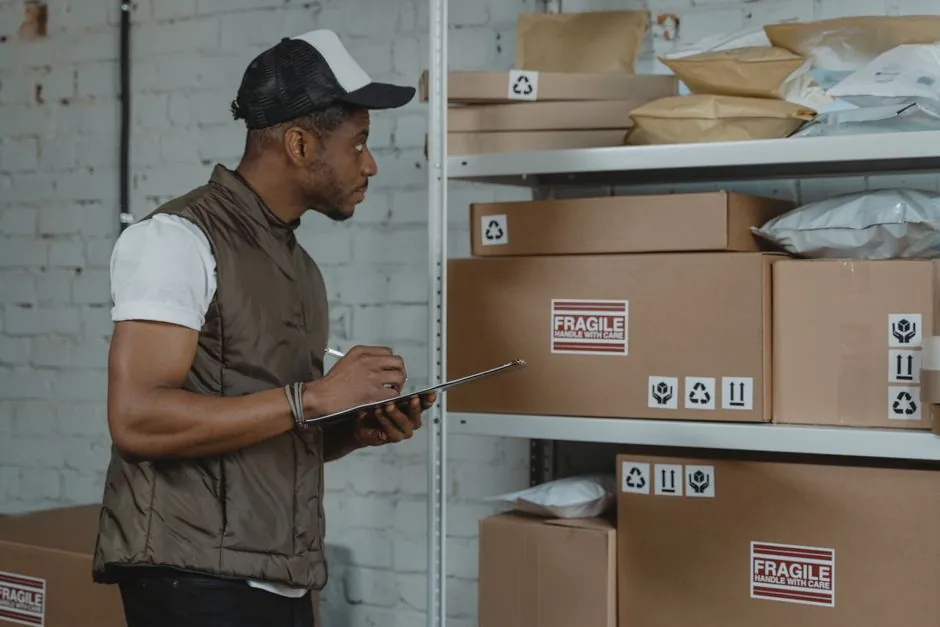
Warehouses generate three distinct head-impact hazards: tools and shrink-wrap reels falling from pallet racks, forklift tines and overhead stock, and operators stepping off man-up orderpickers, so the helmet spec has to be matched to the dominant hazard, not the worst-case one [S1][S7].
EN 397 is the baseline standard for general industrial head protection in Europe and covers impact from falling objects, penetration, and optional electrical insulation up to 440 V (Class E marking) [S1][S2]. The two main ANSI/ISEA Z89.1 types are Type I (top impact) and Type II (top + side, front, rear impact), with Type II increasingly specified for warehouse and distribution centre work [S2][S8].
EN 397 vs EN 12492 vs EN 14052: the three real options
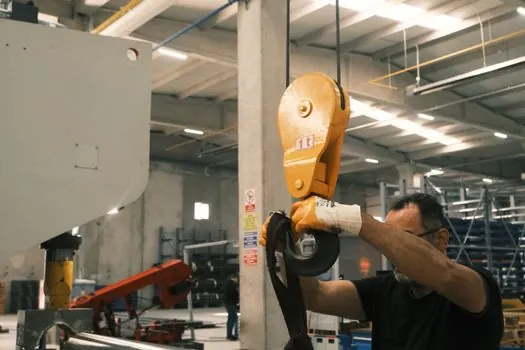
EN 397 industrial safety helmets are tested with a 5 kg striker dropped from 1 m onto the crown and a 3 kg conical punch for penetration, which is the minimum envelope for warehouse rack aisles and forklift traffic [S1][S2]. EN 12492 climbing helmets are tested with a more severe 5 kg striker from 2 m and require a chinstrap that holds under 50 N or more of force, making them the right call for work on orderpicker platforms above 2.5 m but over-spec (and under-ventilated) for floor staff [S1][S2]. EN 14052 high-performance industrial helmets add mandatory lateral impact testing (a 5 kg striker at 0 to 60 degrees off vertical) and typically higher top-impact energy absorption, so they fit cold-store mezzanines, automated storage aisles, and any zone with swinging loads or moving crane hooks [S1][S2].
A direct four-criterion comparison, useful for RFQ line items:
EN 397: 5 kg / 1 m top impact, no mandatory side impact, no mandatory chinstrap, 440 V optional (Class E) [S1][S2].
EN 12492: 5 kg / 2 m top impact, no mandatory side impact, mandatory chinstrap ≥ 50 N, no electrical class rating by default [S1][S2].
EN 14052: 5 kg / 1 m top impact plus 5 kg lateral impact, stronger harness, no mandatory chinstrap, electrical rating only via -440 V variant [S1][S2].
For warehouses operating mixed fleets, the practical answer is usually EN 397 with the -440 V electrical optional marking for floor staff and EN 12492 or EN 14052 reserved for the small population who actually work at height or in swing-radius zones [S1][S2][S7].
Who EN 397 is for, and who should pick something else
EN 397 Class E is the right helmet for receiving dock workers, pickers on standard powered pallet trucks, and orderpicker operators below 2.5 m, because the dominant hazard is a falling carton, a swinging stretch-wrap roll, or a bump against a racking upright [S1][S7]. The same source notes warehouses and logistics as a listed work site for EN 397, alongside construction, forestry, and agriculture [S1]. Bump caps to EN 812 are not a substitute: they are explicitly not rated for falling objects and only address low-energy bumps against fixed objects, so they fail the moment a tote drops from the second pallet level [S1].
EN 12492 should be specified for staff working at height on man-up orderpickers or mezzanines where a fall is foreseeable, and where the chinstrap retention test is what actually keeps the helmet on the head through the arrest event [S1][S2]. EN 14052 fits high-bay aisles with stacker-crane or AS/RS servicing, where lateral impacts from carriages and load-handling attachments are a routine, not theoretical, hazard [S2]. None of the three standards make a helmet electrically insulating above 1000 V; for live battery-charger or PV-installer work inside the same building, EN 50365 (Class 0, 1000 V) is the standard the spec needs to call out separately [S2].
Shell, harness, and accessories: the second decision layer
Three component decisions drive fit, comfort, and total cost of ownership on top of the standard choice. The shell is typically high-density polyethylene (HDPE) or polypropylene for cost-driven fleets, with ABS and fibreglass composites appearing in higher-priced EN 14052 lines for stiffness and temperature stability [S5][S3]. The harness or suspension is usually a 4-point or 6-point nylon webbing cradle, and a 6-point harness is the right call for EN 14052 because the side-impact test loads the harness asymmetrically, not the shell [S5]. Accessories such as chinstraps, slot-mounted ear defenders, face visors, and headlamps must be manufacturer-approved for the specific shell; mixing uncertified clip-on earmuffs to a non-tested slot can break the chinstrap retention test and void the EN 12492 rating on a helmet that still carries the label [S1][S3].
For a full review of the head-protection taxonomy including bump caps, see the safety helmet types and classifications reference. Where the same PPE plan also covers foot protection, the safety shoe S-class and ASTM F2413 comparison is the right companion read, because the head-and-foot standards tend to be specified together in the same PPE risk assessment.
Electrical, temperature, and chemical add-on markings
EN 397 opens a menu of optional markings that are commonly misread as automatic. -440 V (or the older Class E) confirms dielectric strength to 440 V, but only when the manufacturer has actually tested and marked it, and it does not cover work on live battery banks in forklift charging rooms [S2]. -30 degrees C confirms very low temperature performance of the shell; without it, an HDPE shell in a -25 degrees C cold store becomes brittle and can fail the impact test that it passed at +20 degrees C [S2]. MM identifies molten metal resistance and is irrelevant in a dry-goods warehouse but mandatory in any foundry or metal-casting tenant of the same building [S2].
ANSI/ISEA Z89.1-2014, referenced in industry guidance, uses Class E (20 kV), Class G (2.2 kV), and Class C (no electrical rating), and the head-protection market shows continued split between EN 397-dominant European warehouses and ANSI Z89.1-dominant North American sites, which is why the spec should call out both standards when the fleet crosses regions [S3][S8].
Selection workflow for a warehouse PPE review

Run the same five-step filter on every zone in the building. Step 1: map the hazard inventory, falling objects, lateral impacts, electrical, and fall-from-height separately rather than as one combined score [S1][S5]. Step 2: assign the standard, EN 397 for object and bump hazards, EN 12492 if a chinstrap failure would be catastrophic, EN 14052 where lateral impact energy is high, and EN 50365 only for live electrical work above the EN 397 -440 V ceiling [S1][S2]. Step 3: pick the optional markings, -440 V or -30 degrees C, only when the zone actually needs them, because every extra marking is a small cost that compounds across a 200-person fleet [S2]. Step 4: verify accessory compatibility in writing with the helmet maker, especially for clip-on earmuffs and chinstraps, because the EN 12492 chinstrap test is done on the bare helmet, not the helmet-plus-muff combination [S1]. Step 5: document fit and replacement policy, with most HDPE shells rated for 5 years and most suspensions for 1 year of daily use, regardless of visible damage [S3][S5].
For adjacent PPE planning, the protective clothing types and classifications reference covers cut and chemical ratings that usually share the same risk-assessment document as head protection.
Common failure modes that show up in warehouse audits
Four spec mistakes dominate the audit findings in distribution centres. First, EN 812 bump caps specified where EN 397 is required: bump caps do not pass the falling-object test and should be limited to visitor routes, low-clearance mezzanines, and pedestrian-only aisles with no overhead storage [S1][S3]. Second, EN 397 helmets used on man-up orderpickers above 2.5 m without an EN 12492-rated chinstrap: a helmet that flies off during the arrest event is functionally no helmet at all, and the chinstrap force rating is the difference [S1][S2]. Third, shells in cold stores that were never tested to -30 degrees C: HDPE transitions from ductile to brittle around -20 to -25 degrees C, so a -25 degrees C freezer needs the -30 degrees C marking, not just any EN 397 shell [S2]. Fourth, mix-and-match accessories that were never combo-certified by the helmet manufacturer, which can quietly invalidate the impact test even when each part carries its own CE mark [S1][S3].
Tracking signals to watch
Two indicators are worth re-checking on the next quarterly PPE review. Watch for the EN 14052 variant pricing spread against EN 397 across major distributors, since a narrowing gap makes lateral-impact helmets cost-neutral for new fleet builds rather than a premium line item. Watch also for distribution-centre guidance referencing ANSI/ISEA Z89.1-2014 Type II on the same site, because Type II is the direct functional analogue of EN 14052's lateral-impact test and the two standards are converging on the same hazard model for warehouse and logistics work [S2][S8].
For component-level specifications, see safety helmet, fire safety, and machine safety.