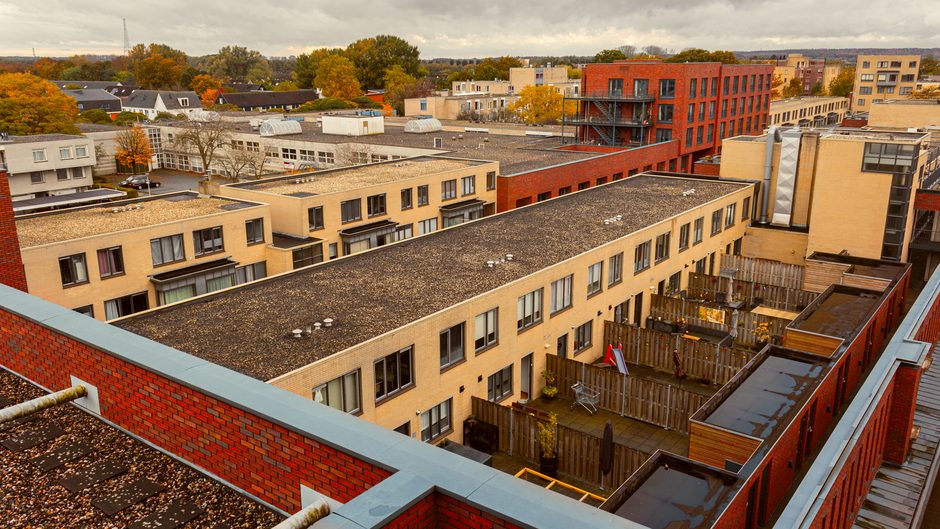
Modified bitumen membrane and waterstop are not competing products in a procurement sense — they are complementary layers that solve two different leak paths on a typical below-grade or podium structure. A 4 mm SBS-modified bitumen sheet with polyester-fibre reinforcement and PE film facing is a continuous surface barrier over horizontal decks, plaza roofs, and foundation slabs [S1][S2]. A waterstop is an extruded PVC, TPV, rubber, or hydrophilic profile embedded inside a construction joint, expansion joint, or pile-cap interface to block water migration along the joint line [S1].
Specifying one in the role of the other is a common 2026 design error seen on mid-rise basements and metro stations: a sheet membrane cannot seal a 20–30 mm cold joint that opens 5–10 mm under thermal or settlement movement, and a waterstop cannot protect a 5,000 m² plaza deck from standing water and UV-driven ageing. This article lays out the 2026 cut — material, thickness, joint type, hydrostatic head, and movement class — using sourcing data from SBS/APP membrane product listings [S1][S2][S4][S5] and the 2026 waterstop selection framework.
Scope, Form Factor, and Where Each Product Actually Lives in the Build
An SBS-modified bitumen membrane is a factory-made roll, 1 m wide and 10 m long at 4 mm thickness, with a polyester-fibre (PY) reinforcement and a PE-film or sand/mineral finish [S1][S4]. The base asphalt is modified with styrene-butadiene-styrene thermoplastic elastomer, giving cold-bend flexibility typically down to roughly −20 °C and a softening point above 100 °C, which is why SBS sheets dominate cold-climate roof and basement specifications [S1]. APP (atactic polypropylene) modification is the alternative chemistry, offered in 2/3/4 mm grades with PY or glass-fibre (G) reinforcement and PE, sand (S), mineral (M), or aluminium (Al) facings — the Al-faced grade doubles as a vapour barrier.
A waterstop, by contrast, is a profile extruded in continuous coils, typically 15–25 m long, with a constant cross-section — centrebulb, dumbbell, base-seal, or swellable strip — designed to sit inside a wet joint between two concrete pours. Cross-section width runs 100–300 mm for PVC dumbbells and 20×5 mm to 30×10 mm for hydrophilic strips, depending on joint type and hydrostatic head. The base polymer is usually PVC (SBS-grade flexible PVC, 60–70 Shore A), TPV, EPDM rubber, or a bentonite-rubber hydrophilic compound. The two products therefore meet on a construction site: the sheet membrane is torch-applied or cold-adhered on the structural slab surface, and the waterstop is cast into the joint between the slab and the wall kicker or the pile cap.
Performance Criteria: Hydrostatic Head, Movement, Temperature, and Chemical Exposure
Modified bitumen sheet is rated by hydrostatic resistance (typically 0.3–0.6 MPa for a 4 mm SBS-PY system with double-layer torch application), cold-flex temperature, tensile strength (PY-reinforced sheets run 800–1200 N/50 cm in both directions), and puncture resistance [S1][S4]. Peel strength at the lap, achieved by torching the PE film off the underside and pressing the bitumen bead into the selvage, is the in-service failure point — poorly heated laps leak first, not the field of the sheet [S1][S2].
Waterstop is rated by movement class (Type 1 ≤10 mm movement, Type 2 ≤30 mm, Type 3 ≤60 mm, per typical European/ASTM joint-waterstop practice), hydrostatic head (PVC dumbbells rated to 30–80 m water column depending on profile and concrete confinement), and chemical resistance. PVC stands up to brackish groundwater and mild effluent; TPV and EPDM are required for hydrocarbon exposure (fuel stations, refinery bund walls) and for chloramine/chlorine resistance in swimming-pool and potable-water tanks. Hydrophilic strips swell 200–500% by volume on water contact and self-heal minor concrete honeycombing, but they have no UV tolerance and must be fully embedded — any exposed strip degrades within weeks in sunlight.
Selection Cut: Pick by Location, Not by Material Trend
The 2026 cut for a typical below-grade or podium project is straightforward once location is fixed. Horizontal plaza roof, basement slab, or invert where the concrete is a continuous pour: specify a 4 mm SBS-PY-PE sheet, double-layer, fully torched, with sealed laps and protection board [S1][S2][S4]. For inverted-roof assemblies where the membrane is under rigid XPS insulation, the same 4 mm SBS-PY grade is used but the protective cover is mandatory — UV and mechanical damage during back-fill are the killer modes. For sub-zero climate or northern-China basements, SBS (not APP) is specified, since APP is more heat-tolerant but stiffens below roughly −10 °C [S1].
Construction joints in the same structure — slab-to-wall kicker, wall panel-to-panel, pile cap to pile — are a waterstop scope. A centrebulb PVC profile in 250 mm width handles up to 30 mm movement and 50 m head, which covers most commercial basements. Hydrophilic strips are added at pipe penetrations and at the interface between new and existing concrete where the joint geometry is irregular. For more detail on the waterstop side, see the 2026 waterstop selection criteria guide. For the membrane-vs-coating decision when a liquid-applied system is also on the table, see the modified bitumen membrane vs waterproofing coating 2026 spec cut.
Options Comparison: SBS, APP, PVC, TPV, and Hydrophilic at a Glance
Five material options show up in a typical 2026 tender, and the difference is not subtle. SBS-modified bitumen membrane: 4 mm PY-reinforced, cold-bend to roughly −20 °C, torch-applied, lap-welded, suitable for horizontal decks and protected vertical walls [S1][S2][S4]. APP-modified bitumen membrane: 2/3/4 mm thickness, PY or G reinforcement, PE/S/M/Al facings, higher softening point, more UV-tolerant on exposed roofs, stiffer at low temperature. PVC waterstop: 100–300 mm cross-section, 60–70 Shore A, 30–80 m head rating, weldable on site with hot-air or thermal blade, baseline option for most basements.
TPV/EPDM waterstop: higher chemical and temperature tolerance, required for hydrocarbon bunds and potable-water tanks, typically 20–30% cost premium over PVC. The decision rule is: sheet membrane for continuous surface area, PVC dumbbell for movement joints, TPV for chemical exposure, hydrophilic for penetrations and detail geometry.
Failure Modes and Constraints a Spec Must Address in Writing
For modified bitumen membrane, the three killer failure modes are lap failure from under-heated torching, puncture during back-fill or rebar placement, and blistering from substrate moisture trapped under the sheet. Mitigations are specified at tender: primer on dry concrete, full torching with visible 5–10 mm bleed bead at every lap, 4 mm thick protection board over the membrane before screed or back-fill, and a 24-hour water test on horizontal decks before protection [S1][S2]. SBS-PYPE sheets from the major CN supplier pool are listed as ISO 9001-certified with delivery in 15 days post-deposit, which is the typical lead time for export orders [S4].
For waterstop, the failure modes are different: displacement of the profile during the second concrete pour (the most common site error), chemical attack of PVC in hydrocarbon environments, and dehydration of hydrophilic strips left exposed on site for weeks before concrete encasement. Mitigations: factory-fitted clips or factory-welded intersections to keep the profile in plane, TPV or EPDM spec in any hydrocarbon-exposure zone, and hydrophilic strips kept in original sealed packaging until the day of pour. Standard reference points for both product families sit inside the broader waterproofing coating 2026 price and cost guide for sourcing context.
Sourcing and Standards Reference Frame for 2026
Modified bitumen membrane product lines in active 2026 supply are dominated by Chinese manufacturers offering SBS-PYPE 4 mm at ISO 9001 certification, with pallet packaging and 15-day lead time, MOQ typically one 20 ft FCL for export [S4]. APP-modified sheets are offered in 2/3/4 mm with PE/S/M/Al facings, and modified-bitumen production-line equipment (calendering, coating, winding) is also available from the same supplier base, with monthly output quoted at 10 sets of full membrane lines [S6].
Material standards to verify at the PO stage include the applicable product standard for the destination market (GB 18242 in China for SBS sheets, EN 13707 / EN 13969 in Europe for roof and basement applications, ASTM D6162/D6163/D6164 for US SBS specifications). For the full modified bitumen membrane reference and material taxonomy, cross-check the product type (SBS vs APP, PY vs G reinforcement, PE vs S vs M vs Al facing) against the substrate and exposure class before issuing a purchase order. For the joint-side counterpart, the waterstop product reference covers profile geometry, polymer selection, and movement class. For a broader sheet-product framing, the waterproof membrane category page ties both into the wider roll-goods family.
Track these three signals over the next quarter to keep the 2026 spec defensible: (1) whether the tender specifies a 4 mm SBS-PYPE or 3 mm APP-PE sheet, since the thermal-climate band is the deciding evidence; (2) whether the joint schedule is sealed with a 250 mm centrebulb PVC or a 20×5 mm hydrophilic strip, since that confirms the assumed movement class; and (3) the supplier ISO 9001 certificate scope and lead-time clause in the PO, which decides whether the export delivery in 15 days [S4] is contractual or aspirational.