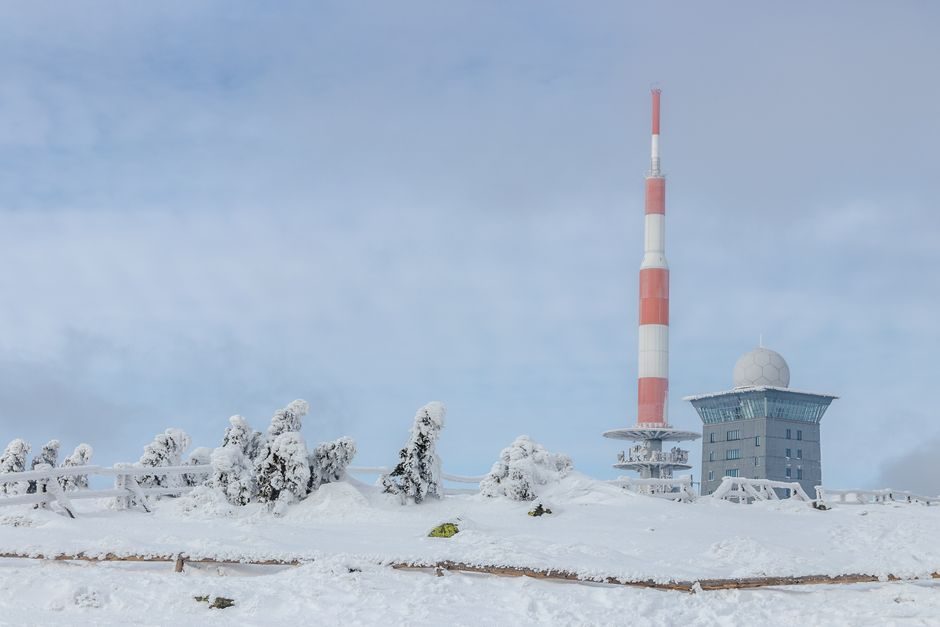
Specifying a weather station means choosing a sensor stack first, then a data logger, then a siting plan — and the stack is decided by the duty, not the brand label on the box [S1].
A live amateur station at the Hampshire Astronomical Group logged barometer 1016.7 mb, temperature 24.6 °C, humidity 52%, WNW wind at 8.0 mph, wind chill 23.1 °C, and a 0.0 mm rain rate on 2026-07-27, illustrating the seven parameters (pressure, dry-bulb, RH, wind, rain, light, dewpoint) that any buyer should map to their application before shortlisting hardware [S3].
What a weather station sensor stack actually measures
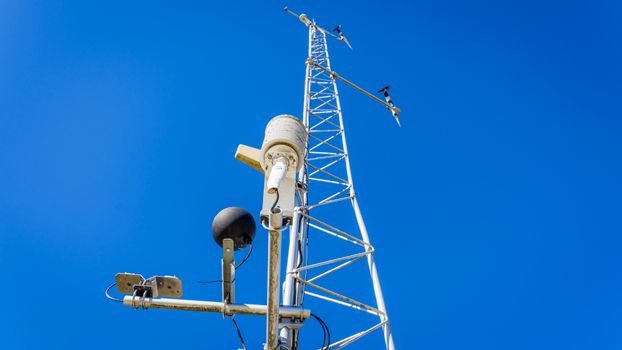
A weather sensor is a device that measures or quantifies one weather factor and reports it as analysable data; in most field deployments several of these sensors are bundled into a single station so a complete picture of the local microclimate is captured in one timestamped record [S1]. The minimum practical stack is temperature + relative humidity + barometric pressure + wind + precipitation, with optional solar radiation, UV, soil moisture, and lightning detection added where the duty justifies it. Buyers should treat any vendor claim of "all-in-one" coverage as a checklist: confirm each claimed channel is a genuine calibrated sensor, not a derived or interpolated value. The detailed mechanics of the weather station sensor package drive everything from siting rules to power budget.
Duty-driven selection: who the station is for, and who should not buy the mainstream unit
Personal and hobby users typically need only temperature, humidity, and a simple rain gauge, often fed via Wi-Fi to a home dashboard — the WxObservation 2026 review roundup notes that consumer units have converged on easy-install, app-driven designs aimed at this segment [S2]. Municipalities, construction sites, agriculture operations, and aviation/aerodrome users, however, require WMO-compliant siting, redundant sensors, and traceable calibration, with documented data quality objectives. Buyers specifying a station for worker-safety go/no-go decisions or regulated reporting should reject the mainstream consumer bundle entirely, since its sensors generally lack the traceability and uncertainty budgets that a pressure transmitter or other met-grade instrument provides in process plants.
Sensor class vs measurement principle: the main options lined up
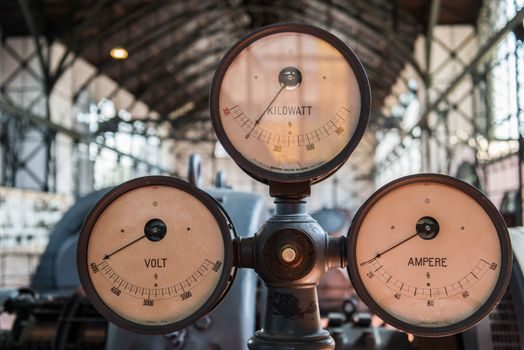
Four sensor classes dominate current weather-station builds, and the right pick is governed by environment and accuracy target rather than price alone. The Hampshire Astronomical Group weather station log shows barometer reported to 0.1 mb resolution (e.g., 1012.8 mb) [S3]. Wind speed and direction are split between mechanical cup-and-vane anemometers (low cost, moving parts, ice-prone) and ultrasonic non-mechanical heads (no moving parts, no ice accretion, higher cost) — ultrasonic is the default for desert, polar, and corrosive atmospheres. Rainfall is measured by tipping-bucket rain gauges (0.1–0.2 mm per tip) or weighing gauges, while solar radiation uses a thermopile pyranometer in W/m² and is paired with a separate UV channel when material-degradation studies matter.
Selection criteria a buyer should hard-code into the spec
Five criteria separate a working station from a regretted purchase. First, accuracy: a published uncertainty per channel, not a marketing adjective — look for figures expressed with a confidence interval and reference to a traceable standard. Second, range and operating limits: confirm the anemometer survives the site's 50-year gust, the thermometer covers the site's recorded min/max, and the rain gauge's intensity range covers cloudburst-class events rather than only gentle showers. Third, durability: IP65 or higher enclosure rating, UV-stable housing, and a wind sensor that survives salt spray for coastal sites. Fourth, data interface: SDI-12, Modbus RTU/TCP, and 4–20 mA remain the industrial staples, with LoRaWAN and cellular added for remote sites — pick the protocol the existing SCADA, flow meter, or telemetry stack already speaks, not the one the vendor prefers to sell. Fifth, power and data integrity: confirm the logger stores a local copy (the Hampshire station exposes 2-day and 8-day raw downloads in CSV and pipe-delimited .txt for exactly this reason) so a network outage never costs a record [S3].
Use cases: matching the stack to the job
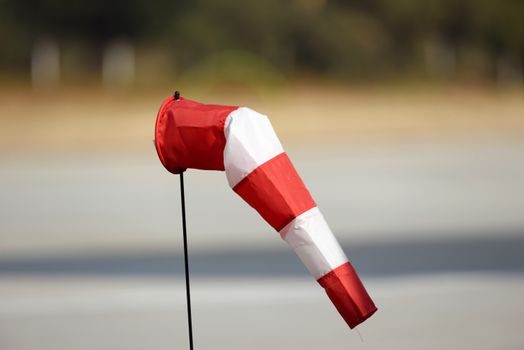
Agriculture and irrigation scheduling stations emphasise soil-moisture and solar-radiation channels alongside wind and RH for evapotranspiration models. Construction and crane-lift sites lean on wind speed and direction alarms with redundant anemometers at boom height, since gust events drive go/no-go decisions far more than temperature. Solar farms size their pyranometer choice around the W/m² accuracy they will claim in yield reports, while road-weather stations add a road-surface temperature probe and a non-contact surface-state sensor. Aviation and aerodrome use — including drone-port operations — require WMO-compliant siting, regular calibration, and redundant pressure channels, often feeding the same SCADA platform that already handles total station survey data on a construction site. [S1]
Limitations, failure modes, and the standards that govern them
The most common field failure is siting, not the sensor: an anemometer mounted above a rooftop or beside a cooling tower records turbulence, not ambient wind, and the resulting data set is unrecoverable no matter how good the calibration certificate. Mechanical cup anemometers stall in freezing rain and overestimate low winds due to bearing wear, while ultrasonic heads can be blinded by heavy snow or spiders building webs across the acoustic path. Tipping-bucket rain gauges underread in high-intensity events unless a correction algorithm is applied. Buyers should require WMO No. 8 siting guidance for reference installations, and for industrial hygiene dust monitoring on the same site they should confirm the dust channel uses a separate, calibrated eye wash station-adjacent safety instrument rather than a repurposed weather sensor. [S1]
Sourcing, calibration, and what to ask the vendor
Require a traceable calibration certificate per channel at delivery, with a recommended re-calibration interval (12 months is the field norm for temperature, RH, and pressure; anemometers often run 24 months between wind-tunnel checks). Ask for a documented data format and a sample export — the Hampshire Astronomical Group publishes live readings and offers both 2-day and 8-day raw downloads in CSV and pipe-delimited .txt formats, which is a useful benchmark for the kind of data portability a buyer should demand from any supplier [S3]. Confirm the vendor's published accuracy against an independent test report, and for sites in regulated industries (aviation, pharma, energy) request evidence of compliance with the relevant metrology standard rather than a generic ISO 9001 claim. Two trackable signals to watch: the WxObservation 2026 review roundup's continued convergence on Wi-Fi-first consumer designs [S2] and the steady migration of industrial users toward ultrasonic wind + SDI-12 / Modbus outputs [S1] — both are signs of where price/performance is heading in the next procurement cycle.
Background reading: Dust Particle Meter vs Lux Meter: Sensor Class, Output Unit, and Selection Map.