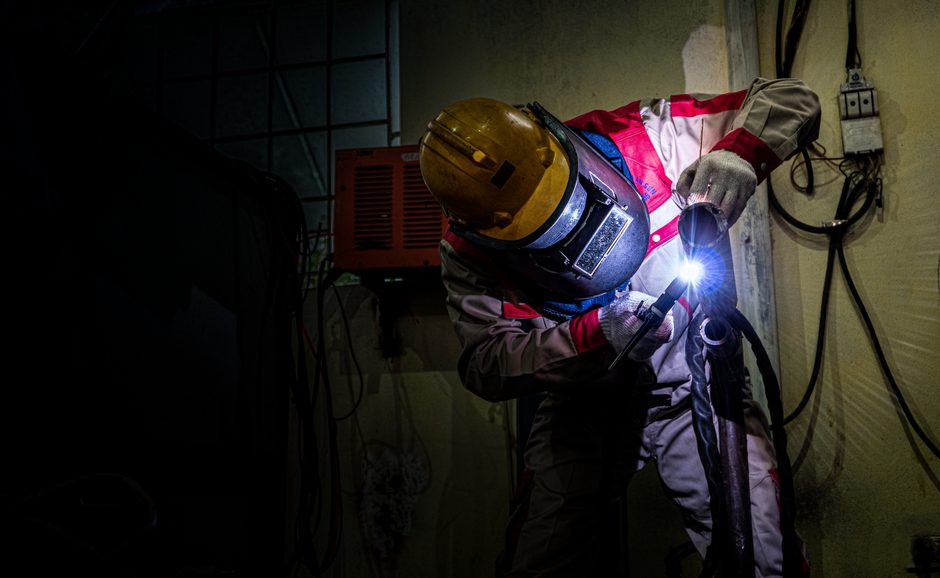
Welding operations generate a defined cocktail of toxic gases — carbon monoxide (CO), nitrogen dioxide (NO2), ozone (O3), and depending on the consumable, hydrogen fluoride or hexavalent chromium compounds — alongside oxygen depletion and, in confined spaces, combustible gas accumulation. A toxic gas detector specified for welding must therefore be a multi-gas instrument, not a single-channel CO meter, and the 2026-08-02 Henan ZhongAn catalog lists pump-suction portable analyzers such as the S360 that accept swappable sensor heads for that exact reason [S3].
Selection hinges on five quantified criteria: sensor count (1–8 channels), sampling method (diffusion vs. built-in pump), runtime on a single charge, ingress/explosion-proof rating, and alarm topology. The S319 platform from ZhongAn simultaneously reads 1–8 gas types via grouped sensor elements on a dot-matrix display with bilingual UI, while the S360 uses a built-in pump suction design tied to the gas type being measured [S3]. For welding-floor mobility this combination — pump sampling plus swappable heads — is the practical baseline.
Sensor Channel Mix Required for Welding Fume
A minimum four-sensor bundle is the de-facto welding specification: CO (0–500 ppm typical range), NO2 (0–20 ppm), O2 (0–25% vol), and LEL combustible (0–100% LEL) [S3]. The S360 portable multi-gas detector and the S319 eight-in-one instrument both accept this group-type sensor arrangement, allowing the operator to replace individual elements as cross-sensitivity or end-of-life dictates [S3]. GrayWolf's AdvancedSense / DirectSense / WolfPack TOX meters extend the channel count further, supporting 1–5 gas sensors per probe plus temperature, with up to four probes simultaneously on a single embedded-PC meter [S1].
Adding an electrochemical NO2 channel matters more than adding a second combustible sensor: NO2 is the slower-onset pulmonary irritant in MIG/Stick welding, and OSHA's ceiling limit sits at 5 ppm while NIOSH's REL is 1 ppm (STEL). For stainless steel and hard-facing operations a CR(VI) monitor is a separate problem outside standard electrochemical gas detection — it requires air sampling with laboratory analysis rather than a portable electrochemical cell.
Pump Sampling vs Diffusion in Confined-Space Welding
Pump-suction is mandatory for any pre-entry test of a tank, vessel, or structural cavity where welding will occur, because diffusion sensors underestimate concentration when the worker's breathing zone is metres away from the arc. The S360's built-in pump suction is explicitly tied to "according to the type of gas being measured," meaning the flow rate is set to the sensor cell's specified face velocity [S3]. For open-shop welding on a fabrication floor, a diffusion-mode portable gas detector clipped to the lapel is acceptable provided the sensor face is within 25 cm of the breathing zone.
For multi-probe surveys of large weld bays, the WolfPack TOX configuration accepts up to 4 probes wired to a single host running Windows Mobile, Win 7 tablet, or a standard notebook, allowing one operator to map CO/NO2 distribution across a 40-metre fabrication hall while logging at 1 Hz [S1]. This is the same pattern used in IAQ audits and translates directly to welding-fume compliance surveys against indoor air thresholds.
Explosion-Proof, Runtime and Alarm Topology
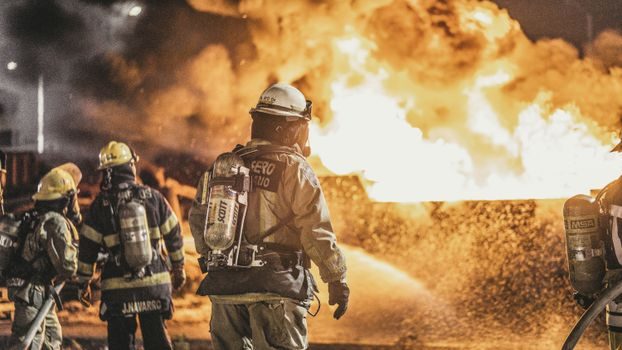
Hot-work permits in oil & gas fabrication yards require ATEX or IECEx certification, and any combustible gas detector on a welding cart without that rating will be rejected at the gate. The BTYQ-A116 portable gas detector is described as suitable for "gas leak rescue in explosion-proof places, underground pipelines or mines," implying an Ex-rated housing suitable for the welding-adjacent hazardous-area classification [S3]. Pair the toxic-gas instrument with a fixed gas detector head at the workshop ventilation extract for continuous area monitoring between shifts.
Alarm architecture should be three-stage: low (TWA-derived), high (STEL/ceiling), and TWA time-weighted average over 8 hours. The GSS-GP300 from ZhongAn integrates combustible, O2, CO and H2S sensing with a colour LCD, USB charging and an audible/visual stack that most procurement teams treat as the minimum acceptable [S3]. For a four-gas instrument this represents the entry-level hardware cost; upgrading to a 7-day battery, wireless (WiFi or LoRa) telemetry, and a thermal printer typically adds 40–60% to the unit price.
Comparative Read: S360 vs S319 vs WolfPack TOX
Decision criteria for welding-fume selection break down as follows: channel count, sampling, probe scalability, and data workflow. The S360 (1–4 gas channels, built-in pump, single handheld) suits a single welder's personal monitor. The S319 (1–8 channels, grouped sensors, dot-matrix bilingual display) fits a safety supervisor covering a small cell. The WolfPack TOX (1–5 sensors per probe, up to 4 simultaneous probes, embedded PC host, photo/audio note attachment, optional Advanced Report Generator and GrayWolfLive WiFi webhosting) addresses QA and compliance reporting on large fabrication projects [S1][S3].
Cross-sensitivity between NO2 and ozone is a known false-positive trigger in arc-welding environments; sensor manufacturers publish interference tables, and GrayWolf's on-board sensor tips include "government & industry guidelines, cross-sensitivity info" as a deliberate feature [S1]. A multi-gas detector with documented cross-sensitivity matrices should be preferred over cheaper four-cell modules that ship with generic calibration certificates only.
Calibration, Bump-Test and Sensor Replacement Cycle
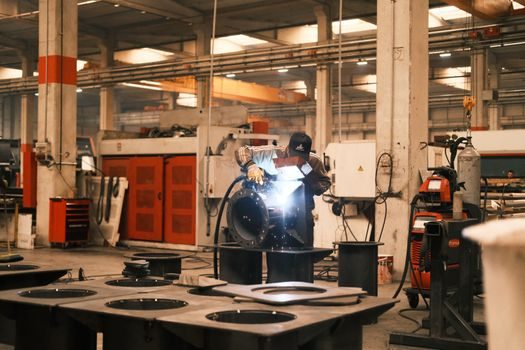
Electrochemical toxic-gas sensors drift 1–5% per month depending on exposure history; a 30-day calibration interval is the industry-accepted practice for CO/NO2/H2S cells used in welding fleets. Span gas is typically 50 ppm CO, 10 ppm NO2, 25 ppm H2S balanced in nitrogen, supplied in 34 L or 58 L cylinders at 1–5 L/min. ZhongAn's published service workflow lists Calibration and Technical Support as separate post-sale channels, alongside Warranty [S3].
The S319's "group type sensor element, which can be replaced with different sensor types anytime" is a critical feature for welding operations: a fabricator cutting over from carbon-steel to stainless consumables can swap in an HF-sensitive cell without returning the instrument to the vendor [S3]. For operations expecting consumable changes, this hot-swap sensor architecture avoids the 5–10 day downtime typical of fixed-configuration four-gas analyzers.
Trackable 2026 Signals for Welding-Fume Detector Sourcing
Two signals to monitor over the next two quarters: regulatory tightening of welding-fume exposure limits (the US OSHA enforcement weight on hexavalent chromium and the EU's continued adoption of stricter OELs under CMD 2017/164), and the migration of portable gas detectors to connected platforms with WiFi telemetry and automatic cloud-logged bump tests. Henan ZhongAn's catalog of 2026-08-02 lists both standalone S360/S319 handhelds and the GSS-GP300 4-in-1 with USB interface, signalling that the Chinese mid-tier market is segmenting between disposable-cost workhorses and connected instruments [S3]. GrayWolf's TOX family is positioned at the upper end with optional Advanced Report Generator software and GrayWolfLive webhosting for remote real-time access [S1]. For procurement teams writing welding-cell specifications in 2026, the decision is no longer "which sensor" but "which data workflow" — the sensor spec has converged, and the differentiator is now how fast calibration and exposure data reach the safety officer's screen.
Related analysis: Toxic Gas Detector Selection for Oil and Gas Facilities: 2026 Spec Map.