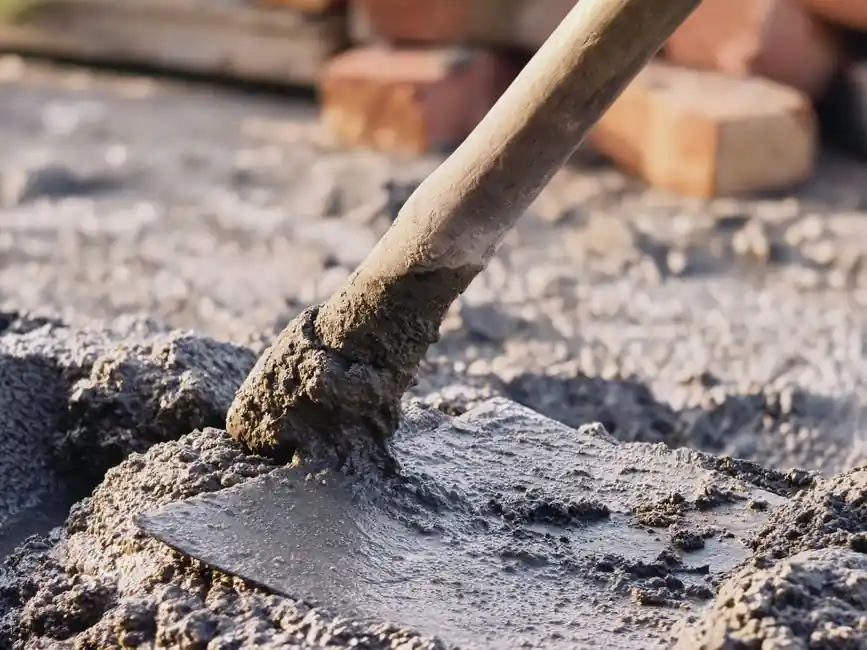
Wet mix and dry mix shotcrete differ on a single technical axis: the point at which water enters the mix. In dry-mix (gunite) placement, dry cement and aggregate are pneumatically conveyed through the hose and hydrated by the nozzleman at the manifold; in wet-mix placement, all components including water are pre-mixed and pumped as a slurry, with compressed air added at the nozzle to project the material [S1][S5].
The choice between them is driven by project scale, site access, required production rate, and whether the work pattern is continuous or stop-and-start. Equipment cost ranges, capacity figures, and rebound percentages diverge enough that the two processes target different job profiles, and the decision is rarely settled by finished-product quality alone, since the in-place material is broadly similar once it strikes the substrate [S1][S3].
Process Definition and Where Water Enters the Mix
The American Concrete Institute (ACI) defines the dry process as shotcrete in which most of the mixing water is added at the nozzle, with dry ingredients propelled pneumatically through the hose and water metered by the nozzleman in real time [S1][S5]. ACI defines the wet process as shotcrete in which all ingredients, including water, are mixed before introduction into the delivery hose, with compressed air introduced at the nozzle to enhance spray characteristics [S1].
That single difference, the water addition point, cascades into equipment design, rebound behavior, and quality-control protocol. A shotcrete machine configured for dry-mix uses a gun or hopper fed with pre-bagged or site-batched dry material, plus a larger air compressor to convey the dry stream; a wet-mix rig uses a concrete pump and a smaller compressor (around 185 ft³/min, or 5.24 m³/min), since the material is already fluid [S3][S4]. ACI 506R is the underlying guidance document, and dry-process nozzlemen are certified separately under ACI CP-60 because water-cement ratio control is operator-dependent [S5].
Equipment Cost and Production Rate Compared
Capital cost for the two process lines is closer than most contractors expect, but the line items inside each budget are inverted. A dry-mix gunite setup (machine, hoses, nozzle) runs $12k to $16k, paired with a large air compressor at $33k to $70k, for a total of $45k to $86k and a capacity range of 8 to 15 yd³/h (6.1 to 11.5 m³/h) [S3]. A wet-mix setup (machine, hoses, nozzle) runs $45k to $95k, with a smaller compressor at $15k to $20k, totaling $60k to $115k and delivering 12 to 20 yd³/h (9.2 to 15.3 m³/h) [S3].
If the site already has a large air compressor in place, dry-mix wins the per-cubic-yard cost competition; if not, the two methods are roughly comparable on a dollar-per-yard basis [S3]. Wet-mix capacity roughly doubles the lower end of dry-mix output, which is why lock-and-dam, rail tunnel, and large underground projects default to wet: hundreds to thousands of yards of material placed into wide open areas favor a higher production rate [S1][S3].
Rebound, Dust, and Quality Control Behavior
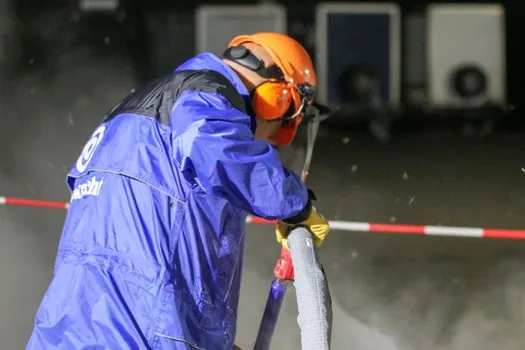
Dry-mix vertical rebound typically runs 20 to 40 percent, against 10 to 20 percent for wet-mix, which is one of the strongest arguments for wet placement on large structural pours where material waste is a line-item cost [S5]. The trade-off is dust: dry-mix generates more airborne dust at the nozzle, making wet-mix the safer pick in confined spaces such as tunnel interiors and mining headings [S2][S3].
Quality control is asymmetric between the two processes. Wet-mix delivers a more consistent water-cement ratio because the mix is pre-batched at the plant or by an on-site mixer; the trade-off is batch life, since mixed material must be used within a short window or it goes to waste [S2][S4]. Dry-mix lets the nozzleman adjust water content in real time, compensating for substrate variability, orientation change (vertical to overhead), and weather without halting work, but quality is operator-dependent and is verified through ACI 506.2 panel testing and ASTM C1604 core sampling [S5]. Verified dry-mix compressive strength typically lands at 4,000 to 6,000 psi, with aggregate top size of 3/8 inch for civil structural work and sand-only for traditional gunite finishes [S5].
Job-Site Fit: Where Each Process Wins
Dry-mix is the right tool for repair work, remote sites, overhead-dominant placement, and intermittent or small-volume jobs where ready-mix delivery and pump logistics do not pay back. Tunnel rehabilitation, dam and spillway repair, mining ground support, and pool construction (the historical home of the original 1907 gunite trademark) are characteristic dry-mix territory, with production typically running 1 to 3 yd³/h [S2][S5]. The setup is a portable single-trailer field rig that can be helicopter sling-loaded into a remote site, a logistics advantage wet-mix cannot match [S5].
Wet-mix is the default on new construction with hundreds or thousands of yards of material, where the higher production rate of 12 to 20 yd³/h and the lower 10 to 20 percent rebound are decisive [S1][S3][S5]. A practical rule that falls out of the production ranges: continuous placement at high volume favors wet, and intermittent or stop-and-start placement favors dry, because each wet-mix stop requires the hose to be cleaned of mixed material, while dry-mix tolerates pauses without batch-life loss [S1][S2][S5].
Limitations and Failure Modes
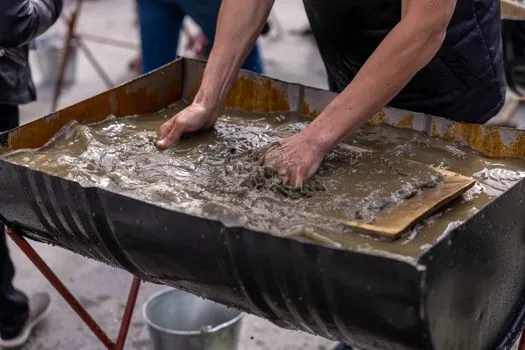
Wet-mix is not conducive to stop-and-start repairs, since each interruption requires a hose purge of mixed material, and any leftover slurry hardens inside the line and must be discarded [S1][S2]. The corollary is that small repair areas finished with a steel trowel, rubber float, or flash, such as bridge pier repairs and parking garage rehabilitation, are poor wet-mix candidates, regardless of how attractive the production rate looks on paper [S1].
Dry-mix carries its own failure modes. The water-cement ratio is operator-controlled, so an inexperienced nozzleman produces inconsistent in-place strength; dust exposure in confined spaces is higher; rebound losses of 20 to 40 percent inflate material supply cost on large pours [S3][S4][S5]. Equipment wear is also asymmetric: dry-mix requires a much larger air compressor than wet-mix, so sites without an existing compressor bear the full $33k to $70k compressor capital cost on top of the gun and hoses [S3].
Selection Criteria and Decision Matrix
Five criteria reliably separate the two processes on a real project: project size, access, stop-start frequency, finish quality requirement, and existing site equipment. On project size, wet-mix wins above roughly 100 yd³ of continuous placement; dry-mix wins below that and on repair work [S1][S3]. On access, dry-mix wins on remote or helicopter-dependent sites because the rig is sling-loadable; wet-mix wins in urban plants where ready-mix trucks can feed directly [S2][S5].
On stop-start frequency, dry-mix wins whenever the work pattern is intermittent, because the dry stream has no batch life to manage; wet-mix wins on continuous pour cycles [S1][S2]. On finish quality, wet-mix delivers more consistent water-cement ratio and lower rebound, favoring structural linings and architectural pools; dry-mix wins where real-time substrate compensation matters, such as overhead repair and mixed-orientation patches [S4][S5]. On existing equipment, dry-mix wins whenever a $33k to $70k air compressor is already on site; wet-mix wins whenever a small 185 ft³/min compressor and a concrete pump are already mobilized [S3]. For broader context on how process selection maps to adjacent concrete equipment decisions, see the walk-behind vs ride-on power trowel productivity comparison and the ready-mix concrete process reference for upstream mix-design constraints.
Standards, Sourcing, and Trackable Signals
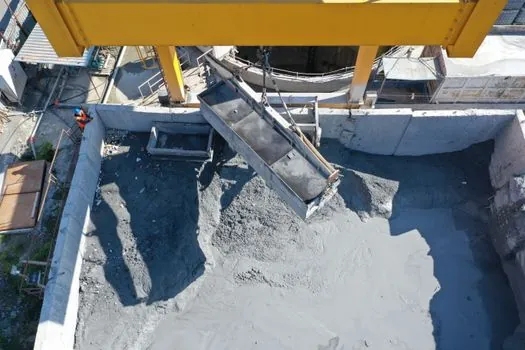
The governing standards cluster is ACI 506R for shotcrete materials and placement, ACI CP-60 for nozzleman certification (dry-process and wet-process tracks are separate), ACI 506.2 for shotcrete panel testing, and ASTM C1604 for core sampling of in-place shotcrete [S5]. The American Shotcrete Association is the industry reference body for process selection and contractor qualification, and ACI's own definitions of dry and wet processes remain the canonical language used in project specifications [S1][S2].
Equipment-side, watch the European wet-mix pump brands (Clever, Turbosol) and U.S. gunite gun builders (Reed, Allentown legacy) for new small-format wet-mix pumps aimed at the repair and pool market, since that segment is currently a dry-mix stronghold and any equipment breakthrough would shift the decision matrix [S2].
Component reference pages worth checking: dry mortar.